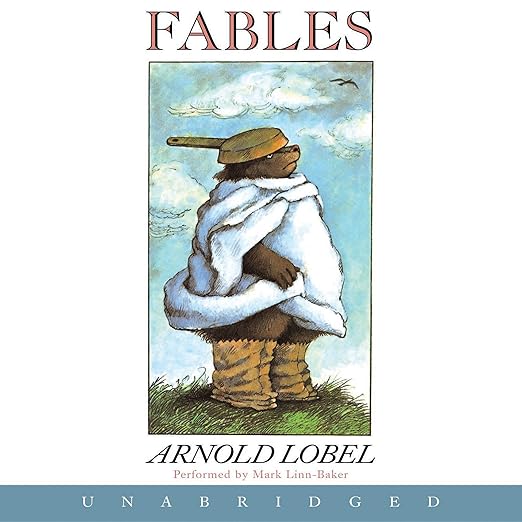
Arnold Lobel's Frog and Toad made him a household name in children's literature, but Fables, his Caldecott Medal winner, gets far less attention despite being just as strange and funny, and this audiobook is a genuinely good way to rediscover it. Where Frog and Toad built its charm around two consistent characters across many small stories, Fables scatters its wit across a menagerie: a pig who dreams through marshmallow clouds, a camel who dances across open desert, animals who behave with just enough human folly to make the morals land without ever feeling like a lecture. At 44 minutes, this is a short, deliberately bite-sized listen, and that runtime is entirely the point rather than a limitation.
Linn-Baker Reads Like a Gifted Teacher
Lobel wrote and illustrated more than sixty award-winning books across his career, and Publishers Weekly singled this collection out as, in the outlet's own words, 'the most remarkable' of that entire bestselling run. What makes the fables work as audio specifically is how self-contained each one is: no continuing plot or cast of recurring animals needs tracking from one story to the next, which makes this an unusually forgiving listen for young children whose attention may drift and reset constantly during a single sitting.
Mark Linn-Baker narrates with a light theatrical quality that never tips into full performance, landing each fable's moral with a deadpan trust that the material doesn't need underlining. He reads like a genuinely gifted teacher working through a book aloud rather than an actor doing character voices for their own sake, which suits Lobel's dry, understated humor better than a more exaggerated performance would. Even the sillier animals, the pig, the camel, get restraint rather than cartoonish voicing, and the collection is noticeably better for that choice, since overplaying the comedy would undercut the dry wit Lobel actually wrote on the page.
Quick Arrival, Quick Payoff, Quick Departure
Linn-Baker is a familiar name to a generation of television viewers from his sitcom work, and that comic-timing background is exactly the skill set a fable collection needs most: knowing precisely how long to let a punchline or a moral sit before moving on. It's a different discipline than dramatic voice-acting, closer to stand-up rhythm than character performance, and it's a better fit for this specific material than a more classically trained audiobook narrator might have delivered.
The animal cast here is deliberately wider and stranger than Frog and Toad's tight two-character focus, a pig who dreams himself airborne through clouds shaped like marshmallows, a camel who finds unexpected grace dancing across open desert, and that variety is part of the point: rather than building deep affection for one recurring pair, Fables asks a listener to form a quick, specific attachment to a new creature every few minutes, then let go and move on to the next one. That rhythm, quick arrival, quick payoff, quick departure, is unusual for a children's audiobook and suits genuinely short attention spans better than most formats manage.
The Lesson Translates Cleanly Into Pure Sound
The best reason to choose the audiobook specifically is exactly that read-aloud quality built into Linn-Baker's approach: this format replicates, rather than replaces, the experience of a parent or teacher reading the stories aloud, which matters for a book explicitly designed for shared listening rather than solitary reading. Reviewer Bich says a teacher recommendation led her to the book and that her daughter 'enjoys learning from these stories and asks a lot of questions,' which is a strong sign the fables genuinely invite conversation rather than passive listening.
Reviewer jerzyguy reports going through the collection with a four-year-old 'several times,' which speaks to real rewatch, or in this case re-listen, value despite the short runtime; a 44-minute book that gets requested repeatedly is doing something a much longer, one-and-done story often doesn't manage. Newsweek called Lobel's approach 'a magical addition to an ancient genre of storytelling,' and that genre lineage, fables as a form stretching back to Aesop, gives even young listeners an early, painless introduction to a literary tradition they'll keep encountering.
The fable format itself happens to suit audio better than most picture-book genres do, because of a structural convention baked into the form: a fable traditionally states its moral directly, often as a single closing line, rather than leaving the lesson implicit in visual detail the way many modern picture books do. That built-in verbal payoff, the explicit 'and the lesson is' moment, translates cleanly to sound in a way that a story leaning on illustrated visual gags or wordless spreads simply couldn't.
What Earned the Caldecott Is Structurally Absent
Some of the attached listener reviews clearly describe the print edition specifically, praising the book's illustrations or its condition as a used physical copy, which is worth flagging honestly: those comments speak to the material's broader reception and Lobel's artwork rather than to this audio performance directly. That's a common wrinkle with beloved picture-book adaptations, and it doesn't diminish what Linn-Baker does with the text itself, but it does mean the reviews aren't a pure narration report.
Because Fables is a collection of unrelated animal stories rather than a running narrative, listeners expecting Frog-and-Toad-style continuing characters will need to adjust expectations; real charm lives in the variety, but none of the character-attachment a longer-running series builds over time comes with it. At 44 minutes total, this also isn't a book you put on for a long car ride expecting it to last, it's built for a single sitting or a bedtime rotation.
Worth naming honestly: the Caldecott Medal specifically honors distinguished illustration, not text alone, which means part of what earned this book its award is structurally absent from any audio edition. Lobel's visual comedy, the actual look of a camel mid-pirouette or a pig adrift in marshmallow clouds, simply isn't part of what a listener experiences here. That's not a flaw in Linn-Baker's performance so much as an honest limit of the format, and families who want the full Caldecott-winning experience should treat the audiobook as a companion to the print edition rather than a full substitute for it.
Variety and Brevity Instead of a Recurring Duo
Parents and caregivers of preschool and early-elementary children are the clear core audience, especially anyone building a bedtime or classroom read-aloud rotation who wants something that rewards repeat listens without demanding a long attention span. Adult fans of Lobel's other work, especially Frog and Toad, will also enjoy hearing his humor applied to an entirely different cast of characters.
Listeners hoping for a long-form listen, or for the specific comfort of Frog and Toad's familiar recurring duo, should know this collection trades continuing characters for variety and brevity instead, and 44 minutes simply isn't going to fill a lengthy commute or road trip on its own.
The Short Version
- Performance: Mark Linn-Baker narrates with light theatrical restraint, trusting Lobel's deadpan morals to land without overplaying the comedy.
- What it covers: Animal fables, gentle moral lessons, storytelling tradition
- Feel: Playful and warm
- Our call: A short, rewatchable bedtime classic best suited to shared parent-child listening rather than a long solo commute.
A Few Questions About Fables
How long is the Fables audiobook, and is that too short to be worth it?
It runs about 44 minutes, which is short by design. The collection is built from self-contained animal fables meant for a single sitting or repeated bedtime listens, not a long-form narrative.
Is this audiobook connected to Arnold Lobel's Frog and Toad books?
Not directly. Fables is a separate, standalone Caldecott Medal-winning collection with a different animal cast in every story, though it shares Lobel's dry humor and gentle moral sensibility.
Does Mark Linn-Baker do different character voices for each animal in this audiobook?
He favors a light, theatrical restraint over distinct character voices, letting each fable's deadpan humor land through pacing and tone rather than exaggerated performance.
Is this audiobook appropriate for very young children?
Yes. Reviewers describe success with children as young as four, and the self-contained, minute-long stories are forgiving of short attention spans.