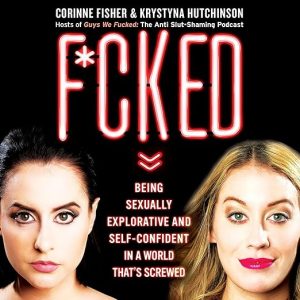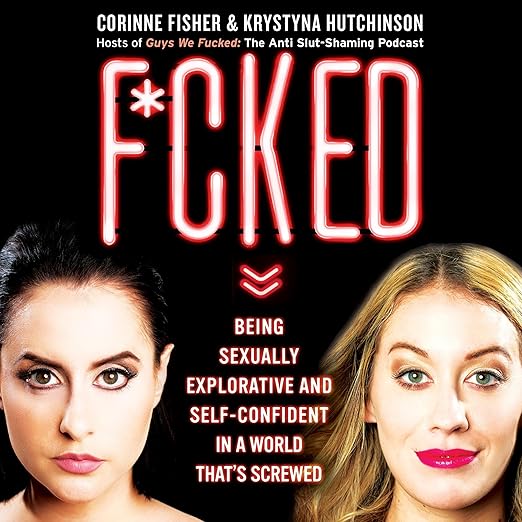
Krystyna Hutchinson narrating her own book is not a neutral fact. F*cked, the audiobook co-written by Hutchinson and Corinne Fisher and narrated by Hutchinson herself, carries a particular charge because the material is autobiographical, confrontational, and built on the same unapologetic voice that powered their Guys We F*cked podcast to over a million listeners. The result is one of those audiobook experiences where the narrator's presence genuinely changes what you are hearing.
The book originated from the podcast's evolution. What started in 2013 as a project to interview former sexual partners and deconstruct the shame attached to female sexuality grew into something more complex: a space where stories of assault, emotional abuse, and deeply ingrained shame became regular topics alongside the comedic ones. Fisher and Hutchinson recognized that their audience needed more than laughs, and this book is their attempt to synthesize that recognition into something lasting.
The Review
The audiobook does not hedge. Hutchinson and Fisher tackle masturbation, faking orgasms, snooping on partners, body image, and how to extract yourself from an unsafe situation with the same directness they apply to comedy, and Hutchinson's delivery matches that register perfectly. She is not performing outrage or mining the content for shock. The stand-up background shows in the timing, in the way she undercuts sentiment before it tips into earnestness, and in the specific rhythms of her delivery that make the more serious passages land harder because they arrive without warning.
The section on shame is where the book earns its credibility beyond the provocative framing. Fisher and Hutchinson argue that shame is a learned construct and that most of the rules governing how women are supposed to behave sexually are neither natural nor inevitable. The audiobook frames this not as feminist theory but as practical observation, and that distinction matters. It keeps the argument grounded in experience rather than ideology, which makes it accessible to listeners who might resist a more academic framing. The book also includes specific practical content: how to ask sexual partners uncomfortable questions, how to recognize the difference between a situation that is just awkward and one that is genuinely unsafe, and a frank accounting of why snooping on partners, nitpicking bodies, and faking orgasms all represent forms of self-abandonment rather than self-protection. Each of those topics gets a chapter-level treatment, and Hutchinson narrates them with enough variety in register that the audiobook never settles into a single emotional key.
Why F*cked Works as an Audiobook
Reviewers have consistently flagged Hutchinson and Fisher as sharp, intelligent writers operating well above the level of the genre label that might get slapped on a book with this title. Reviewer Nicki, who ranked Hutchinson among her most inspirational women, captures something real about the audiobook's effect: it treats the listener as someone capable of handling information and making decisions, rather than someone who needs to be coaxed or protected from complexity. The Bridget Jones line in the synopsis is not a throwaway. The book is explicitly positioning itself against a certain kind of women's self-help that patronizes its audience, and it makes that case with enough specificity to back it up.
For listeners familiar with the podcast, the audiobook adds structure and deliberate argument to material that existed in more scattered form across hundreds of episodes. For new listeners, it works as a standalone entry point that requires no prior knowledge of the show. At six hours and fifty minutes, the runtime is long enough to develop its ideas without overstaying. The comedic sections provide pacing relief from the denser emotional material, and the alternation between the two registers is handled well enough that neither undercuts the other. Reviewer Brian Honigman described the book as successfully articulating why this conversation is important and complex, which points to the specific intellectual ambition that makes the material something more than an extended podcast episode in book form.
The Caveats
The audiobook does not carry trigger warnings, which Fisher and Hutchinson address directly in the text: they argue that preemptive shielding from difficult content is itself a form of condescension. That position will resonate with some listeners and alienate others. Topics including sexual assault and emotional abuse are covered without protective framing, and listeners who need preparatory context before encountering those subjects should factor that into their decision.
The no-trigger-warning stance is also not the same as gratuitous. The audiobook handles difficult material with directness rather than sensationalism, and Hutchinson's narration is calibrated enough that the serious sections do not feel exploitative. But the lack of signposting is a genuine structural choice, not an oversight, and listeners should approach with that in mind. The book is also specifically focused on women's experience as its primary frame, although Fisher and Hutchinson address male and non-binary readers directly and the synopsis confirms the book is intended for listeners regardless of gender identity.
Should You Listen to F*cked?
Adults looking for a frank, comedically grounded conversation about sex, shame, and self-determination will find this audiobook genuinely useful. Listener J noted it would make a good gift for someone going into high school or college, and that instinct is right for mature teenagers and young adults who are beginning to form independent perspectives on these subjects. Listeners who want a deeply theoretical feminist text will find the approach too anecdotal, and those who want the subject handled with more protective framing should look elsewhere. Fans of the podcast will find the audiobook format adds satisfying cohesion to ideas they already know in more fragmented form.