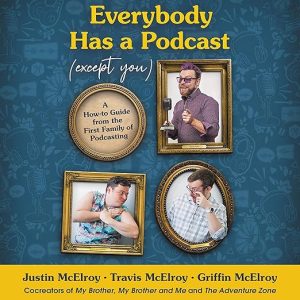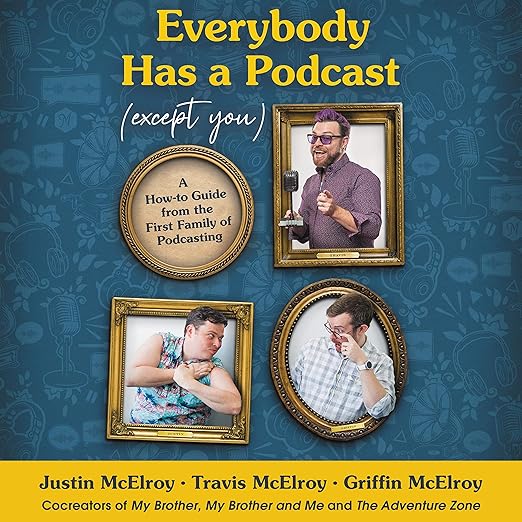
Justin McElroy opens this audiobook the same way he opens most episodes of My Brother, My Brother and Me, mid-joke, mid-thought, and somehow still on topic, walking listeners through a decade of podcasting mistakes specific enough to double as scenes from the shows themselves. Justin narrates solo across five hours and nine minutes, though the material draws on lessons from all three McElroy brothers' collective run of shows, including The Adventure Zone and Sawbones, distilled here into practical advice on naming, recording, editing, and promoting a podcast of your own.
Justin Narrates Solo Despite a Group Byline
The book's structural joke, that three guys with famously bad workplace-advice instincts are now the qualified experts on a completely different skill, podcasting itself, gives the material a built-in tension between comedy and genuine usefulness. Reviewer Michael was skeptical going in for exactly that reason and came away describing the mix of the McElroys' established wit with accurate, helpful information as seamless, the specific balance this kind of comedic how-to audiobook has to strike to work at all.
Justin's solo narration is worth noting given the byline: the synopsis credits the McElroy Brothers throughout and describes collective experience across eleven podcasts, but only Justin is named as author and narrator here. That is plausibly just how the writing and recording division of labor worked out for this specific book, but listeners expecting to hear all three brothers' voices, the way longtime fans of their ensemble podcast dynamic might assume, should know this audiobook is Justin alone carrying the material.
Chapter Order Mirrors an Actual Podcast Launch
The catalog the book draws on is real and genuinely varied: My Brother, My Brother and Me built the brothers' initial audience with advice comedy, The Adventure Zone turned a family Dungeons and Dragons game into a scripted-feeling actual-play hit, and Sawbones mines medical history for comedy, though that particular show is really a Justin-and-spouse project rather than a three-brothers one, a small imprecision in the synopsis worth knowing if you go looking for it afterward.
The McElroy family's broader media footprint extends well past the specific shows named in the synopsis; by the time this book arrived, the brothers had already spent many years building an independent podcast network around exactly the lessons this book distills. That larger context matters because it means the advice comes from people who scaled a hobby into a sustainable career, not just from three guys who got lucky with one hit show.
The book's full arc, from an idea to naming it, recording, editing, and promotion, mirrors the actual chronological journey a new podcaster faces, rather than organizing chapters by abstract topic. That structural choice means the audiobook can function as a step-by-step companion listened to alongside an actual in-progress podcast launch, not just a one-time overview.
Even Non-Readers Call This an Easy Listen
A how-to guide about audio production, delivered in audio, is one of the more self-evidently well-matched format choices in this whole nonfiction category. Justin can demonstrate tone, pacing, and comedic timing directly rather than describing it abstractly on a page, which matters for a book whose central claim is that personality and specificity, not technical polish, is what actually makes a podcast worth listening to.
Reviewer Cameron Childers, who describes not usually reading nonfiction or how-to books at all, calls this one of the easiest and most enjoyable listens in recent memory, specifically because the information lands alongside real laughs rather than despite them. That crossover appeal, useful even to listeners who do not necessarily want to start their own podcast, is a meaningful selling point for a book that could easily have stayed narrow and purely instructional.
Comedic Timing Is Harder to Land Aloud
Comedy-forward how-to writing is a difficult needle to thread in audio specifically, since jokes that work timed against a reader's own internal pace on the page can land differently read aloud at a fixed speed. Justin's experience performing comedic timing live across a decade of podcast episodes gives him an unusual, genre-specific advantage most first-time audiobook narrators reading someone else's how-to manuscript would not have.
The book's own joke about microphone advice, definitely not one from the video game Rock Band, is a good preview of its teaching method throughout: real, specific, occasionally very online comedic reference points used to make a genuinely useful piece of advice, in this case, do not use a toy microphone, memorable rather than forgettable the way a plain bullet-pointed gear list would be.
Five hours and nine minutes is a genuinely light lift for a how-to audiobook, short enough to finish in a weekend and immediately start applying, which fits the book's own practical, get-moving ethos better than a denser, more academic guide to media production would.
Its Own Subtitle Promises No Guaranteed Results
Despite the comedic framing, reviewer Jonathan Schmid confirms the book delivers real behind-the-scenes knowledge about starting and running a podcast, not just brand-adjacent comedy content riding on the McElroys' existing audience. Listeners going in purely for laughs with zero interest in podcasting mechanics will still get genuine information whether they want it or not, either a bonus or mild padding depending on what you came for. That balance of comedy and craft is really the whole pitch of the audiobook in miniature: entertaining enough to finish, useful enough to matter.
The subtitle's own disclaimer, results not guaranteed, on the promise to help listeners get rich doing this, is worth taking at face value. This is not a guide promising podcasting success or income, and listeners hoping for a rigorous business or monetization playbook rather than practical production advice wrapped in comedy should adjust expectations accordingly.
This joins a small but growing shelf of podcaster-written how-to guides riding on their own shows' established audiences, a format that only works when the underlying advice holds up independent of the personality selling it. Reviewer Jonathan Schmid's confirmation that the behind-the-scenes knowledge is genuinely useful, not just brand extension, is the detail that actually matters for anyone deciding whether to trust this over a more anonymous podcasting guide.
Reassurance for the Too-Weird, Too-Niche Anxious
Anyone thinking about starting a podcast, or any existing fan of My Brother, My Brother and Me or The Adventure Zone who wants more of Justin's voice in their ears, will find this a fast, funny, genuinely useful five hours.
Aspiring podcasters specifically anxious about sounding too weird or too niche for an audience should find real reassurance here, since the McElroys' own biggest hits started from premises, a sibling advice show, a family tabletop game, that were plenty weird and niche before they worked.
Skip it if you specifically wanted to hear all three McElroy brothers together rather than Justin solo, or if you need a rigorous monetization strategy rather than practical, personality-driven production advice.
- Narrator: Justin McElroy narrates solo with the same fast, funny cadence longtime podcast listeners already know from his shows.
- Subjects: podcast production, comedic how-to writing, creative entrepreneurship
- Tone: Fast, funny, and genuinely practical
- Bottom line: A breezy, useful how-to guide for anyone considering a podcast, carried by Justin's established comic timing.
Before You Listen
Does this audiobook feature all three McElroy brothers, or just Justin?
Just Justin narrates and is credited as author here, even though the material draws on lessons from all three brothers' collective podcasting experience.
Is this audiobook useful if I do not actually want to start a podcast?
Reviewer Cameron Childers, who does not usually read how-to nonfiction, found it enjoyable and informative regardless, largely because the comedy carries the instructional content.
Does this audiobook promise podcasting will make me money?
No, and it says so directly. The subtitle's own results-not-guaranteed disclaimer sets realistic expectations about income from podcasting.
How practical is the advice in this audiobook compared to its comedic tone?
Genuinely practical, according to reviewer Jonathan Schmid, who credits it with real behind-the-scenes knowledge about starting and running a podcast alongside the humor.