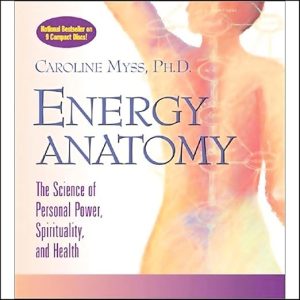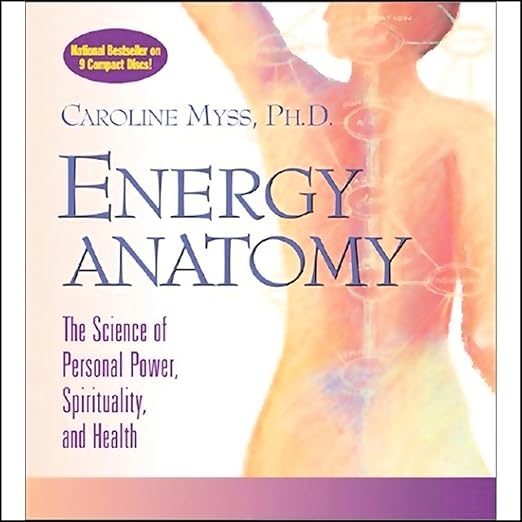
A book first, then cassettes, then CDs, and now an audiobook: one reviewer here traces the format history of Energy Anatomy in a single sentence, and that lineage turns out to be the most useful thing on the page. Caroline Myss recorded this as a twelve-session teaching course rather than a book read aloud, and she is credited as the narrator of her own material. Eight hours and forty-one minutes across twelve sessions works out at roughly forty-three minutes apiece, a lecture length rather than a chapter length, and that difference matters more than it sounds.
The Verdict, Briefly
This is a course, and the distinction is not pedantic. The description says so directly, promising twelve step-by-step sessions in which "you learn every phase of her groundbreaking work." That means no plot, no arc, no cumulative story pulling you forward. What carries you is a syllabus, and syllabi reward a different kind of attention than books do. The reviewers understand this instinctively. One describes putting life on hold to sit down with the whole thing and take notes. Another describes returning to it repeatedly across decades and hearing something new on every pass.
Myss states her central claim without hedging. The body, in her framing, is not a biological machine but "a vast energetic network, where spirit, matter, and power intersect", one that in her account "encodes thought, converts it into matter, and stores it as energy within specific areas of the body." From there the course moves to its most contested proposition: that after working with thousands of patients she connected specific illnesses to past emotional traumas and, in the description's words, "solved the puzzle of why some people heal, while others don’t." That is an enormous claim, and it is the reason this recording has both devotees and detractors.
The recording has age on it, and the review pool is the only evidence for how much. One listener writes about hearing Energy Anatomy "back in 2001, when I was in my early 20s", playing it over and over on long country walks. Another confirms the migration from printed book to cassette to CD. So what you are buying is a transferred recording with a long life behind it rather than a contemporary studio production, and it is worth adjusting expectations for that before you press play rather than during session one.
Twelve sessions taught by the person who built them is the entire proposition, and it is the rare listing where the narrator question answers itself. Author and narrator are the same person, which for a teaching course is not a cost decision but the product itself. The same transcript read by a hired voice would be a different object: you would keep the content and lose whatever a teacher does with emphasis and pacing when she is explaining a framework she assembled herself rather than reciting one somebody handed her.
The review pool describes a use pattern rather than a listening experience, which is unusual and quietly informative. Repeat listening comes up in all three. One reviewer has been returning to the material since the early 2000s and reports finding something new each time, linking that explicitly to how you change as you age. Another took notes, meditated on what had been covered, and let the dishes and the bills pile up in the meantime. This is not an audiobook people finish. It is one they run on a loop, which changes the value calculation on eight and a half hours considerably.
Audio also suits this material better than print would. Guided teaching, and particularly anything that asks you to attend to your own body, works badly as a page you have to keep looking at and well as a voice you can follow with your eyes shut. If the framework appeals to you at all, hearing it delivered by its author while walking, which is precisely what one reviewer describes doing for years, is the intended mode of use rather than a compromise forced by the format.
Things to Know Before Starting Energy Anatomy
The claims here sit outside mainstream medicine, and the description does not pretend otherwise. It positions the course against conventional medicine explicitly, offering "your own spirit’s unlimited capacity for self-healing and divine connection" as the overlooked part of the healing equation. Whatever you make of that, understand it before purchase rather than discovering it in session four. The proposition quoted above, connecting illness to emotional history, has no clinical consensus behind it. This is a spiritual framework about the body, not a medical text about it, and the honest thing is to say so plainly.
The second thing to weigh is who is doing the reviewing. A 4.7 average across 115 ratings is high, and the three visible reviews come from people who identify as long-term devotees, one calling Myss simply the top, another describing an afternoon reorganized entirely around the material. That is a self-selecting sample. Anyone who bounces off an energy-medicine course in the first hour rarely returns to write about it, so the score describes satisfaction among the converted rather than a general verdict on the work.
Practically, the twelve-session structure carries a cost. The listing says nothing about a companion PDF, chapter guide or worksheet, and a step-by-step course delivered as audio alone puts the whole burden of capture on the listener. One reviewer solved that with a notebook and a cleared afternoon, which is both a real endorsement of the material and a real description of the effort involved. Anyone hoping to absorb this passively while doing something else will come away with atmosphere rather than a syllabus.
Best Suited For
Two audiences are genuinely well served. The first is anyone already inside the world of energy healing and mind-body medicine who wants the foundational course from one of the field's most durable teachers rather than another derivative summary of it. The description calls this her "foundational learning course," and the review pool treats it exactly that way: a text people return to across decades instead of consuming once and shelving.
The second is a listener going through something a doctor has not been able to name. The reviews here are full of people describing reorientation rather than information, one saying the material changed how they see their own energy system before the review breaks off mid-word. If you have exhausted the clinical route and want a framework that gives your experience a shape, that is what this offers, and it is more respectful to say so directly than to dress it up as science.
Stay away if you want clinical evidence, and stay away too if you would find the linking of illness to emotional history distressing rather than empowering. That connection is the course's central proposition rather than an aside, and no amount of goodwill toward the rest of the material will get you past it. For everyone else, the sensible test is one session instead of the whole course. The first will tell you inside an hour whether the remaining eleven belong to you.