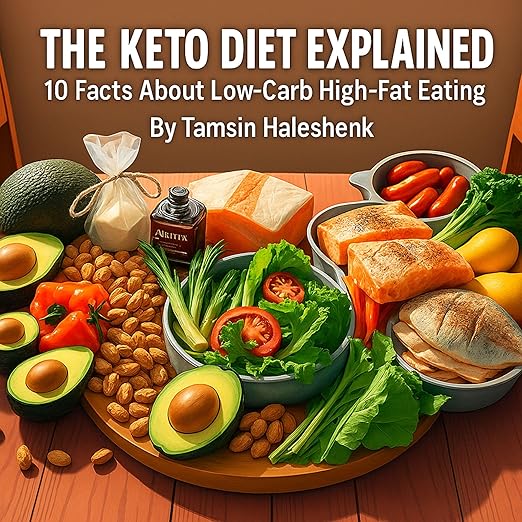
Quick Take
- Narration: Michael Bridges reads with a measured, slightly formal authority that suits the Zentara UK Medical Facts series format, informative without clinical distance, and consistently even between benefits and contraindications.
- Themes: Ketosis as metabolic shift, the difference between clean and dirty keto, blood sugar and neurological health applications
- Mood: Calm and analytical, closer to a well-researched science explainer than a diet program
- Verdict: A solid science-first orientation to keto mechanisms for listeners who want to understand the biology before deciding whether to try the diet.
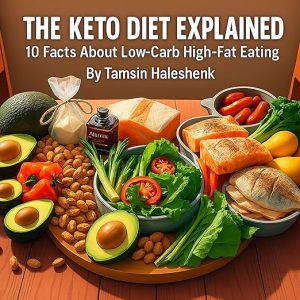
I picked up this audiobook on a Thursday afternoon when I was trying to put together a response to a reader who wanted to know whether the keto content she was finding online was actually accurate. There is a lot of keto material in circulation, and the ratio of science to enthusiasm is not always reassuring. What I found here was something more careful than I expected from a sub-four-hour guide in a numbered series: a measured, structurally organized explainer that prioritizes metabolic understanding over lifestyle promotion.
Tamsin Haleshenk has written what the subtitle promises and the full synopsis delivers: an explanation of keto rather than an instruction manual for it. This distinction matters. The book does not tell you what to eat on Monday or how to shop for a keto kitchen. What it does instead is walk through the biochemical logic of ketosis with enough precision to help a reader evaluate what they are being told elsewhere.
Ten Essential Facts as Structural Architecture
The book is organized around ten core facts about the ketogenic diet, which is an unusual choice that turns out to work well in audio. Rather than chapter-by-chapter narrative, the listener moves through discrete, numbered claims: what ketosis actually is, how the liver produces ketone bodies, what macronutrient ratios drive and sustain ketosis, why the early phase produces keto flu symptoms, how electrolyte management addresses those symptoms. Each section is self-contained enough that the audiobook holds together even if your attention drifts between stops.
Michael Bridges reads with a measured, slightly formal authority that suits the series format. The Zentara UK Medical Facts series is clearly designed for the kind of listener who wants science explained accessibly rather than sold to them. Bridges never pushes toward promotion. When Haleshenk presents potential benefits for blood sugar stabilization, insulin sensitivity, or neurological support, the narration maintains the same even tone it uses for the caveats and contraindications that follow. This restraint is not common in health content narration.
The Dirty Keto Distinction
One of the more valuable contributions the book makes is its treatment of what Haleshenk calls dirty keto, the version of the diet built on processed meats, seed oils, and packaged low-carb products that technically achieve ketosis while undermining most of the health rationale for pursuing it. This is a real problem in the keto community that most entry-level guides either ignore or minimize. Haleshenk addresses it directly and without condescension, explaining what nutrient-dense fat sources look like versus their industrially processed alternatives and why the distinction matters for long-term outcomes.
This section also contains the book’s most useful reframe: that keto is a metabolic tool, and its success depends on how thoughtfully it is used. That framing avoids both the evangelical enthusiasm and the categorical skepticism that dominate popular coverage of the diet, and it is more honest about the research landscape than most competing guides at this runtime.
Medical Considerations and Who This Guide Excludes
Haleshenk is careful, though not exhaustive, about contraindications. She flags that keto is not appropriate for everyone and specifically identifies diabetes management, thyroid conditions, and other underlying metabolic disorders as situations requiring professional guidance before carbohydrate restriction. This is the correct and responsible position. The caveat is present without being so hedged as to undermine the book’s usefulness for healthy adults making informed dietary choices.
At 3 hours and 33 minutes, this is not the comprehensive clinical reference that a reader with a specific medical condition would need. It is an orientation, correctly sized as one. The series format as part ten of Medical Facts by Zentara UK suggests these books are designed to function as entry points that lead readers toward deeper research rather than final authorities on complex topics.
Who Should Listen, Who Should Skip
This audiobook is well-suited to listeners who have heard about keto from multiple directions and want a calm, scientific framework for evaluating what they are being told. It also works well as a precursor to longer keto books by authors like Jason Fung or Ben Azadi, providing the metabolic vocabulary that makes those denser texts easier to follow. Skip it if you want a meal plan, a shopping list, or a practical implementation program. The book is explicitly about understanding, not execution, and it stays faithful to that purpose throughout.
Frequently Asked Questions
Is this book part of a series, and do I need to listen to other entries first?
The Keto Diet Explained is entry ten in the Medical Facts by Zentara UK series, but each volume is a standalone explainer on a discrete topic. No prior listening in the series is required.
Does the book address keto for specific health conditions like type 2 diabetes or epilepsy?
The book notes that keto has been used in clinical contexts for neurological conditions and discusses its relevance to blood sugar and insulin sensitivity. It also specifically flags that individuals with diabetes, thyroid issues, or other metabolic conditions should seek professional medical guidance before starting. It is not a clinical protocol for managing specific diseases.
How does this compare to longer keto books like Jason Fung’s The Obesity Code?
The Keto Diet Explained is a focused science orientation at just over three hours. Fung’s Obesity Code is a much longer clinical argument about insulin resistance with extensive research citation and case study material. This book gives you the metabolic vocabulary to follow Fung’s argument; it does not replace it for readers who want depth.
Does Michael Bridges’s narration handle both the benefits and the contraindications with the same register?
Yes, which is one of the narration’s strongest qualities. Bridges reads the potential health benefits of keto with the same measured tone he applies to the medical cautions and contraindications, which prevents the audiobook from sliding into promotional territory while still presenting the science clearly.