Quick Take
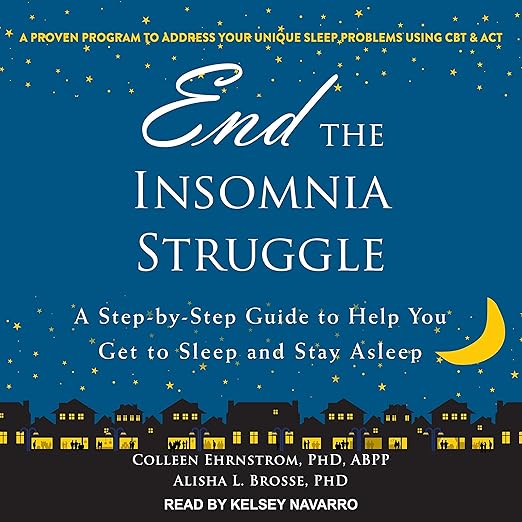
- Narration: Kelsey Navarro is well-matched to the clinical program structure, her measured, unhurried delivery suits the CBT-I content and does not introduce the kind of performative energy that would feel incongruous in a book about sleep.
- Themes: Cognitive behavioral therapy for insomnia, sleep restriction, acceptance and commitment therapy
- Mood: Clinical and methodical, quietly reassuring
- Verdict: One of the most substantive audiobook treatments of insomnia available, with real CBT-I protocols that produce documented results, the PDF companion is essential for the program worksheets.
I went through a period of sleep maintenance insomnia a few years ago, the particular variety where falling asleep is fine but staying asleep past four in the morning becomes impossible. I know firsthand that the experience is cumulative and demoralizing in ways that are hard to explain to people who sleep normally. The books I tried at the time ranged from basic sleep hygiene checklists to slightly mystical prescriptions involving lavender and bedroom temperature. None of them engaged with the behavioral patterns that were actually perpetuating the problem.
End the Insomnia Struggle is a different category of audiobook entirely. Colleen Ehrnstrom holds a PhD and board certification in behavioral health, and her co-author Alisha Brosse brings the same clinical background. This is not a wellness guide with sleep suggestions. It is a structured behavioral program, principally Cognitive Behavioral Therapy for Insomnia (CBT-I), now recognized as the first-line treatment for chronic insomnia by major sleep medicine organizations, combined with elements from Acceptance and Commitment Therapy (ACT). The distinction matters enormously.
Why CBT-I Works When Sleep Hygiene Does Not
The book explains the mechanism clearly: chronic insomnia is largely a learned disorder, maintained by compensatory behaviors that feel logical but perpetuate the problem. Staying in bed longer to catch up on lost sleep, napping to manage daytime fatigue, going to bed earlier to increase sleep opportunity, all of these intuitively sensible responses actually worsen the underlying condition by disrupting sleep drive and reinforcing the association between bed and wakefulness. CBT-I works by systematically dismantling these patterns through sleep restriction, stimulus control, and cognitive restructuring.
Navarro reads the clinical sections with appropriate gravity, this is not light material, and CBT-I involves a period of intentional sleep deprivation before the consolidation phase produces improvement. For listeners who have suffered for years, the idea that recovery requires initially getting less sleep is counterintuitive enough that Ehrnstrom spends considerable time on the rationale. Navarro honors that explanatory patience in her delivery.
The PDF Companion Is Load-Bearing
This is one of those cases where the physical companion materials are not optional extras but core components of the program. The audiobook comes with a PDF available in your Audible Library, and it contains the sleep diaries, worksheets, and tracking tools that make the CBT-I protocol functional. You cannot run this program without tracking your sleep efficiency, and you cannot track your sleep efficiency without the forms. Listening without downloading the PDF first would be like attending a cooking class without the recipe sheets, the instruction is valuable but the application requires the handout.
The ACT integration is handled with similar rigor. Where CBT-I addresses the behavioral perpetuators of insomnia, ACT addresses the psychological struggle around sleeplessness, the catastrophizing, the performance anxiety about sleep, the identity that can form around being someone who does not sleep. The combination allows the program to address both the physiological patterns and the psychological relationship with sleep simultaneously.
Real Outcomes in the Reviews
The reviewer outcomes reported for this book are unusually specific and trackable, which itself tells you something about the program’s nature. One listener reports increasing sleep efficiency from 44% to 92% over eight weeks after fourteen years of insomnia. Another describes long-standing sleep maintenance insomnia resolved after two months. These are not testimonials about feeling calmer or having more positive sleep habits, they are measurable improvements in specific clinical metrics. CBT-I is one of the few behavioral health interventions with this level of documented, replicable outcome data, and the book’s program reflects that heritage.
Who This Program Is For
This audiobook is excellent for anyone with persistent insomnia who has already tried standard sleep hygiene advice without lasting relief. It is particularly suited to listeners with the variety of insomnia characterized by hyperarousal, lying awake with an active mind, waking early and being unable to return to sleep, monitoring sleep anxiously. If your insomnia has been present for more than three months and disrupts daily function, this program was designed for exactly your situation. Skip it if you are looking for a general sleep optimization guide or sleep content for occasional restless nights, this is a clinical intervention protocol, not a wellness read.
Frequently Asked Questions
Is the PDF companion absolutely necessary, or can the program be followed from the audio alone?
The PDF is essential. CBT-I requires sleep diary tracking to calculate sleep efficiency and adjust sleep restriction parameters. The audio explains the protocol, but the worksheets in the PDF are the tools that make it functional as a personal program.
How long before the program produces results, and is the initial sleep restriction phase genuinely difficult?
Ehrnstrom is honest about the timeline: sleep restriction typically causes increased daytime sleepiness for one to two weeks before sleep consolidation begins to improve. Reviewers confirm this, outcomes build progressively over six to eight weeks. The initial phase requires commitment.
Does this book address the anxiety and catastrophizing about sleep specifically, or mainly the behavioral patterns?
Both. The CBT-I component addresses behavioral perpetuators, while the ACT component specifically targets the psychological struggle around sleeplessness, including catastrophic thinking about missed sleep and the performance anxiety that develops around bedtime. The integration of both frameworks is one of the book’s key strengths.
Is this suitable for someone whose insomnia is driven by a specific cause like shift work, menopause, or medication side effects?
Ehrnstrom addresses the program’s adaptability to different insomnia profiles, including those with specific contributing factors. The book acknowledges that underlying causes vary but argues the behavioral and psychological perpetuators are similar across populations. For insomnia linked to medical conditions, working alongside a healthcare provider while using this program is recommended.