In Brief
- Performance: Eileen Day McKusick narrates her own material with the pacing of someone who has taught this content live to thousands of students, not simply read it aloud.
- What it covers: Electrical view of health, biofield work, mindfulness and lifestyle practices
- Feel: Instructional, earnest, workshop-paced
- Our call: An honest, teacher-led alternative-medicine audiobook that clearly signals it sits outside mainstream consensus, best for listeners already curious about biofield and energy-based frameworks.
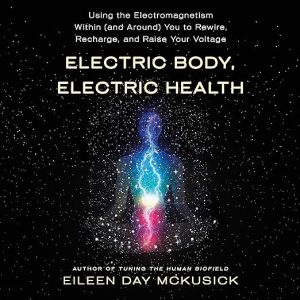
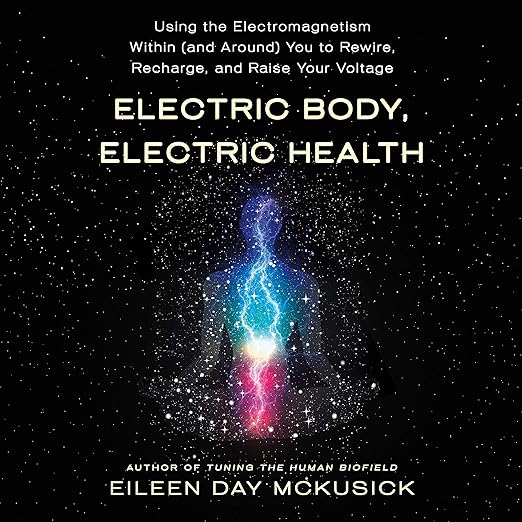
Everything is electric, and Eileen Day McKusick has built an entire audiobook around what happens when you take that observation seriously rather than treating it as a slogan. Electric Body, Electric Health is McKusick's follow-up to Tuning the Human Biofield, and she narrates it herself across nearly twelve hours, walking listeners through what she calls thinking electrically: awareness practices, breathing techniques, perspective shifts, and lifestyle changes aimed at clearing what she describes as static and resistance from the body's electrical systems. This is alternative and complementary medicine territory, produced by Macmillan Audio for St. Martin's Essentials, and it deserves an honest hearing on its own terms.
McKusick's Framework Offers a Parallel Lens to Medicine
McKusick's authority here comes from having originated the framework rather than reported on someone else's, and that shows in how she narrates. Reviewer Anna describes deep-diving into McKusick's full body of work, having already finished Tuning the Human Biofield, watching her YouTube channel, and even purchasing her tuning forks, the kind of layered, product-spanning devotion that suggests a genuine teaching relationship rather than a one-off audiobook purchase. Reviewer Rebecca L Bisenius, describing herself as a voracious reader, calls it one of the best books she has ever encountered and says it changed her life, an unusually strong claim worth noting even from a single data point.
Reviewer jgrunvald, who identifies as a physical therapist and movement specialist, offers a notably measured and useful assessment: the book does not specifically set out to challenge current medical models, but instead presents what they call a sound case for the electric body within a broader electric universe framework. That distinction matters. This is not positioned as a direct rebuttal to conventional medicine so much as a parallel lens laid alongside it, and listeners should understand the difference before deciding how much weight to give the claims inside.
Static and Faulty Wiring as a Body Metaphor
McKusick's central metaphor, that the body accumulates static, noise, and resistance the way faulty wiring does, gives the whole book a consistent vocabulary for otherwise abstract emotional and physical complaints. Framing chronic tension or fatigue as an electrical problem rather than a purely psychological or purely physical one is the real reframing exercise here, and whether or not a listener accepts electricity as a literal mechanism, the metaphor itself does useful work in giving vague complaints a more specific, actionable shape.
McKusick Narrates Like She Is Running a Workshop
Self-narration is close to the whole appeal here. McKusick has taught thousands of students this material directly, according to the synopsis, and that teaching background is audible in how the practices are laid out, in sequence, with the kind of pacing a live workshop would use rather than a text simply read aloud. A hired narrator with no background in biofield work would have to fake an authority McKusick can simply supply.
The practices themselves are genuinely varied rather than one repeated technique dressed up five different ways: awareness practices, breathing work, deliberate perspective shifts, and specific lifestyle adjustments all get their own treatment, giving listeners several different entry points depending on what actually resonates. That variety, combined with a major audio publisher's backing rather than a self-published release, signals a level of production investment that this kind of alternative-health content does not always receive.
A Macmillan Audio production released under the St. Martin's Essentials imprint signals a real publishing investment behind this title rather than a self-published wellness pamphlet, the same infrastructure behind a wide range of mainstream nonfiction. That matters specifically for alternative-medicine content, where production quality and editorial vetting vary enormously across the category; this is a professionally produced release from an established nonfiction imprint, whatever a listener ultimately makes of the underlying claims.
Tuning Forks and a YouTube Channel Complete It
This material sits outside mainstream medical consensus, and that needs to be said plainly rather than danced around. McKusick's framework treats the body's electrical properties as a primary lever for health in a way conventional medicine does not currently support with the same evidentiary standard, and listeners should approach the specific health claims as a complementary lens rather than a replacement for medical care, a distinction jgrunvald's own review implicitly makes by noting the book does not aim to directly challenge existing models.
Anna's review makes clear that Tuning the Human Biofield came first and that a real audience has followed McKusick from one book to the next; listeners entirely new to her work may find some concepts assume familiarity with terminology her earlier book already established. It is not strictly necessary to start there, but doing so would likely smooth the on-ramp into this book's more advanced practices.
Reviewer Anna's mention of purchasing McKusick's tuning forks directly is a reminder that this book sits inside a broader ecosystem of physical products and practices, sound therapy tools, workshops, a YouTube channel, rather than existing as a single self-contained text. Listeners who want the full experience McKusick's most devoted followers describe should understand the audiobook is an entry point into that wider practice, not necessarily a complete substitute for it.
Twelve Hours of McKusick's Own Teaching Authority
This suits listeners already curious about biofield work, energy healing, or alternative complementary medicine, and especially suits existing McKusick readers working through her catalog in sequence. Anyone drawn to practical, teachable wellness frameworks, rather than purely clinical health information, will find the practices here genuinely actionable rather than abstract.
Listeners recovering from burnout or chronic stress who have already tried more conventional approaches without full relief may find McKusick's alternative framing offers a genuinely fresh angle worth exploring, especially paired with her stated background teaching this material to thousands of in-person students.
Skip this one if strictly evidence-based, clinically validated health content is the requirement, since this book operates from a framework current medical consensus does not endorse. Skip it too if starting fresh feels daunting without the earlier book; consider sampling Tuning the Human Biofield first. For listeners already open to the premise, though, McKusick's own voice carries real teaching authority across all twelve hours.
Questions Listeners Ask
Do I need to have read Tuning the Human Biofield before this audiobook?
Not strictly, but it helps. One reviewer describes working through McKusick's catalog in order, and some terminology in this book builds on concepts her earlier title introduces first.
Is Electric Body, Electric Health grounded in mainstream medical science?
No, and the audiobook does not claim to be. One reviewer, a physical therapist, describes it as presenting a case for an electrical view of the body alongside current medical models rather than replacing them, so treat it as complementary rather than clinical.
Who narrates the Electric Body, Electric Health audiobook?
Author Eileen Day McKusick narrates it herself, drawing on her background teaching this material to thousands of students in person.
What kind of practices does this audiobook actually teach?
It covers awareness practices, breathing techniques, perspective shifts, and lifestyle changes, all aimed at what McKusick calls clearing static and resistance from the body's electrical systems.