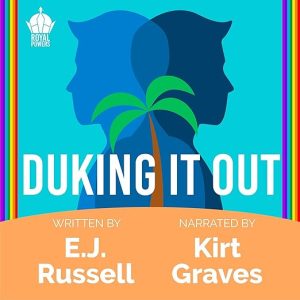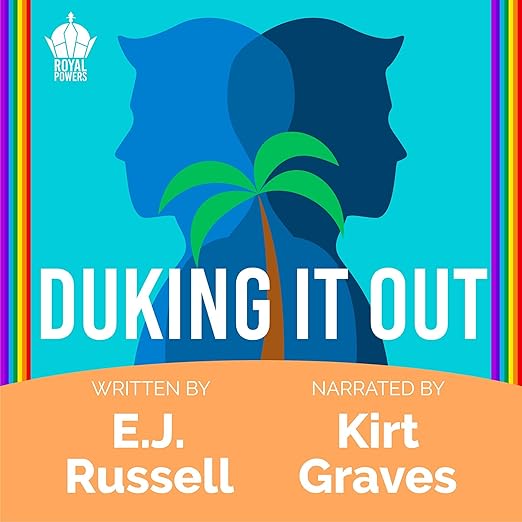
I came to Duking It Out on a afternoon when I specifically did not want anything that was going to make me work for it. What I found was something more thoughtfully constructed than the delightfully ridiculous premise suggests: two rival royal dukes, each with problematic superpowers, shipwrecked together on a deserted island with only one bed. As a set of genre ingredients, this is so precisely calibrated that it almost feels like it was engineered in a lab, and E.J. Russell deploys it with obvious pleasure in the formula.
Sander, Duke of Roses from South Abarra, has been effectively exiled from court since an incident at age seventeen when his powers, never fully described but clearly significant, got away from him. He lives quietly, grows things, and doesn't particularly need other people. Tarik, Duke of Arles from North Abarra, is bombarded constantly by every electronic transmission in range, which makes sustained social interaction something between an inconvenience and a torment. They meet badly, circumstances deteriorate rapidly, and they find themselves on a boat they didn't intend to be on, stranded somewhere neither of them knows.
Our Take on Duking It Out
Russell's best decision here is making the conflict internal to the characters rather than externally imposed. The plot mechanics, the political factions, the dark conspiracies, the centuries of border tradition, are real obstacles, but the actual drama is Sander discovering that his nickname is not his identity, and Tarik discovering that the armor he's built around himself has costs. A reviewer who described the conflict as "woven into the characters and dealt with in believable ways" put their finger on what the book does right: the emotional logic tracks even when the situation is thoroughly implausible.
The worldbuilding is sketched rather than elaborated. The alternate Pyrenean countries of South and North Abarra exist at the same technology level as our world but with superpowers integrated into aristocratic politics, and Russell establishes the basic parameters efficiently. One reviewer wanted more development of this world and felt the book's shorter length worked against it. I think that is a reasonable response, though the tightness of the format is also what keeps the pacing so clean. At just over forty-six thousand words, a novella rather than a full novel, the story doesn't have room to linger, and it mostly fills its runtime with the things that matter: the two leads orbiting each other and trying to pretend they aren't.
The Strengths
Kirt Graves is an experienced MM romance narrator with a reliable sense of character differentiation. Sander and Tarik need to feel like distinct people from the first scene, they have different speech patterns, different social comfort levels, different ways of processing difficulty, and Graves maintains those distinctions consistently across the runtime. The gossipy seagulls, which are a real feature of this book and not a metaphor I am embroidering upon, are handled with exactly the right level of comedy. At five and a half hours, the audiobook is a complete afternoon's commitment with room to breathe.
What to Watch For in Duking It Out
The one genuinely critical review among the group called this a "loosely organized bit of mystical nonsense" with minimal character development and a plot needing more exposition. I would not put it that harshly, but the critique has some basis: the plot mechanics involving the attack on Tarik and how they both ended up on that boat are not explained with any great precision, and some readers will find that frustrating. The worldbuilding, as noted, does not go deep. This is a book that works on feeling and character chemistry rather than on the satisfaction of a tightly plotted mystery, and listeners should go in knowing that.
This is the first book in the Royal Powers series, with subsequent installments by different authors. Each book stands alone, though reading in sequence provides more world context.
Who Should Listen to Duking It Out
Ideal for MM romance listeners who enjoy the enemies-to-lovers setup and are happy with a lighter, comedy-adjacent tone rather than heavy emotional drama. The superhero element is integrated into the character dynamics rather than being the story's primary focus, which makes this accessible to romance readers without strong genre fiction backgrounds. Also a good short listen for fans of fake-relationship and forced-proximity tropes in a slightly fantastical setting. Skip it if you need thorough worldbuilding, airtight plot mechanics, or a story that takes its stakes seriously rather than with affectionate humor.