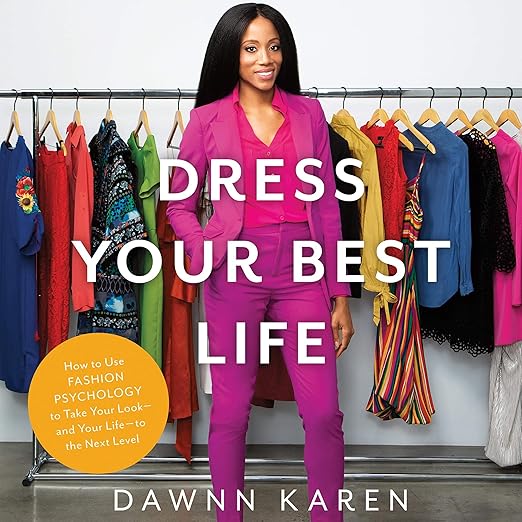
Dawnn Karen coined the term "fashion psychology" and spent years building it into a recognizable field before she wrote this book. That professional history matters for how to evaluate the audiobook's claims. Karen is not proposing a self-help framework invented for the book's commercial purposes but documenting a body of research and practice she developed over the course of her career - research into the relationship between what people wear and how they feel, between attire and attitude, between the specific choices made in a closet each morning and the way those choices ripple through a person's day. At 10 hours and 36 minutes, narrated by Jeanette Illidge, this is a substantial audiobook for a subject that is often treated as a shorter, lighter read. The length reflects Karen's ambition to make fashion psychology a rigorous framework rather than a magazine feature.
The central argument is more specific than most style guides manage: Karen's question is not "what flatters you" but "what serves you." Are your clothing choices hurting or helping you achieve your life goals? That reframing shifts the entire axis of the book away from the aesthetics-focused advice that dominates mainstream fashion content and toward a more psychologically grounded inquiry into why we wear what we wear and what that tells us about what we actually want and believe about ourselves. One reviewer, a wardrobe stylist with a psychology degree who describes herself as obsessed with the subject of enclothed cognition, calls this her favorite book on the topic - and her professional credentials give that endorsement a weight that casual reader praise often doesn't carry.
Illidge Reads With Warmth, Without Condescension
Illidge's narration is the right choice for this material. Karen writes in a register that is simultaneously encouraging and demanding - she wants readers to examine their wardrobes but also their assumptions about who they are and who they want to be. Illidge reads that register accurately: there is warmth in the delivery without false cheerfulness, and there is authority without the condescension that fashion advice sometimes carries when it addresses people who haven't already figured out their personal style. The audiobook feels like the version of this material that works, the version where the ideas have been tested in conversation and refined.
The sections on color psychology and on matching clothing choices to emotional states are among the most practically specific in the audiobook. Karen doesn't simply assert that color affects mood - she explains the mechanisms and gives listeners the tools to apply that understanding to their own wardrobes. Similarly, the material on shopping psychology - how to become a smarter shopper, how to evaluate whether a potential purchase serves your goals or merely your impulses - is more concrete than comparable chapters in most style guides. One reviewer describes the book as helping them understand not just how to dress but how to understand themselves, which is the accurate description of what Karen is actually doing.
Reflective Prompts Feel Like Live Instruction
The audiobook format serves this material in a way that the print version approximates but doesn't fully replicate, because Illidge's narration gives the practical exercises and reflective prompts a quality of live instruction. Karen asks listeners to think about why they picked what they wore today, what they were communicating, what they were protecting or projecting. Those questions in audio have an immediacy - they arrive in someone's voice, at someone's pace - that creates a different relationship to the reflective material than reading the same questions from a page.
The audiobook also works well for the specific context in which people often engage with style and self-presentation content: getting dressed, or preparing for a presentation, or thinking through a professional transition. Listening while doing related tasks is not a workaround for this audiobook; it is, in some ways, the ideal context. Karen's ideas about how clothing functions as communication land differently when you're in front of your closet than when you're reading about them at a desk.
Ten-Plus Hours Suit Listeners at an Inflection Point
The audiobook's length - over ten hours - reflects the breadth of Karen's framework, but it means that listeners who wanted a quick style guide will find this considerably more demanding than expected. This is not a book about which colors work for which skin tones or which silhouettes suit which body types. Those questions are not entirely absent, but they are subordinate to the psychological and identity-based framework that Karen is really building. Listeners who arrive expecting conventional makeover advice and leave because they didn't get it will have misread the book's actual ambition.
The framework is also most immediately useful to listeners who are at an inflection point of some kind - a career change, a major life transition, a period of reassessing who they are and what they want. Listeners in stable, established lives who are happy with their wardrobes and self-presentation will find some of the material less urgently relevant, though the color and shopping psychology sections retain practical value regardless of life stage. The fullest version of what Karen offers requires a listener who is genuinely open to the question of whether their clothing choices are aligned with their actual goals - and not everyone is in that place when they pick up this book.
Stylists and Career-Changers Get the Most Value
People at career transitions, life changes, or identity reassessments who want to think more deliberately about how they present themselves will find Karen's framework genuinely useful rather than merely motivational. Wardrobe stylists, image consultants, and fashion professionals who want to understand the psychological mechanisms underlying their practice will find substantive material here. Psychology and behavioral science readers curious about enclothed cognition - the documented effect of clothing on the wearer's own behavior and self-perception - will find Karen's accessible treatment of that research a solid entry point.
Listeners looking for a quick read about which jeans to buy or how to declutter a closet should look at shorter, more conventionally prescriptive style guides. Those who are content with their existing relationship to their wardrobe and aren't particularly interested in examining its roots will get less from the audiobook's reflective depth than listeners who arrive with genuine questions about their own style story. The audiobook earns its ten-plus hours, but only for listeners who want to go where it is actually going.
Frequently Asked Questions
Is Dress Your Best Life audiobook more of a self-help book or an actual style guide?
It is genuinely both, but the self-help dimension is more sophisticated than the marketing framing might suggest. Karen's fashion psychology framework asks readers to examine what their clothing choices reveal about their goals, self-perception, and assumptions - that is real psychology applied to real style decisions. Listeners wanting purely prescriptive style advice (which silhouettes, which colors, which pieces to buy) will find the psychological framework takes up more space than expected.
How does Jeanette Illidge's narration work for this fashion psychology audiobook over 10-plus hours?
Well. Illidge reads Karen's encouraging-but-demanding material with warmth and authority - the kind of narration that makes you feel the book wants to be useful to you personally rather than inspiring in a generic sense. She handles both the practical sections and the more reflective prompts with the same engaged delivery, which keeps a long audiobook from losing energy in the middle sections.
Does this audiobook cover the science behind fashion psychology or is it mostly practical advice?
Both, in a ratio that favors practice. Karen draws on enclothed cognition research and behavioral science to ground her recommendations, but she translates that research into applicable frameworks rather than presenting academic studies. Listeners who want more depth on the science will benefit from seeking out academic sources on enclothed cognition; the audiobook's scientific references are accessible rather than exhaustive.
Is the Dress Your Best Life audiobook suitable for people who don't have a strong interest in fashion?
Potentially more suitable than people without a fashion interest might expect. Karen's central question - are your clothing choices serving your goals? - is useful precisely for people who haven't thought deliberately about what they wear, because the answer for people in that situation is almost always that their choices are unexamined rather than intentional. The audiobook is most useful for listeners who are willing to examine something they've treated as automatic.