In Brief
- Narration: Dave Cruse is the credited reader on a book that alternates between a shifting dreamscape and a high school corridor, which is two registers rather than one.
- Themes: Dreams as a divine instrument, a chosen guardian, a rival at school, two worlds escalating together
- Mood: Earnest, imaginative and faith-shaped, with genuine peril on both sides of the boundary
- Verdict: A well-built opening volume of Christian middle-grade fantasy, sitting under a shelf tag with no connection to anything inside it.
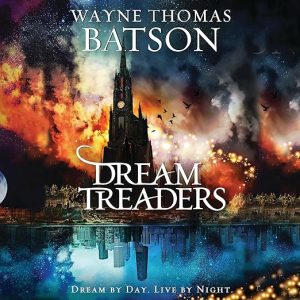
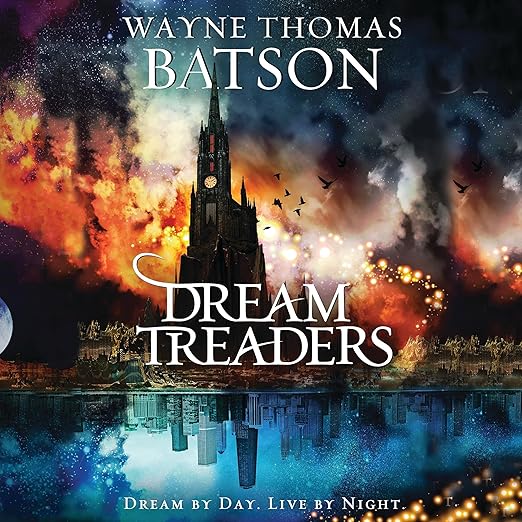
A trilogy about dreams sounds like a license for anything at all to happen, which is precisely the trap Wayne Thomas Batson had to write his way out of. Dreamtreaders sets rules instead: three people per generation can enter dreams deliberately, the barrier between sleeping and waking can tear, and if it fails altogether the waking world goes down with it. Dave Cruse reads the audiobook, eight hours and twenty-two minutes of it, on a novel that runs two plots simultaneously.
Rules and Structure Make Both Worlds Escalate
Nine years before this recording existed, a five-star account from July 2014 identified what makes the premise work: dreams are an original and largely unexplored subject, and Batson was already known for straight fantasy rather than for anything like this. That reader also admits to hesitating over other people's reviews before starting, and to finding the hesitation unnecessary. A useful admission, because Dreamtreaders reads oddly in summary and considerably better in practice.
Structure is where Batson solved the real problem, and it is the genuinely interesting part. Archer Keaton is fourteen, he treads dreams to hold back the Nightmare Lord, and he still has to turn up at school. Most books in this shape let one world become the real story while the other becomes an obligation. Here the two escalate together: as the dreams grow more dangerous, waking life deteriorates in step, and the new arrival at Dresden High School who acquires a rock star's following rather too quickly turns out to matter in both places.
Genesis, Matthew, and Revelation Frame This Fantasy
The biblical frame is stated at the front rather than smuggled in, and a buyer should know that before pressing play. The description opens on Jacob's dream of the heavenly stairway in Genesis, angels visiting Joseph in Matthew, and the Apostle John's waking dream that produced Revelation. Batson's premise is that dreams carry real weight inside a divine plan, and his three dreamtreaders are chosen rather than self-appointed. This is Christian fantasy and never pretends to be anything else.
Dream Geography That Rewards Being Heard
Masterpiece of woven dreams is the phrase a May 2014 five-star response reaches for, and then it does something more useful: it lays out the two corners. In one, Archer treads the dreamscape and knows its geography better than most of us know the backs of our own hands. In the other he is an ordinary teenager managing acceptance, morality and friendship, the same problems every teenager carries. The second corner is the harder one, and that is the whole design of the book.
Eight hours and change is well judged for this readership, substantial enough to register as a real fantasy without turning into a project. The dream sequences are also the kind of material that gains from being heard rather than looked at, because a landscape that keeps rearranging itself goes down more easily in a voice than on a page, where the eye keeps hunting for the join between one description and the next.
Labeling does its job on this listing, which is far from guaranteed. This is book one of The Dreamtreaders Series, labeled as such, and the description says trilogy outright rather than leaving you to infer it. Anybody starting a middle-grade fantasy with a fourteen-year-old lead wants to know how long the road runs before setting off, and this page actually tells them.
Eight Years Between the Reviews and the Recording
One grade short of the top, filed in November 2015, doubles as the clearest plot summary anywhere on the page, which says something about how the book lands. It sets the stakes out precisely: three people chosen to fight evil inside the Dream World, a boundary that has to hold, and the end of everything for all of us if it collapses. Its reservation reads less as a complaint than as a temperature, four stars from somebody who finished it and went looking for more.
Not one entry in the written record is younger than 2015. The recording arrived in June 2023, eight years after the newest of them, which is a clean statement of what the record covers: the story itself, tested thoroughly by readers who came to it when it was new and who had the rest of the shelf fresh in mind for comparison.
Part of the description was written for booksellers rather than for buyers. A Features and Benefits block lists the author's previous trilogy along with its sales figure, observes that epic fantasy performs well in movies and television, and states that this book brings epic fantasy with a biblical base to middle grade readers. That last line matters, because the listing files the title under holidays and celebrations, a tag with no relationship to anything inside the book.
Faith-Framed Fantasy Built for Older Middle Graders
Middle grade readers who want fantasy with a faith framework are the exact audience, and one October 2014 response describes arriving as a newcomer to the author and staying. That reader had not read Batson before, approached the dream world from an explicitly Christian reading, and describes Archer as a guardian who finds and repairs tears in the dream realm, which is a sharper account of the job than the publisher copy manages. They also write the role as two separate words throughout, which is what tends to happen to an invented compound.
Families listening together get a second use out of it. The stakes are large, the violence is not the point, the protagonist is fourteen rather than eight, and the questions the book raises about dreams and purpose survive a conversation in the car afterward. Readers who came up on the author's earlier fantasy will recognize the machinery here too, though this is a different world running on different rules.
Younger listeners are the wrong fit whatever the children's shelf implies, because the setting is a high school, the protagonist is fourteen, and the peril is real enough to register. Pass as well if the biblical framing is unwelcome, since it is structural rather than decorative and removing it would leave no book standing. Families who want a fantasy that takes both of its worlds seriously, and treats a teenager's ordinary troubles as the harder half, have found the right first volume.
Frequently Asked Questions
Is the Dreamtreaders audiobook the first in a series?
Yes. The page labels it book one of The Dreamtreaders Series and the description calls the whole thing a trilogy, so you know the commitment before starting. Whether the rest of the trilogy has been recorded is something the page never says, so check before committing to the first one.
Does the audiobook work for a listener who does not share the faith?
The mechanics work regardless: a chosen guardian, a villain to hold back, a school rival, and two worlds tightening around one another. The faith framing is structural rather than decorative, though, opening on three dreams drawn from scripture, so anyone hoping it stays in the background will be disappointed.