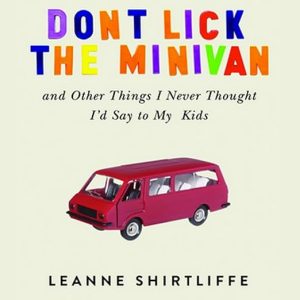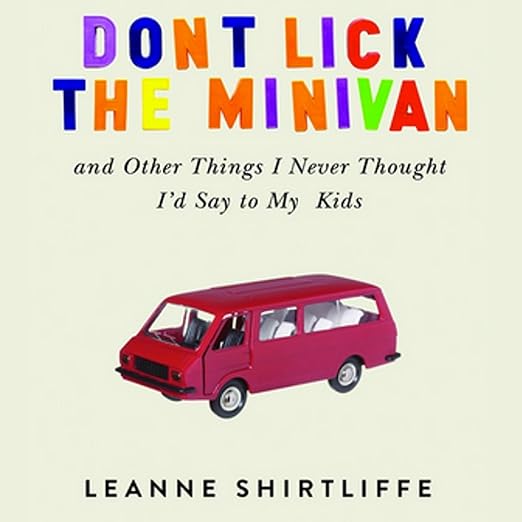
A Coca-Cola deliveryman helped keep Leanne Shirtliffe's newborn twins alive during their first year, alongside several waitresses and, memorably, a bra factory, and that specific brand of chaos is the whole appeal of this audiobook. Don't Lick the Minivan, narrated by Trudie Kessler across seven hours and seventeen minutes, opens with Shirtliffe pregnant with twins in Bangkok, a city she describes navigating through deep-fried bug cuisine and nurses who wrap newborn bassinets in plastic.
The book then follows the family back to the isolation of North American suburbia, where the specific incidents pile up: a birthday party where secondhand face paint gave neighborhood kids skin rashes, twins caught carving their names into the minivan's paint with rocks, a full funeral officiated for a doll called “Stripper Barbie,” and what the synopsis simply calls “the horror of glitter.”
Bangkok Culture Shock Raises the Comedic Stakes
Reviewer Clay Morgan sets the tone precisely: “Don't Lick the Minivan features adventures in Bangkok, missing newborns, and a breast milk spray halftime show.” He also flags directly that despite how absurd those details sound, this is nonfiction, not embellished comic invention. That distinction matters; the humor lands harder because these events actually happened to a real family, not because a comedy writer invented them for effect.
Reviewer Arnold Gill draws an explicit comparison to Erma Bombeck, and says this book “updates that level of everyday to the 21st Century, and does so with humour and style.” That is a genuinely useful comparison point for any listener trying to gauge whether this book is for them: if wry, self-deprecating writing about the absurdity of raising small children appeals to you in Bombeck's work, Shirtliffe is working the same territory with a more contemporary, more international backdrop.
The title itself, Don't Lick the Minivan, captures the book's whole comic sensibility in a handful of words: a genuinely bizarre, specific parenting moment stated completely matter-of-factly, no exclamation point needed to signal that something absurd just happened. That restraint in the humor, letting the facts of the anecdote do the comedic work rather than over-narrating the joke, is a skill that separates genuinely funny memoir writing from merely well-intentioned attempts at it.
The specific mix of geography also does real work here: starting the memoir in Bangkok rather than in familiar suburban territory means the earliest, most disorienting stretch of new parenthood collides with genuine culture shock, which raises the comedic stakes considerably before the story ever gets to the more universally recognizable chaos of raising twins back home.
Kessler Controls the Timing of Every Joke
Comic memoir depends enormously on timing, and Kessler's narration gets to control the pacing of jokes that, on the page, rely entirely on a reader's own internal rhythm. A funeral for “Stripper Barbie” or a matter-of-fact aside about carved minivan paint works as comedy specifically because of how it is delivered, deadpan versus exaggerated, rushed versus lingering, and audio removes the guesswork a silent reader has to do to land that timing themselves.
The book's structure, discrete, punchy anecdotes rather than one sustained narrative arc, also suits audio particularly well for the exact audience Shirtliffe is writing for: exhausted parents grabbing listening time in fragments, during a commute, a feeding, a walk with a stroller, rather than settling in for one uninterrupted sitting. Short, self-contained comic chapters are far more forgiving of a listen broken into ten-minute pieces than a tightly plotted narrative would be.
This book also sits inside a genuinely useful genre for new parents specifically: comedic parenting memoirs that normalize the exhaustion and mild chaos of early childhood rather than performing effortless competence. That genre has grown considerably since Erma Bombeck's era, and Shirtliffe's specific contribution, an international backdrop, unusually vivid concrete anecdotes, a willingness to admit real struggle including postpartum depression, gives it a sharper edge than a purely nostalgic take on the same material would have.
Kessler's delivery also has to navigate real tonal whiplash, from slapstick physical comedy about glitter and face paint to the more serious postpartum depression material, without either register undercutting the other, and doing that well across seven-plus hours is a genuine narration achievement worth crediting directly.
Subtle Humor Divides Even the Five-Star Readers
One reviewer's word for the humor here was subtle, and that assessment is fair. Kindle CustomerKathleen Olson's three-star review calls the book funny “at times” but describes the comedic theme itself as subtle, “maybe too subtle,” a genuinely useful counterpoint to Clay Morgan's much more enthusiastic five-star reaction. Listeners who prefer their parenting comedy broad and constant throughout, rather than embedded in more restrained, observational writing, should know reactions to the humor's intensity vary even among reviewers who otherwise liked the book.
This is also squarely a memoir about the exhausting, occasionally absurd mechanics of surviving early parenthood rather than a book offering structured parenting advice or developmental guidance. The synopsis is explicit that Shirtliffe eventually faces a delayed encounter with postpartum depression, so listeners should expect real emotional weight folded in among the comic set pieces, not pure lighthearted farce from cover to cover.
Even the chapter-level anecdotes that sound almost too outlandish to be true, the bra factory, the Coca-Cola deliveryman, read as entirely plausible once placed within Shirtliffe's specific Bangkok expatriate context, which the book establishes early and returns to for texture throughout.
Twins, Bombeck Fans, and Book Clubs Alike
Parents of young children, especially twins or multiples, are the obvious core audience, and the description of surviving Bangkok's particular hazards while pregnant will resonate especially with anyone who has navigated pregnancy or new parenthood far from home and family support. Fans of Erma Bombeck-style domestic humor, per reviewer Arnold Gill's comparison, should also find this a natural fit, and the 4.2 rating across 236 ratings suggests broad appeal well beyond just twin parents specifically.
Anyone who has ever felt like they were failing at parenting despite trying their best will likely recognize themselves somewhere in these stories, and that recognition, per the synopsis's own closing line about the book being cheaper than therapy, is really the emotional service this memoir is offering underneath the jokes.
Book clubs built around memoir and essay collections will find plenty to discuss here too, given how directly Shirtliffe addresses postpartum depression alongside pure comedy, a combination that tends to generate genuinely substantive conversation beyond just swapping favorite funny lines.
Anyone going through a rougher stretch of new parenthood themselves, particularly navigating postpartum depression, should know the book touches that territory directly rather than avoiding it, which some will find validating and others may want to be prepared for going in. For anyone wanting genuinely funny, specific, occasionally unhinged stories about the family that a chaotic first few years produced, this delivers with real warmth underneath the comedy.
Does this audiobook cover topics beyond comedy, like postpartum depression?
Yes. The synopsis is direct about Shirtliffe facing a delayed encounter with postpartum depression, so real emotional weight sits alongside the comic anecdotes.
How is the humor in this audiobook, consistently broad or more subtle?
Reviewers disagree somewhat. One five-star review praises it as genuinely hilarious, while a three-star review describes the humor as subtle, possibly too subtle, so expectations may vary.