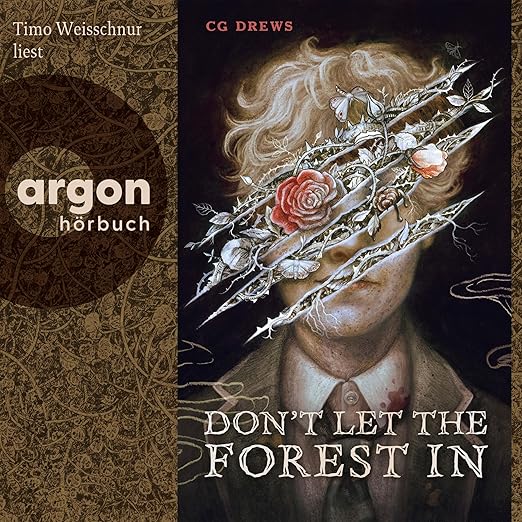
- Narration: Timo Weisschnur captures the poetic, morbid interiority of Andrew's perspective and sustains the novel's specific atmospheric dread without overreach.
- Themes: Queer adolescent love and sacrifice, botanical horror and living darkness, the price of artistic creation
- Mood: Lyrical, morbid, and emotionally intense with genuine horror weight beneath the fairy-tale register
- Verdict: A distinctive dark academia botanical horror audiobook that privileges atmosphere and queer emotional stakes over plot resolution, for readers who want their YA genuinely unsettling.
Dark academia has a tendency to aestheticize its own suffering so thoroughly that the danger at the center of the story becomes decorative. CG Drews refuses that easy resolution in this audiobook, a botanical horror YA novel translated from German, where the darkness at Wickwood Academy is not backdrop but biological, living, and fatal. Andrew and Thomas are students bound by a creative partnership: Andrew writes fairy tales, beautiful and strange, and Thomas illustrates them with images of monsters. That collaboration is the emotional and thematic engine of the novel. When Thomas begins to change, when art no longer interests him and he arrives at school with blood on his sleeve, Andrew's investigation becomes both a mystery and an act of love, and the forest he follows Thomas into answers back in ways that neither boy expected.
How Don't Let The Forest In Holds Up
Timo Weisschnur narrates this audiobook, a notable choice for a novel originally written in German. His performance carries the weight of the material's atmospheric demands: the story requires a narrator who can sustain the poetic, somewhat fractured interiority that reviewer commentary describes as central to Andrew's perspective. One reviewer translates their assessment as noting the narrative style is vivid, morbid, and dark in a way that perfectly reflects Andrew's inner suffering. Weisschnur's reading honors that quality without overplaying it. The botanical horror genre depends on a particular kind of creeping dread, the sense that what should be organic and growing is instead consuming, and the narration needs to hold that register without tipping into pure shock. The audio version also navigates what listeners describe as complex, open-ended plotting with sufficient clarity that the emotional throughline, the relationship between Andrew and Thomas, remains the anchor even when the plot raises questions it does not entirely resolve.
The novel's romantic dimension is handled with the care its LGBTQ+ tag signals. Reviewers who translated their responses describe the first love between the two main characters as very sweetly portrayed, and one notes that their younger self would have loved the book, implying a genuine resonance with the experience of queer adolescent longing set inside a strange and dangerous world. The relationship does not exist separately from the horror; the fate of the monsters is described as inseparably linked to the fate of their creator, which means that Andrew's love for Thomas is the story's central stakes rather than a subplot alongside the horror.
For YA listeners who find the dark academia subgenre compelling but are frustrated by its tendency toward social politics at the expense of genuine supernatural threat, this audiobook recalibrates the balance. The botanical horror premise, where the monsters from Thomas's illustrations come to life in the forbidden forest, is genuinely inventive. Plants as horror vectors carry a different quality than ghost or vampire fiction; they suggest something patient, rootbound, and impersonal about the danger, which cuts against the characters' intensely personal experience of it. Drews, as a bestselling author in the genre, understands how to deploy that contrast.
The poetic narrative style that reviewers flag as distinctive is either the novel's greatest asset or its most demanding feature, depending on reader temperament. Andrew's fairy-tale sensibility shapes the prose, which means the horror is filtered through a literary consciousness that aestheticizes even its own terror. For readers who find that kind of lyrical darkness compelling, the audiobook delivers something rarer than standard YA horror. For readers who want clarity and plot over atmosphere, the approach will feel frustrating.
Weak Spots in Don't Let The Forest In
Reviewers note that the plot contains many open questions, and that assessment appears consistent across multiple responses. Drews does not resolve every mystery the novel raises, which will feel like a meaningful ambiguity to some readers and an unsatisfying incompleteness to others. The ending is specifically called out, in one case approvingly, in another with the implication that the journey was more powerful than the destination. YA botanical horror is not a genre that conventionally ties off all its threads neatly, and listeners should approach this audiobook expecting atmosphere and emotional resonance to carry more narrative weight than plot resolution.
The novel is labeled for readers fourteen and above, which is useful information for parents or educators considering it for younger listeners. The content involves genuine horror violence, including the creatures killing people who come too close, and the emotional intensity of adolescent love rendered in extreme circumstances. The LGBTQ+ content is central rather than peripheral, and the relationship between Andrew and Thomas is the emotional core of the story rather than an incidental element.
The novel's LGBTQ+ designation is embedded in the storytelling rather than applied to it. Andrew and Thomas's relationship is not a subplot that coexists with the horror; it is the structural reason the horror matters. The consequences that Drews builds into the narrative's final act, the inseparable link between the fate of the monsters and the fate of their creator, mean that the romantic stakes and the survival stakes are the same stakes. That integration is rarer and more difficult to achieve than it might appear, and it is what elevates the novel above the genre's more formulaic entries.
Who Should Listen to Don't Let The Forest In
This audiobook is best suited to YA readers who have an appetite for lyrical, atmospheric horror and who respond to the queer dark academia tradition in fiction. Fans of fairy-tale inflected horror, botanical or folk horror as a subgenre, and novels where emotional relationships define the stakes of supernatural danger will find Drews's approach rewarding. Readers who need tidily resolved plots and forward-driving action will likely find the novel's ambiguities and its privileging of atmosphere over event frustrating. The translation from German to English is navigated through the audio rather than addressed directly in the text, and Weisschnur's narration carries that transition effectively.
How graphic is the horror content in this audiobook?
The novel features creatures that kill people who come too close to them, and the emotional content of adolescent love in extreme circumstances is intense. It is labeled for readers fourteen and above, which suggests the horror is meant to be genuinely frightening rather than softened for younger children. The gore level is in keeping with the literary botanical horror genre rather than splatter-style writing.
Is the LGBTQ+ relationship between Andrew and Thomas central to the audiobook or peripheral to the main plot?
It is the structural and emotional center of the novel. The fate of the monsters is described as inseparably linked to the fate of their creator, which means that Andrew's love for Thomas is directly tied to the resolution of the supernatural threat. The relationship is not a sidebar to the horror plot but its animating logic.
Does this audiobook resolve its central mysteries or does it leave significant questions open?
Multiple reviewers note open questions and an ending that generates strong reactions without full resolution. Drews appears to prioritize emotional and atmospheric completion over plot neatness. Listeners who need all threads resolved will find the ambiguity frustrating; those comfortable with lyrical ambiguity will likely find it appropriate to the material.