Before You Press Play
- Narration: Bryan Burling keeps an unobtrusive, readable pace that suits the essay format well. These 41 essays work well in audio because they are written for clarity, and Burling does not editorialize on top of Donaldson's already-wry tone.
- Themes: behavioral science vs. folk wisdom, dog cognition, positive training methods
- Mood: Wry and instructional, with moments of genuine wit
- Verdict: The best entry point into Jean Donaldson's behavioral science thinking for dog owners who found The Culture Clash demanding, and a solid reference resource for anyone actively working through training challenges.
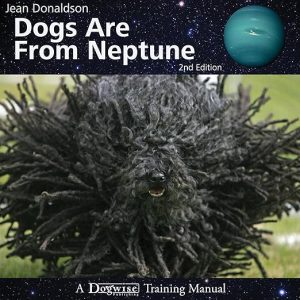
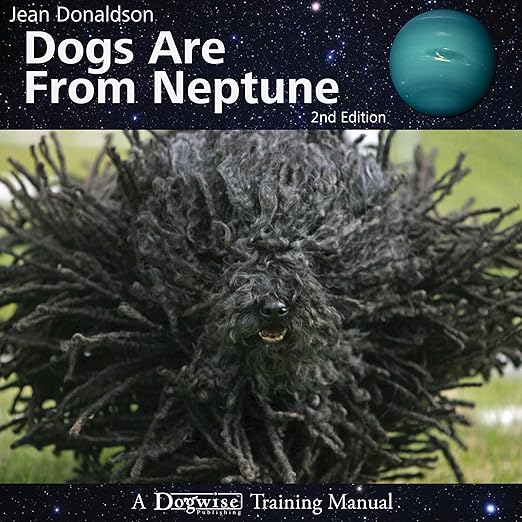
I have a border collie. I say this because it is relevant context for why I came to this audiobook with some investment in whether Jean Donaldson actually knows what she is talking about. She does. Dogs Are from Neptune, now in its second edition and newly available in audio narrated by Bryan Burling, is Donaldson doing what she does best: dismantling the wrong-headed assumptions that humans carry into their relationships with dogs and replacing them with behavioral science that actually works.
The format is 41 short essays, each tackling a specific behavior or common misconception. This is not a training manual in the traditional sense, where you move through a sequence of skills. It is more like a series of recalibrations. Why does your dog jump on guests? Not for the reasons you think. Why does the alpha-wolf model of dog ownership not hold up? Donaldson has been making this argument since before it became mainstream, and she makes it here without condescension, which is not always guaranteed in expert-written popular science.
Practically Organized for Foster Coordinators
One of the reviewers who found Donaldson's earlier book The Culture Clash a harder read specifically recommends this as more accessible and more practically organized. That tracks. The Culture Clash is her masterwork, densely argued and foundational, but it makes demands on the reader. Neptune is structured around problem areas rather than theoretical frameworks, which means you can find the chapter about the behavior you are dealing with right now and get useful information immediately. Multiple reviewers who work as foster coordinators or training coaches report using it as an active reference guide rather than a one-time read.
Burling Lets Donaldson's Dry Wit Breathe
Bryan Burling's narration is steady and clear. He does not try to inject personality into Donaldson's already distinctive voice, which is the right call. These essays have a dry wit that is baked into the prose, and a narrator who played for laughs on top of that would undercut it. The 4-hour and 53-minute runtime is the kind of audiobook you can finish in a weekend, which means it is achievable in a way that longer dog training books sometimes are not. The essay format also works well for audio because you can pause between sections without losing your place in a continuous argument.
Familiar Arguments, Freshly Rearranged for Neptune
If you have already read The Culture Clash and are coming to Neptune hoping for new theoretical ground, you will find some repetition. Donaldson's training recommendations are consistent across her work, which is a mark of intellectual integrity but means that readers deeply familiar with her thinking will encounter familiar arguments in new arrangements. The second edition presumably incorporates updates, but the core methodology, positive reinforcement, behavioral science over dominance theory, is the same foundation she has always built on. This is not a weakness; it is coherence.
Forty-One Essays, Precise Yet Quietly Warm
Any dog owner dealing with specific behavioral challenges will find this useful, particularly the essay structure that lets you locate the relevant chapter quickly. Training professionals and foster coordinators will get more out of it than pure novices, since some of the behavioral science assumes a willingness to engage with the science rather than just the practical tips. Listeners who loved The Culture Clash and want more Donaldson: this delivers that. Listeners who tried The Culture Clash and found it demanding: this is genuinely more accessible and organized, as multiple readers confirm. Anyone who accepts that dominance-based training models do not hold up to scientific scrutiny will be in good company here.
There is also something to be said for how Donaldson handles the emotional dimension of dog ownership without sentimentalizing it. She is a scientist first, and she writes about dogs with precision. But the essays carry an implicit warmth for the animals being discussed, and that warmth is what makes the science feel like it is in service of the relationship rather than in opposition to it. That balance is harder to achieve than it looks, and Neptune manages it across all 41 essays.
Common Questions
Is this audiobook useful for owners of dogs with serious behavioral problems, or is it for mild issues only?
The essays cover a range of behavioral challenges, from jumping and pulling to more ingrained problem behaviors. Donaldson is a serious behaviorist who has worked with difficult cases, and the science she draws on applies across the spectrum. For very severe aggression issues, professional behavioral help is always the appropriate first step, but this book can inform that process.
How does Bryan Burling handle the essay format across the 4-hour and 53-minute runtime?
The short essay structure actually suits audio well, and Burling navigates the transitions cleanly. Because each essay is self-contained, you can pause between sections without losing the thread. His narration is clear and unobtrusive, appropriate for material that wants the science to be the focus rather than the delivery.
Is the second edition meaningfully different from the original, and does it matter which version I listen to?
The second edition has been updated by Donaldson, though the core behavioral science framework is consistent with her broader body of work. For most listeners, the distinctions between editions are unlikely to be significant. If you are a training professional who needs the most current scientific references, the second edition is the right choice.