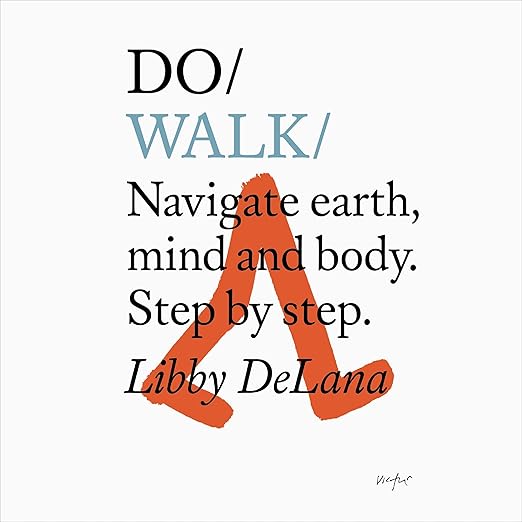
Libby DeLana's Do Walk audiobook arrives at a moment when the wellness shelf is crowded with books promising transformation through complexity - through protocols and routines and biometric data. DeLana's offering is almost defiantly simple: she walked every morning for years, she walked the equivalent of the earth's circumference, and somewhere in that accumulated motion she found something worth sharing. At one hour and fifty-three minutes, this is a short listen. That brevity is deliberate and, I'd argue, philosophically correct. The Do Books series as a whole operates on the premise that action precedes expertise, and book twenty-nine in that catalog embodies the philosophy of its own subject matter.
What Three Endorsers Found in the Same Book
DeLana doesn't pad. She draws on her own experience of walking through major life milestones, including what she describes as her second act, and the material has the texture of genuine reckoning rather than self-help scaffolding. What makes this particular listen work is the author's resistance to grandiosity. She doesn't claim walking will fix everything; she claims it will give you time and space to process, to notice, and to reconnect with the world outside your head. Cheryl Strayed, who endorses this book, describes it as "a moving and wise book that powerfully conveys a simple truth" - and that simplicity is the point. DeLana is asking listeners to take seriously the idea that putting one foot in front of the other is a practice worth protecting, in a world designed to keep you sedentary and inside.
The endorsements gathered around this book are worth reading for what they reveal about its range of application. Alex Elle, whose endorsement describes the book as having "wildly impacted my life," points to gratitude as an unexpected discovery. Charlie Engle, the endurance runner, focuses on commitment and exploration of self. Cheryl Richardson, writing from a personal development background, notes "so much of the wisdom in Do Walk has stayed with me long after finishing it." These are three different readers taking three different things from the same short book, which speaks to how DeLana has built her argument - not prescriptive, but generative. She gives you the frame and the permission; what you bring to the walk is your own.
DeLana's Voice Like an Old Friend's Letter
The self-narration is essential here. DeLana reads her own book with the unhurried confidence of someone who has genuinely lived what she's describing, and there's an intimacy in hearing her voice that a third-party narrator would flatten. One reviewer describes the book as feeling like she had "found an old friend," and that quality is audible in the recording - it's not performed warmth, it's the real thing. The writing style has the quality of letters written to a specific person, and DeLana's delivery reinforces that register throughout the less-than-two-hour runtime.
The listening experience is also worth considering in context: this audiobook functions particularly well when listened to while walking. The irony of sitting still to absorb a book about walking is real, but the audio format genuinely opens up the option of accompanying your own daily movement with DeLana's reflections on hers. That loop - her words reaching you mid-step, describing the same quality of morning attention you might be practicing as you listen - creates a strange and productive resonance. Suleika Jaouad's endorsement speaks to this: "May it inspire your own peregrinations; be they morning, noon, or long after midnight." That's an invitation to pair the listening with the doing.
Ambitious Claims Earned by Staying Modest
A few practical notes before you begin. Reviewers mention that the print edition features photography, and that visual element is naturally absent in the audio version. The prose stands on its own, but if visual texture matters to you, the physical book carries an added dimension. This audiobook is also an invitation rather than a prescriptive guide - if you're looking for a structured program with specific weekly milestones, measurable outcomes, or a step-by-step framework, DeLana is writing toward an ethos rather than a schedule. The Do Books series as a whole follows this philosophy, and Do Walk embodies it as thoroughly as any entry in the catalog.
One reviewer noted the book "will inspire you to get in touch with yourself, your fears, Mother Nature, the meaning of life" - that's ambitious language for a ninety-minute listen, but the ambition is earned precisely because DeLana doesn't overstate her case. She's not promising enlightenment; she's describing what daily walking actually gave her and inviting you to find out what it gives you. That modesty is what makes the larger claims land.
Restarting a Lapsed Walking Habit From Inside
This audiobook is for listeners at a crossroads - not necessarily a dramatic one, but the quieter kind where the shape of daily life feels wrong and the way forward isn't obvious. If you already have a daily walking practice and want language for why it matters, DeLana's prose will give you that. If you've lapsed from one and need something to restart the habit from the inside out rather than from external discipline, this works well for that too. The reviewer who discovered Do Walk after establishing her own pandemic walking practice - "the only place I felt free was on my local nature trail" - describes exactly the kind of listener the book is designed to meet.
It's not for listeners seeking data-driven fitness guidance or comprehensive wellness protocols. And at under two hours, it won't satisfy anyone looking for exhaustive treatment of any subject. But approached as a contemplative listen rather than a motivational one, Do Walk rewards you fully and sends you back outside.
Before You Press Play
- Voice: Libby DeLana self-narrates with warmth and quiet conviction - the intimacy of hearing the author speak her own decade-long practice makes this audiobook distinctly affecting.
- Big ideas: daily walking as spiritual and creative practice, life transitions, reconnecting with the natural world
- Atmosphere: Reflective and gentle, with a quiet insistence that ordinary movement holds extraordinary possibility
- Worth it?: Under two hours long and genuinely worth every minute, Do Walk is a meditative invitation that earns its brevity through density of meaning rather than padding.