Before You Press Play
- Performance: Alex Wingfield captures both Iris's desperate determination and Roman's guarded warmth, holding the enemies-to-correspondents tension tightly across ten hours.
- What it covers: Rival journalists finding love, gods at war, letters as connection
- Feel: Lush and emotionally urgent, with a bittersweet current underneath
- Our call: Divine Rivals earns its devoted following: a romance with genuine narrative stakes and a world that feels expensive in the best sense.
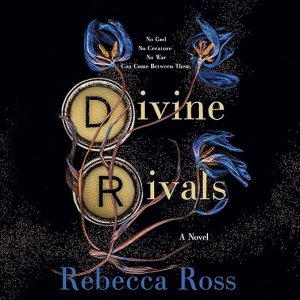
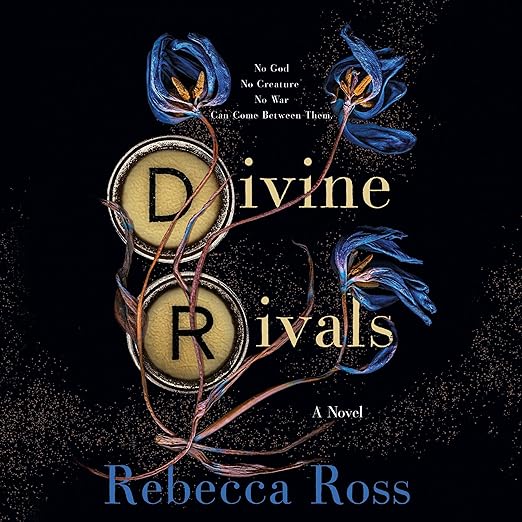
Iris Winnow arrived in my listening life during a particularly chaotic stretch when I needed something that combined plot momentum with genuine feeling. Divine Rivals is the audiobook adaptation of Rebecca Ross's YA romantasy, narrated by Alex Wingfield, and from the first chapter it is clear that this is a story built around a very specific kind of longing: for connection, for purpose, for a brother who may already be lost.
The setup is elegant in its complications. Eighteen-year-old Iris is trying to hold her family together while competing for a columnist position at the Oath Gazette against Roman Kitt, her cold and talented rival. She writes letters to her missing brother and slips them under a wardrobe door, where they disappear. They end up, impossibly, in Roman's hands. He writes back anonymously. A relationship forms through words before faces or names.
The Review
The letter conceit is the book's central achievement, and Ross handles it with discipline. The correspondence between Iris and her anonymous correspondent never feels like a narrative shortcut; it is where the emotional core of the story lives. Wingfield's narration makes a crucial contribution here: she differentiates Iris's voice as letter-writer from her voice as journalist from her voice as daughter, and that range prevents the story from collapsing into one register. When a reviewer describes the writing style as lush and immersive and says they were always eager to pick it up again, Wingfield's delivery is a significant part of that pull.
AudioFile's note that this captivating production will leave listeners wanting more understands something important: the audiobook format is unusually well-suited to this story. Letters read aloud carry a different intimacy than letters on the page. You hear the person behind the words. That is exactly the effect Ross is building toward, and Wingfield delivers it without sentimentality.
The comparison to Shadow and Bone and Lore that Ross's publisher reaches for is accurate in terms of genre atmosphere, though Divine Rivals has its own specific texture: the newspaper setting gives it a social dimension that most YA romantasy lacks. Iris isn't just fighting for love or survival; she's fighting for professional legitimacy in a world that has every reason to dismiss her. That stakes-layering keeps the story from tipping into conventional territory.
The world itself is original without being overwhelming. The gods' war is present in the background before it becomes foreground, and by the time the conflict escalates, listeners are already invested enough in Iris that the shift into higher stakes feels earned rather than imposed. Ross is careful not to let the fantasy machinery overwhelm the human scale of the story, and that balance is one of its key strengths.
The character of Roman Kitt attracts particular praise from readers. What Ross does well with him is keep his apparent coldness legible as guarded rather than unkind. The moment where his warmth breaks through doesn't feel like a character reversal; it feels like confirmation of what the letters have been hinting at all along. Wingfield finds the right note for Roman in these sections: she lets him be genuinely warm without abandoning the reserve that has defined him.
One reviewer describes the ending as a cliffhanger and responds with considerable feeling. This is fair warning. Ross does not wrap everything up in this first volume of the Letters of Enchantment series. The emotional arc of the central relationship reaches a significant point, but the larger narrative is clearly designed to continue. Wingfield's narration at that moment is controlled in the right way: she doesn't oversell it, which makes it land more forcefully than histrionics would.
What to Watch For in Divine Rivals
At ten hours and fifty minutes, the listening commitment is real but justified by the density of what Ross puts into the story. The journalism setting never feels incidental: the rivalry between Iris and Roman at the Oath Gazette is the context in which their relationship develops, and the professional and personal stakes are always in conversation with each other. The world-building layers in gradually rather than front-loading exposition, which makes the story accessible to listeners unfamiliar with the genre.
The mythology Ross creates for this world is original rather than adapted from existing traditions. Listeners do not need prior knowledge of any pantheon to follow the gods' war as it develops; the relevant facts arrive when the story needs them. That accessibility is partly what makes the book work for audiences beyond the dedicated YA romantasy readership.
The competition at the Oath Gazette gives the romance a grounding in professional stakes that most fantasy love stories do not bother with. Iris isn't just pursuing Roman because he is attractive and difficult; she is competing with him for the same professional future she needs to keep her family together. When the relationship shifts from rivalry to correspondence to something more, it does so within a context where both characters have something real to lose beyond their hearts. Ross does not let the romance float free of its own circumstances, and that groundedness is part of what makes the feeling land.
Who It's For
This audiobook is a natural choice for listeners who enjoy YA romantasy with literary texture. The newspaper setting and epistolary device give it a distinct flavor that separates it from more generic entries in the genre. Alex Wingfield's performance is consistently strong and emotionally precise, and the audiobook format genuinely enhances the letter sequences in ways the print version cannot. Listeners who are sensitive to cliffhangers should know this is a series opener with unresolved threads. For the intended audience, Divine Rivals delivers: rich world-building, a romance that earns its feeling, and a narrator who understands exactly what the story needs her to do.
Good to Know
Does this audiobook end on a cliffhanger?
Yes, and it is a significant one. Multiple listeners have flagged this with real feeling. The central relationship reaches an important emotional beat, but the broader narrative of the Letters of Enchantment series continues into the next book. Come prepared for that.
How does Alex Wingfield handle the epistolary sections, the letters Iris and Roman exchange, in this audiobook?
Wingfield differentiates the letter voice from the scene voice in a way that makes the correspondence feel genuinely intimate. Since so much of the emotional core of the story lives in those letters, her control of register is a major asset in the listening experience.
Is Divine Rivals suitable for listeners who don't normally read YA?
The emotional complexity and world-building quality make this accessible beyond the YA age range. The journalism setting and the relationship's foundation in intellectual rivalry give it more adult texture than a lot of YA romantasy. It has been widely read by adults alongside its target audience.
Do I need any background knowledge of mythology to follow the gods-at-war storyline in this audiobook?
No. Ross builds her pantheon from the ground up, and the mythology is original to this world rather than adapted from existing traditions. The world-building is introduced gradually enough that listeners don't need any prior reference points to follow it.