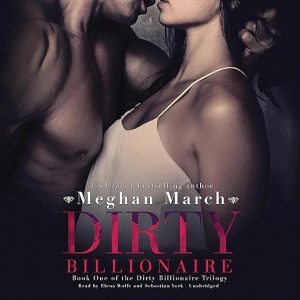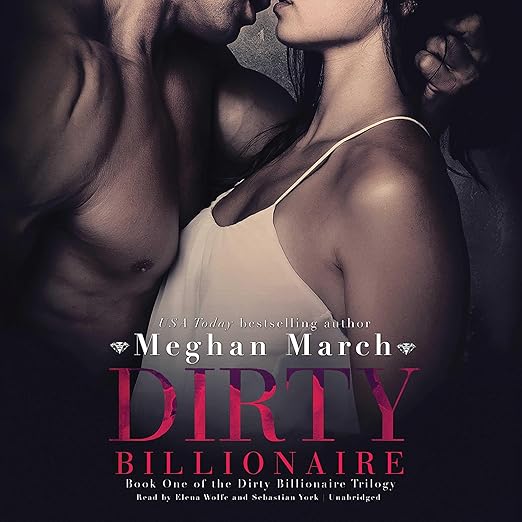
A trilogy that runs four hours and twenty-four minutes is the first thing to question here. Three books is the claim in the title, one is the number in the series field, and four and a half hours is what the audiobook actually delivers, which is shorter than most single romance recordings. Something on this page describes a product other than the one on sale. One written response calls it a trilogy serial, and that is probably the closest thing to an answer the listing contains.
Meghan March writes the blurb in the voice of her hero and does not soften it. He opens by listing his anatomy and his bank balance, announces that he is not a nice man in a blunter word than that, and says the arrangement works for him just fine. The profanity gets censored with hyphens while the sentiment stays entirely uncensored, which is a fair summary of the register throughout. If that paragraph puts you off, so will the book; it is doing precisely what it advertises.
Then the plot arrives, and it is a clean hook. A night in a hotel room with a woman who leaves without giving a name or a number. A missed connection posted publicly that goes viral. A narrator who states, in the last line of the description, that when he finds her he is keeping her. That is a serviceable romance premise built on one unanswered question, and four and a half hours is a workable length for exactly that. Nothing about the setup needs elaboration; it needs a voice and a pace, both of which the audio format supplies directly.
Elena Wolfe is the only credited voice on a book that opens inside the hero's head and stays there for the whole length of the description. No second reader is indicated anywhere here, so the man doing the talking and whatever the woman turns out to sound like both belong to a single performance. In a short, dialogue-driven romance built on banter, one voice does more work per minute than a longer book would ask of it.
What Meghan March Gets Right
Brevity is the selling point, and Mike Brown's five-star entry says so directly: a nice short read with good spice that left the reader wanting to pick up the next one instantly. That is the serial economy working as designed. Four and a half hours is a single evening, and the structure aims squarely at the listener who wants the next installment handed over before the mood breaks. Romance in this register does not benefit from length. It benefits from momentum, and the runtime enforces it.
Ms.Meesh's entry is the most informative on the page, and it describes what the appeal actually is. A first Meghan March book led straight to all the others, and the pull is named specifically: sexy dominant alpha males, the storyline, the prose. The entry then quotes a line about wanting to be told what to do by a man who can produce that feeling with nothing but words and a few kisses. That quotation is a better sample of the book than the blurb is.
A dirty-talking hero is the product, and nobody involved pretends otherwise. Ms.Meesh calls the trilogy aptly titled, a compliment about truth in advertising. Alejandra's three-star entry complains from the opposite direction, reporting nothing at the close that would truly make the book dirty, which is a complaint only available against a book that promised it. Both readers measure the same thing against the same standard, and for anyone deciding whether the register suits them, that agreement matters more than the grades.
Where Meghan March Loses Some Ground
Whatever the trilogy label means, it does not mean a finished story. Alejandra's entry is explicit: the last stretch runs out of energy, the ending is not even a cliffhanger, and no closure arrives. Ms.Meesh's phrase, trilogy serial, points the same way. If you go in expecting three books' worth of resolution because the word Trilogy sits in the title, the running time already told you otherwise. The series field says one, and one is the number to trust.
Two of the five entries were written before the release date. December 8 and December 9, 2015 sit above a listing dated January 12, 2016, roughly five weeks later. Both are among the longest and most detailed responses here, and both discuss a text rather than a recording. The page offers no basis for assuming either reader heard this edition, which matters because those two responses carry most of the usable information on it.
Strangest of all is a five-star response from India that reads, in full, that the product is awesome, easy to use, and that the paper quality is also good. Paper, on an audio listing, for a recording with no pages in it. Another entry names a heroine, Holly Wix, a country singer from Kentucky who won a reality show called Country Dreams and is stuck in a fake relationship with an artist named JC Hughes. Neither observation can be reconciled with the summary printed above them.
Who Should Pick Up Dirty Billionaire Trilogy
Filthy, short and unfinished is an accurate description and, for the right listener, an appealing one. Anyone who reads romance in serial installments and wants a strong hook, an alpha hero written without apology, and a quick turnaround to the next part is precisely the audience. Mike Brown's reaction, wanting the next one immediately, is the intended one. Newcomers get a fast entry point into a voice that will strike them as either exactly right or immediately not. Meghan March's existing readers already know the register and will find no surprises waiting in it.
Leave it alone if a complete arc in one purchase is the goal, because the title says Trilogy, the series field says one, and the only reader who addressed the ending found no closure there. Explicit content in a deliberately crude register is the other filter; the description makes no attempt at taste and the book will not either. Four and a half hours is a small enough bet that the main risk is your evening. The blurb tells you exactly what this is, which is more than the metadata around it manages.