Quick Take
- Narration: Will Damron reads with calm authority that suits Newport’s measured, academic prose. His delivery is unhurried and clear, which works well for a book asking you to slow down.
- Themes: Attention economy, intentional technology use, reclaiming solitude
- Mood: Steady and persuasive, with flashes of genuine urgency
- Verdict: Not Newport’s most essential work, but a well-argued and genuinely practical companion for anyone serious about taking back their attention from their devices.
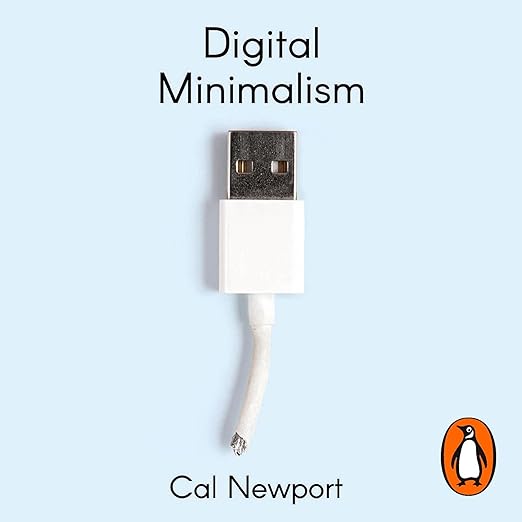
I listened to most of Digital Minimalism on a Saturday morning when I had deliberately left my phone in another room. That detail is not incidental, Cal Newport’s entire argument rests on the idea that the way we use technology is not accidental, and neither should be the way we choose to step back from it. I had already read Deep Work, which remains one of the more useful books I have encountered on the mechanics of concentrated effort, so I came to this one with a specific question: does Newport have something genuinely new to say about our relationship with screens, or is this the same argument in a different jacket?
The answer is somewhere in between. Digital Minimalism is a sharper, more personal book than its precursor. Where Deep Work focused on professional performance, this one is more interested in the texture of daily life, the compulsive checking, the anxiety that rises when a notification goes unanswered, the strange guilt of an empty afternoon. Newport calls for a deliberate thirty-day digital declutter, followed by a systematic reintroduction of only those tools that serve genuinely valued ends. It is less an anti-technology manifesto than a set of operating principles for a more considered relationship with your devices.
Our Take on Digital Minimalism
The lone review in the data describes this as not Newport’s best work, with Deep Work still standing out. That is a fair verdict, and I share it to a degree. The argument here is less intellectually surprising than Deep Work’s, partly because the cultural conversation around phone addiction has matured considerably since 2019 when this was published. Newport is not telling you anything radically new; he is providing a framework and vocabulary for something many people already sense. The strength of the book lies not in novelty but in the rigorous, unsentimental way Newport refuses to let you off the hook. He is allergic to vague intentions. The digital declutter is specific. The reintroduction process has criteria. That concreteness is what separates it from the genre of tech-panic books that diagnose the problem and then dissolve into platitudes.
Why Listen to Digital Minimalism
Will Damron’s narration is a genuine asset here. He reads with a calm authority that mirrors Newport’s prose style, measured, clear, unrhetorical. There is no histrionics in the delivery, which is the right choice for a book that is already asking you to resist the dopamine spikes of the attention economy. Listening rather than reading feels appropriate for this material: you are practicing a form of sustained, undistracted attention simply by sitting with it for seven hours. Newport’s sections on reclaiming solitude, on the value of demanding leisure, and on why low-quality connection via social media actually degrades our capacity for high-quality connection are the strongest parts. They have an intellectual clarity that stays with you.
What to Watch For in Digital Minimalism
The rating here is an unusually low 3.6, though that is based on only two reviews, a statistical footnote rather than a real signal. The more meaningful data point is the book’s overall reception since 2019, which has been largely positive. The caution I would offer is this: Newport writes from a fairly specific vantage point, a knowledge worker with institutional stability, access to time and space, and significant control over his own schedule. His prescriptions can feel idealistic if your job requires constant digital availability. Some of his practical recommendations also have a slight air of 2019 about them; the landscape of social media has shifted enough that certain specific platforms he discusses have changed dramatically.
Who Should Listen to Digital Minimalism
This is for listeners who have already noticed the problem and want a systematic approach rather than vague encouragement. It suits knowledge workers, parents navigating their own screen habits alongside their children’s, and anyone who has felt, in a quiet moment, that their attention has been colonized in ways they never consented to. If you have already read Deep Work and found it useful, this is a natural companion. If you want pure novelty or expect a revolutionary argument, it may land lighter than you hope.
Frequently Asked Questions
How does Digital Minimalism compare to Newport’s Deep Work?
Deep Work is generally considered the stronger intellectual achievement and focuses on professional productivity. Digital Minimalism is more personal and lifestyle-oriented, centered on daily technology habits rather than work performance. The one review in our data echoes this view.
What is the digital declutter process Cal Newport describes?
Newport recommends a thirty-day period of stepping away from optional technologies, followed by a deliberate reintroduction of only those tools that serve clearly defined values, not just things that offer some benefit, but things that serve the best use of your time.
How does Will Damron’s narration handle Newport’s more academic prose?
Damron reads with a calm, unhurried authority that suits Newport’s methodical style well. The delivery is clear and unshowy, which keeps the focus on the argument rather than the performance.
Is Digital Minimalism still relevant given that it was published in 2019?
The core argument holds up well. Some platform-specific references feel dated, but the underlying principles around attention, solitude, and the attention economy remain as applicable now as when the book first appeared.