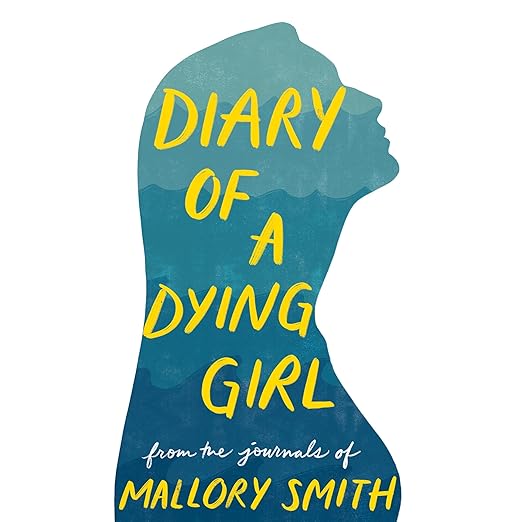
Fourteen hours and eight minutes of somebody's private diary is a strange thing to offer for sale and a stranger thing to sit inside. Mallory Smith kept her journal password-protected on purpose and said so in it: many of the feelings I write about are too difficult to share while I'm alive. This audiobook exists because she also decided the entries should be published once she was gone, and Listening Library released the result in May 2024.
A five-star posted on 14 May 2024 does the work the description avoids. It dates the entries from age sixteen to twenty-five, when Smith died. It notes the cystic fibrosis diagnosis at three and the progressive toll it took. And it lists what she managed anyway: a Phi Beta Kappa degree from Stanford, a record as a star athlete, work as an environmental journalist. That entry also mentions videos alongside the diary, which is the first hint on this page that the source material was never only writing.
Diaries do not have plots. They accumulate, and fourteen hours of accumulation is a real commitment in a format where you cannot skim a page, cannot flip forward to check a date, and cannot see how much of a given year is left. Volleyball, writing, the environment, the boyfriend, the family, the treatments, the mantra to live happy: the copy lists them as themes, and a journal does not sort itself into chapters the way a memoir would.
Reading duties fall to Mara Wilson, and the casting question is the one the page never raises: an actor speaking a real person's private writing in the first person, to an audience that includes people who knew her. No neutral way exists to do that job. Listening Library is a children's and young adult imprint, which frames the release as a book for teenagers, while the entries run into Smith's twenties and take in love and sex alongside illness. Those two facts pull against each other for the length of the file.
What Stands Out
Recognition is what the strongest response on this page is describing. The 19 May 2024 five-star was written by somebody about the age Smith was when she died, who names a shared detail of height and then admits to finding far more recognition in the pages than expected. That is not a literary judgment. It is the specific thing a private diary can do and an edited memoir cannot, because nobody shaped these entries toward a reader.
Smith's mantra, live happy, sits in the copy as the thing she chose every day, and the diaries are where the choosing becomes visible. A memoir would tell you she was determined. A diary shows the days she was not, and then shows the next entry anyway. The gap between those two versions is the reason this book exists in this form rather than as a tidy account written afterward by somebody else.
Fourteen hours is long for a young adult title and about right for this one. The disease is progressive and the copy says so; a shorter book would compress the better part of a decade into something with a clean beginning and end, which is precisely the shape the person living it did not get. Staying with the length is closer to the experience than any amount of editing would be.
Before You Commit to Diary of a Dying Girl
The four-star on this page is the honest one. Filed in April 2025, it says the read was difficult because of the writer's age and that the book was, on balance, enjoyed anyway. Two short sentences, and nothing else on the listing prepares a buyer for that difficulty as plainly. A teenager's account of dying, written by the teenager, is a particular kind of hard, and the phrase unparalleled exploration of the human spirit does not carry it.
A five-star from June 2024 wishes the book had photographs of Smith and then supplies its own answer, saying the absence is understandable. In audio that wish moves one step further out of reach: nothing anchors a face to the voice, while the copy asks a listener to finish feeling they know a real person. The same entry lists the support around her, the parents and friends and boyfriend, and notes that she never complained when treatments failed, which is a heavier sentence than its length suggests.
Content deserves naming plainly. Terminal illness runs the whole file, along with hospital treatment, the death of the writer, and grief belonging to everyone else in the entries. The copy sells encouragement, and the encouragement is genuine. It arrives attached to fourteen hours of a young woman getting sicker, and a listener should decide in advance whether that is what they want in their ears at bedtime.
Best Suited For
Nobody should come to this expecting the shape of a memoir, and anyone who wants the family present as much as the diarist will be well served. The September 2024 five-star describes crying through it and then turns to Smith's mother, calling her amazing for carrying on the fight against the disease. The book's afterlife is part of the book, and that response is a fair map of who it is for.
Teenage listeners living with a chronic illness of their own will find something here they cannot get anywhere else, and they are also the ones for whom it will be hardest; that call belongs to the household rather than to a shelf category. Anyone wanting a clean arc, a resolution, or a version of illness that stays politely in the background should look elsewhere. Everyone else gets a real person's actual sentences, unedited by hindsight, for fourteen hours.
Frequently Asked Questions
How graphic is the illness content in this audiobook?
Direct rather than clinical. The entries were written by someone living with cystic fibrosis from a diagnosis at three until her death in her twenties, so treatment, decline and fear are constant rather than occasional. The copy calls it unflinching, and across fourteen hours that description holds up.
Does the audiobook cover Mallory Smith's whole life or only her final years?
Broadly rather than narrowly. The description says she chronicled every bit of it and wrote thousands of entries before dying in her twenties, with the diagnosis arriving at age three. At fourteen hours and eight minutes the recording has room for school, sport, work and relationships as well as illness.
Can fourteen hours of diary entries be listened to in pieces?
Comfortably. Entries are short and self-contained, so no plot thread gets dropped between sessions and no cliffhanger structure pulls you forward. Many listeners will find twenty minutes at a time is the right dose, given how heavy the material becomes across longer stretches.