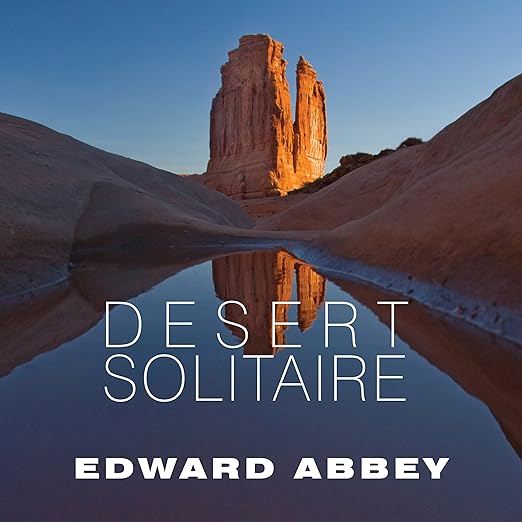
At a Glance
- Narrator: Michael Kramer, better known for fantasy audiobooks, takes on a spare, furious nonfiction register that's a genuine departure for him.
- Subjects: wilderness preservation, solitude, anger at land exploitation
- Tone: Meditative and defiant
- Bottom line: A substantial, essential piece of American nature writing, best suited to patient listeners drawn to environmental philosophy over adventure pacing.
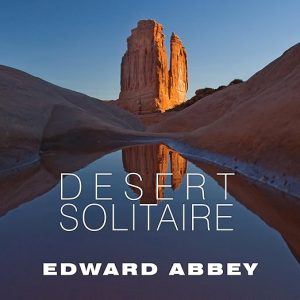
Moab's canyon country turned Edward Abbey into one of American nature writing's angriest advocates, and this audiobook edition, narrated by Michael Kramer, gives that anger room to breathe across eleven and a half hours. Desert Solitaire became the focus of a nationwide cult following almost immediately after its 1968 publication, built from Abbey's own three seasons working as a park ranger in southeastern Utah, and six decades later his core question still lands with real force: how much of the American wilderness can survive being loved to death by the very tourism, oil, and mining interests it's supposed to be protected from? This isn't a tidy conservation memoir. Abbey is rude, tender, mystical, and furious sometimes within the same paragraph, and the audiobook format asks a listener to sit with all of it at once rather than skimming past the parts that don't flatter him.
The Verdict, Briefly
The book moves between two registers that shouldn't work together as well as they do: long, meditative passages on solitude, silence, and the specific beauty of desert light, and sudden shifts into furious protest against the exploitation creeping into wild places he loved. Abbey isn't interested in resolving that tension. He wants the reader to feel both the wonder and the anger as part of the same experience of paying real attention to a place.
Reviewer Autumn Sun calls it 'some of the best nature writing ever produced in America,' framing the book as both memoir and 'a spirited and spiritual justification for valuing our natural heritage.' BrokenArrow, writing under the reviewer title 'Cactus Ed,' Abbey's own well-known nickname, describes him as 'quite a character, quite a personality, quite a man,' rooting the book's account of his adventures around Moab, Utah in the mid-1950s.
Abbey's specific setting matters more than the synopsis's general 'southeastern Utah' framing lets on: this is the canyon country around Arches, where Abbey worked as a seasonal ranger in the mid-1950s, and the book's most vivid passages come directly from watching that exact landscape before its access roads and visitor infrastructure expanded into what later travelers would encounter.
Abbey's reputation has, if anything, grown in the decades since his death rather than faded, as environmental and public-lands debates he was writing about in 1968 have only intensified. Reading him today carries an unmistakable feeling of arriving early to an argument the rest of the culture is still catching up to.
Why Listen to Desert Solitaire
Michael Kramer's casting here is a genuinely interesting question rather than a settled one. His narration doesn't come up in any of the three attached reviews, and Kramer's broader reputation in audiobooks rests heavily on sweeping fantasy narration rather than spare, philosophical nature writing. Whether that skill set translates cleanly to Abbey's cranky, digressive, occasionally furious register is a real craft question worth going in aware of, not a confirmed strength or weakness either way.
The synopsis itself situates Abbey as 'the legendary author of The Monkey Wrench Gang, Abbey's Road and many other critically acclaimed books,' and Desert Solitaire functions as the nonfiction root system beneath that later, more overtly radical fiction. Listeners who know Abbey through The Monkey Wrench Gang's fictional eco-sabotage will find the real convictions behind it laid out directly and personally here.
Abbey's influence reaches well beyond his own bibliography. The Monkey Wrench Gang is widely credited as direct inspiration for the radical environmental group Earth First!, founded in the early 1980s around exactly the kind of direct-action resistance to development that Desert Solitaire argues for in nonfiction form years earlier. Listening to the source material behind that later activism adds real weight to passages that might otherwise read as simply cranky.
The obvious literary predecessor here is Thoreau's Walden, another book built from a writer's deliberate stretch of solitude in a specific landscape, turned into both memoir and argument. Abbey knew that lineage well and pushed against it as much as he drew from it, trading Thoreau's more contained New England pond for a harsher, more openly political desert, and readers who know Walden will find Desert Solitaire arguing with it almost as much as it's carrying its tradition forward.
A specific technical demand sits underneath all of this for whoever narrates it: Abbey's prose is dense with real desert flora, fauna, and geological terminology, and getting plant names, rock formations, and regional place names right, rather than stumbling or flattening them, is exactly the kind of unglamorous precision that separates a careful nonfiction narrator from a merely competent one.
Points to Consider
Abbey's voice can be blunt and occasionally cranky in ways some contemporary listeners may find distinctly of its era rather than timeless; this is a writer with strong, sometimes provocative opinions freely delivered, not a careful, hedge-everything modern nature writer.
This is essayistic, meditative nonfiction rather than a plot-driven adventure narrative, and at eleven and a half hours, the pacing rewards patience over momentum. Listeners expecting a brisk survival story or a straightforward wilderness travelogue should recalibrate toward something closer to a long, philosophical conversation with a genuinely difficult, brilliant narrator.
The pacing demand on Kramer specifically is worth spelling out: fantasy narration builds momentum toward plot events, while Abbey's prose asks a narrator to let a single observed detail, a lizard, a canyon wall's color at a particular hour, sit and breathe without rushing toward the next event, since there often isn't one. That's a fundamentally different pacing instinct than genre fiction requires.
None of this is a knock against Kramer specifically, worth repeating, since no review in this listing's data actually weighs in on his delivery either way. It's simply the honest, open question any listener should carry into a book this dependent on getting its sense of place exactly right.
The Right Listener for Desert Solitaire
Readers of environmental writing and nature memoir, listeners drawn to public-lands and conservation themes, and fans of The Monkey Wrench Gang wanting the nonfiction roots of Abbey's activism will find this a substantial, rewarding listen.
Nature and place-focused writing in general benefits from a format that can't be skimmed the way a page can, and an unhurried eleven-and-a-half-hour audio listen forces exactly the kind of sustained attention Abbey's descriptions of desert light and silence are actually asking for, a real argument for choosing this format over print even for readers who've already read the book once.
Desert Solitaire now sits comfortably alongside Silent Spring and A Sand County Almanac as one of the genuinely canonical texts of American environmental writing, and listeners who've read either of those will recognize the same conviction that close, honest attention to a specific landscape is itself a political act, not just a literary one.
Listeners chasing a brisk survival narrative or a simple wilderness travelogue may find Abbey's philosophical digressions and political fury slow the pace more than expected, a fair trade for the book's substance but a real one nonetheless.
Does the Desert Solitaire audiobook cover Edward Abbey's entire ranger career, or just part of it?
It covers his three seasons as a seasonal park ranger in southeastern Utah in the mid-1950s, not a full career retrospective, framed as a meditation on that specific stretch of time.
Is Michael Kramer's narration a good fit for Edward Abbey's nonfiction, given his fantasy audiobook background?
No reviews attached to this listing address his performance directly, so it's a genuine open question. His usual genre is quite different from Abbey's spare, philosophical, often furious register.
Is this audiobook more of a memoir or an environmental argument?
Both at once, deliberately. Abbey blends personal memoir of his ranger seasons with direct political argument against wilderness exploitation, and the book doesn't try to separate the two.