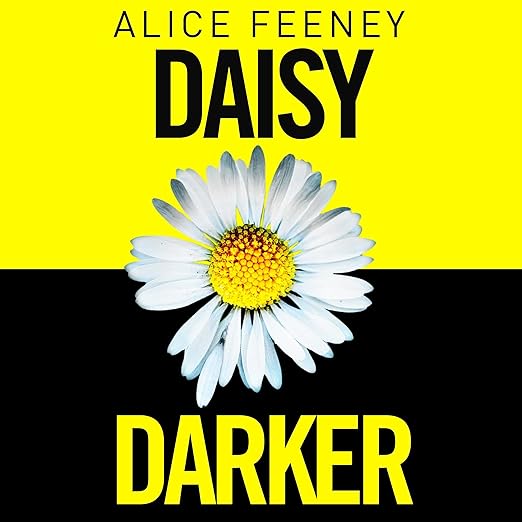
Seaglass sits on a tidal island off the Cornish coast, and the audiobook hands you the clock before it hands you anything else. When the tide comes in, the house is cut off from the mainland for eight hours. Inside it, the Darker family have gathered for the first time in more than a decade, for a grandmother's eightieth birthday. One of them is a killer. That is the entire architecture, laid out inside the first minute, and it is an old one: the sealed house with a countdown has been doing this job for a century. What Alice Feeney adds is a family whose members all had their reasons long before the tide turned.
How Daisy Darker Holds Up
Nana has been alone in that house for years, and the pressure in the novel comes from exactly there. The copy lists the household in a way that reads almost like a cast page: Daisy's absent father Frank, her cold-hearted mother Nancy, her siblings Rose and Lily, and her niece Trixie, full of questions and without a father of her own. Every one of those descriptions carries a grievance folded inside it. That is efficient writing, and it doubles as a warning about the kind of book you are buying. The mystery is not really about who did it. It is about a family that has been rehearsing this evening for a very long time.
Alice Feeney builds the whole novel on the tide, and the constraint pays off in a way that comes through even secondhand. A reader who loved the setting describes the mechanism exactly: a dysfunctional family with a great many secrets, isolated in a gothic home on a small island, blocked from land travel except at low tide, trapped for eight hours while an unknown murderer picks them off one at a time, with nobody especially likable and everybody holding a motive. That is a fair account of the machine, and it explains why the book still works for readers who see the ending coming.
Why Daisy Darker Works as an Audiobook
Macmillan produced the edition, and the narrator field holds one name, Stephanie Racine, which puts a specific problem on the table. The Darkers are distinguished mostly by relation rather than by voice: a grandmother, a father, a mother, two sisters, a niece, and Daisy herself. In print, a name at the head of a line settles who is speaking before you have processed the sentence. In audio, everything rests on whether seven family members inside one crumbling house stay separable once the lights fail and the panic starts. A single reader handling a sealed-house ensemble is standard practice, and it is simultaneously the hardest version of the job.
Ten hours and fifty-four minutes of recording against an eight-hour tide window is a telling ratio, because it establishes that the book is not running in real time. The countdown is a frame rather than a stopwatch, and the novel spends much of its length in the past, filling in why each of these people arrived carrying what they carry. That structure explains why the file outlasts the night it describes. Nothing in the written responses on this page addresses the reading itself. The column argues about the reversal, about the family and about whether the ending earns what it does, which leaves the performance question unanswered on a title where seven voices have to stay apart.
Weak Spots in Daisy Darker
Lisa Jewell endorses this book twice on the same listing, in two different wordings. Near the top the quotation reads clever, compelling, and absolutely delicious. Near the bottom the same name endorses the same book as clever, compelling, confounding and absolutely delicious. One of those two is not what was written. It is not a scandal and it changes nothing about the novel, but it is a useful reminder of how much weight a blurb is asked to carry: the words inside the quotation marks were edited somewhere between the source and this page, and nobody caught it, because nobody expects a buyer to hold two paragraphs of marketing copy against each other.
Cornwall, a crumbling house and a spectacular reversal are what the copy sells, and the reversal is where opinion divides. The dissenting account on this page sets out its disappointment carefully rather than dismissively, praising the chilling premise, the eerie atmosphere of the island and the well-developed dysfunction of the family, describing genuine investment in the characters, and then finding that the book did not sustain what it began. That is the most useful response on this page, precisely because it agrees with the enthusiasts about everything except the payoff. If the ending is the reason you are buying, weigh that one.
Trixie is the detail worth flagging for anyone sensitive about children in danger. The copy places a young niece inside a house where one of the family is a killer, and it does nothing to soften the framing. The description also promises secrets much darker than the others and a gathering some of the family will not remember, which is as close to a content signal as this page offers. Anyone who avoids child jeopardy in crime fiction should take those two lines as the warning they are, since nothing else on the listing addresses the question.
Should You Listen to Daisy Darker?
Locked-room readers are the natural fit here, and this is a strong modern example of the form with a real sense of place attached to it. Save it for an autumn evening when the weather is doing some of the work for you, since the book is set as the leaves fall and the atmosphere rewards the match. It also suits listeners who love family novels but want a plot engine running underneath, because the domestic material is genuinely the point here rather than a delivery system for the deaths.
Keep scrolling if a reversal you can see coming spoils a book for you, because this one stakes a great deal on a single turn and the copy calls it spectacular before you have started. The same applies if you want a detective, since nobody here is investigating and the listener is the only person assembling anything. What remains is a family novel wearing a locked-room costume, set in a house sliding into the sea, with a countdown that matters emotionally more than procedurally. Daisy Darker turns out to be a considerably sadder book than the premise advertises, and that is the best thing about it.
At a Glance
- Narration: A single credited voice on a major-house production, with no dramatization or second reader named on the record
- Themes: A family reunion with a body count, tidal isolation, inherited grievance, a reversal the copy promises up front
- Mood: Gothic, autumnal and quietly grieving
- Verdict: A locked-room novel that is really a family novel, and better once you stop trying to solve it.