In Brief
- Performance: Sofia Willingham doesn't appear to have narrated anything else I could locate, and the book's three-way male-lead structure makes her casting a real unknown worth sampling first.
- What it covers: Found-family romance, trauma and healing, guardian and multi-partner dynamics
- Feel: Intense, isolated, and heat-forward beneath real grief
- Our call: A strong pick for established Douglas fans ready for an age-gap, multi-partner premise; not the right entry point for newcomers to her catalog.
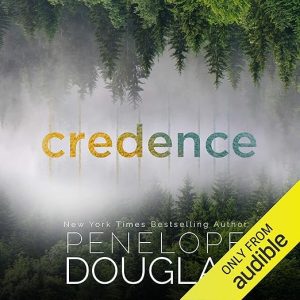
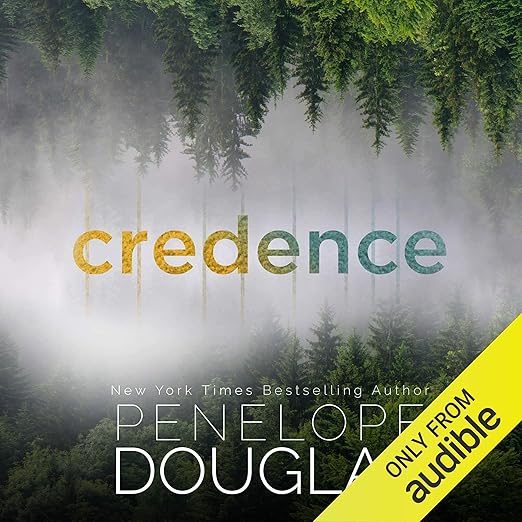
Tiernan de Haas has nothing left to lose when Credence opens, both parents dead, a childhood defined by wealth without warmth, and a court-appointed guardian she barely knows, and Penelope Douglas builds an entire romance around what happens when the people meant to protect a traumatized eighteen-year-old become the ones who make her feel something again. This audiobook follows Tiernan from her parents' sudden death through her arrival at her step-uncle Jake Van der Berg's remote Colorado cabin, where Jake's two sons, Noah and Kaleb, are already living the kind of hard, physical, off-grid life Tiernan has never had to learn.
What Credence Really Means for Tiernan
I could not find any prior narration credits for Sofia Willingham anywhere, so her casting here is a genuine unknown, but the technical demand of this specific book is worth naming plainly: Credence asks one narrator to differentiate a traumatized, emotionally shut-down heroine from three separate male perspectives, Jake and his two sons, without letting any of them blur into a generic romance-hero voice. That is a harder assignment than most single-narrator contemporary romance requires, closer to the vocal range a why-choose or reverse-harem structure demands than a standard two-person love story.
What the reviews confirm is that Douglas's writing carries real emotional weight underneath the taboo premise. Aundi.Living.That.Book.Life frames the unconventional household arrangement as trauma-recovery material rather than shock value for its own sake, describing four lost, broken people on a joint journey toward healing, and D Creed's review backs that reading, praising the found-family dynamic and characters who 'learn through trial and error how to trust, and how to love.' Whether Willingham's performance leans into that vulnerability or plays the material more for heat is not something the available reviews confirm, since none comment on narration specifically.
The title itself rewards a close look: credence means the acceptance of something as true or worthy of belief, and Douglas builds the whole romance around Tiernan slowly extending exactly that, credence, to three men who have given her no obvious reason to trust anyone by the book's opening pages. That is a more literary word choice than a lot of genre-romance titling, and it signals a book more interested in psychological rebuilding than in pure conquest fantasy.
Colorado Wilderness Strips Away Tiernan's Old Life
This audiobook works because Douglas resists making the central relationship purely transactional. Erika's review quotes the book directly on its own coping philosophy: 'we all acclimate' and, more pointedly, 'we just get better at rolling with it.' That line does double duty, describing survival after grief and survival inside an unconventional, blurred-boundary household at the same time. A romance willing to let its characters articulate their own coping mechanism that plainly, rather than leaving the listener to infer it, tends to earn more trust from an audience going in skeptical of the premise.
The Colorado wilderness setting also does more narrative work than a typical contemporary-romance backdrop. Douglas uses the isolation, the physical labor Jake and his sons teach Tiernan, and the total remove from her old life of wealth and privilege to strip away the performative identity she built at boarding schools, so the romance develops alongside genuine survival skills rather than in the usual coffee-shop-and-texting rhythm of the genre. That grounding gives the 16-hour-and-55-minute runtime room to earn its length instead of stalling out on repetitive tension.
Readers coming from Douglas's Fall Away or Devil's Night series will recognize her recurring interest in damaged characters finding safety in unlikely, often morally gray configurations, though Credence pushes that interest further structurally than her more conventional two-person romances do. The why-choose framework itself has grown into a genuine subgenre over the past several years, and Douglas's version distinguishes itself by giving the household a working, physical daily life, chores, hunting, the practical business of surviving a Colorado winter, rather than keeping the drama purely emotional.
Three Men, One Ward, Explicit by Design
The premise itself is the biggest watch-for, and Douglas's own marketing copy does not hide it: three of them, one of her, a step-uncle and his two sons, all pulled into a romantic dynamic with a young woman who arrived in their household as a grieving, newly orphaned ward. This is explicitly billed as content suitable for listeners 18 and older, and the reviews confirm real heat alongside the emotional material; anyone sensitive to age-gap dynamics, found-family-turned-romantic tropes, or multi-partner structures should know exactly what they are choosing before pressing play.
Small Ratings Pool, Narration Still Unreviewed
At 152 total ratings, this is a smaller review sample than Douglas's most popular titles typically draw, which makes the 4.2-star average feel less like a fully settled consensus and more like an early read from her core fanbase. Willingham's narration is also entirely unreviewed so far, at least going by what's attached to this listing, so listeners especially sensitive to narrator chemistry across multiple male love interests in one book should sample a clip before committing to the full runtime.
Listeners new to the why-choose or reverse-harem subgenre specifically should know it operates by different genre rules than standard romance; resolution does not always mean a single clear winner, and some entries in the broader subgenre embrace ongoing multi-partner endings as the actual point rather than a placeholder tension. Credence's own ending is part of what reviewers are protective of not spoiling, so go in aware the genre itself, not just this book, plays by different rules than a traditional love triangle.
Dark romance audiobooks in this general category frequently open with a brief spoken content note ahead of the story itself, flagging themes like age gaps, guardian dynamics, or explicit content before the narrative begins, a now-common industry practice for exactly this kind of taboo-adjacent premise. Whether this specific production includes that kind of framing isn't something I can personally confirm either way from here, but listeners especially sensitive to walking in unprepared may want to check for one before starting.
Established Douglas Readers Are the Real Audience
This audiobook suits established Penelope Douglas readers and anyone drawn to dark, trauma-informed romance that takes its emotional stakes seriously rather than using them as set dressing for heat. It also works for listeners specifically looking for a why-choose or multi-partner structure handled with real character development on all sides, since D Creed's found-family framing suggests Douglas gives Jake, Noah, and Kaleb distinct arcs rather than treating them as interchangeable options.
Skip this one if age-gap guardian dynamics or multi-partner romance structures are hard limits regardless of how the emotional material is handled; no amount of craft resolves the premise's inherent taboo for a listener who simply does not want that content. It is also not the best entry point for listeners new to Douglas who want a gentler introduction to her catalog; her more conventional standalones are a softer starting place before Credence's more extreme setup.