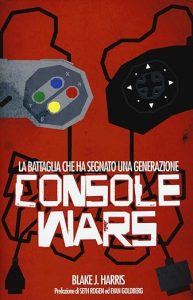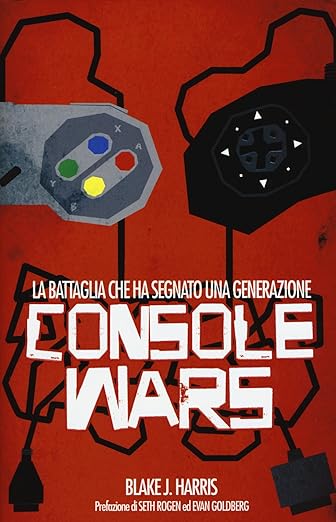
Nintendo held a near-total grip on the video game industry when this story begins, and Console Wars spends its opening chapters making sure you understand exactly how insurmountable that dominance looked in 1990 before Tom Kalinske, a man the synopsis describes as knowing nothing about video games and everything about fighting uphill battles, walked into Sega's American offices. Blake J. Harris built this audiobook from more than two hundred interviews with former Sega and Nintendo employees, and that reporting density shows early: this is not a nostalgic retrospective so much as a genuine business thriller with named sources and internal disputes driving the narrative forward. One listing quirk worth flagging immediately: this edition's narrator credit currently reads 'Elvis himself for an intimate listening experience,' which is obviously placeholder text rather than an actual production credit, so treat the actual narrator as unconfirmed for now.
First, the Big Picture
Harris structures the book like the business thriller its marketing comps, The Accidental Billionaires and Moneyball, promise, and the comparison holds up better than most publisher-supplied comp titles do. A clear underdog protagonist emerges in Kalinske, a clear antagonist in Nintendo's market dominance, and a genuinely satisfying arc as Sega's scrappier, more aggressive marketing culture starts chipping away at a monopoly that looked untouchable at the outset. What keeps it from tipping into hagiography is the interview density: with source material from over two hundred former employees on both sides, Harris has enough competing accounts to render internal Sega politics, and Nintendo's own strategic missteps, in genuine texture rather than a simplified hero's journey.
The book earns its length, all twenty hours and forty-one minutes of it, by refusing to stay narrowly focused on boardroom strategy. Harris moves fluidly between corporate maneuvering and cultural history, tracing how Sonic versus Mario became a genuine schoolyard rivalry, how the console wars eventually reached Congress through hearings on video game content, and how a fight between two Japanese-rooted companies became, in the synopsis's own framing, a proxy battle between the US and Japan more broadly. That range is ambitious for a business narrative, and it mostly pays off, though it does mean the book asks for real patience across its considerable runtime rather than delivering a tight, economical business case study.
Why Listen to Console Wars
Regardless of who is actually narrating this edition, the book itself is built for audio in a way business nonfiction does not always manage. Harris reconstructs entire scenes and conversations from his interview subjects' recollections, meaning long stretches of the book read like dramatized dialogue between real executives rather than summarized corporate history, which gives a narrator genuine character work to do: distinct voices for Kalinske, for Sega of Japan's leadership, for Nintendo's more buttoned-up executives. That structural choice, dialogue-driven scenes over dry reported summary, is exactly the kind of material that benefits from a skilled audio performance, so listeners should sample the opening chapter before committing to twenty-plus hours, since narration quality will matter more here than in a typical business book.
The reader response attached to this listing skews toward listeners who lived through the actual console wars of the 1980s and 90s firsthand, and that generational nostalgia comes through clearly even where the specific review text sits outside English. It tracks with what makes the book work as more than a business case study: anyone who remembers choosing a side, literally owning a Sega Genesis or a Super Nintendo as a kid, gets a reported, sourced account of exactly what was happening in the boardrooms while that schoolyard rivalry played out. The 4.4 rating across 229 ratings suggests that appeal extends well beyond readers who specifically follow gaming industry history as a niche interest.
A Few Reservations
This narrator-credit anomaly is worth taking seriously as a caution rather than dismissing as a joke: whoever is actually credited on your specific edition, this listing does not reliably confirm it, so if narrator performance is a dealbreaker for you on a twenty-hour commitment, verify the actual credited narrator through your retailer before purchasing rather than trusting whatever name happens to be showing here at the moment. It is a minor issue in the scheme of the book's actual content, but it is the kind of detail that matters more on a title this long than it would on a two-hour listen.
Because Harris reconstructs dialogue and internal conversations from interview recollections rather than contemporaneous transcripts, some scenes carry a novelistic polish that invites a reasonable question about precision versus dramatization. He is transparent about his methodology in the source material, but listeners who want strictly documentary-grade business history, quotes drawn only from verifiable primary sources, should know this leans toward narrative nonfiction's looser conventions. That is a defensible choice for readability and it is clearly disclosed, not hidden, but it is a different contract with the reader than a heavily footnoted academic business history would offer.
Should You Listen to Console Wars?
This audiobook is built for anyone who grew up during the actual console wars of the 1980s and 90s, or who simply loves a well-reported underdog business narrative in the Moneyball tradition. Video game industry history buffs will find genuine reporting depth here beyond what most gaming journalism attempts, and readers of business narrative nonfiction generally, even without a personal Sega or Nintendo allegiance, will find Kalinske's story compelling on pure underdog-strategy terms. Given the twenty-plus hour runtime, it also rewards listeners who enjoy a long-haul narrative history they can return to over multiple weeks rather than needing a quick single-sitting read.
Skip it if you want a tight, economical business case study rather than an expansive, sometimes dialogue-heavy narrative history, or if the uncertain narrator credit on this specific listing is enough of a dealbreaker that you would rather confirm the performer before committing to such a long runtime. Readers looking for a purely technical or design-focused history of the consoles themselves, rather than the corporate and marketing battle around them, should also look elsewhere.
In Brief
- Narration: The narrator credit shown on this listing looks like placeholder text, not a genuine one, so treat narration quality as an open question until you can verify the actual performer.
- Themes: Business underdog narrative, 1990s gaming industry history, corporate rivalry
- Mood: Fast-paced and dramatic, genuinely thriller-adjacent
- Verdict: A richly reported business narrative that earns its Moneyball comparison, worth the twenty-plus hours for anyone who lived through or loves 90s gaming history.
Questions Listeners Ask
Who actually narrates this audiobook, since the listed credit looks like a joke?
What this specific listing currently shows in the narrator slot reads like placeholder text rather than a real credit, so the actual narrator is unconfirmed here; verify the credited performer through your retailer before committing to the twenty-hour runtime.
Is this audiobook only for people who already know a lot about the video game industry?
No. It is structured as a business underdog narrative in the Moneyball tradition, so readers of business nonfiction generally will follow it without deep prior gaming industry knowledge.