- Voice: Virtual Voice handles the technical content consistently, though the synthesized delivery lacks the inflection that would help listeners parse complex diagnostic sequences more easily.
- Big ideas: ASE T5 exam preparation, heavy truck suspension and steering systems, real-world diagnostics
- Atmosphere: Systematic and methodical, with a study-guide rhythm that suits exam preparation
- Worth it?: Philip Martin McCaulay's ASE T5 study guide audiobook covers the exam content thoroughly, though the Virtual Voice narration makes it a supplementary listen rather than a standalone study resource.
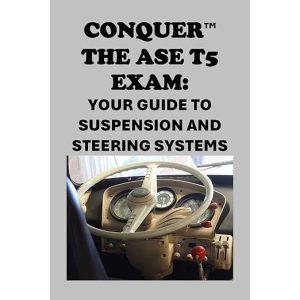
Conquer the ASE T5 Suspension and Steering Exam is part of Philip Martin McCaulay's Automotive Exams series, a catalog designed to help technicians work through the material required for ASE certification across multiple specialty areas. This particular volume covers the T5 exam, which focuses on suspension and steering systems for medium and heavy trucks, and the audiobook version, narrated by Virtual Voice, works through the full scope of the exam content in just over two hours. For technicians who absorb material better through listening than reading, the audio format offers a specific kind of study flexibility that a physical textbook does not, especially for those whose study time occurs during commutes or between shifts.
The coverage is comprehensive in scope. McCaulay organizes the content around the major system components: shock absorbers, leaf springs, torsion bars, ball joints, tie rods, and the increasingly common electronic power steering systems that appear in modern heavy truck configurations. Each section explains how the component functions under normal conditions before addressing failure modes and diagnostic strategies. Case studies illustrating common real-world problems, including excessive vibration, uneven tire wear, and wheel alignment drift, anchor the theoretical content in practical application, which is useful for technicians who learn better from problem-scenario framing than from abstract component description alone.
Embedded Questions Mimic Real Active Recall
The audiobook's most significant structural feature is the inclusion of practice questions embedded alongside the chapter content. For a study guide, this is genuinely useful: the questions help you test retention immediately after covering material rather than requiring you to flip to a separate section. In audio format, this means the listen moves between explanation and examination in a pattern that mimics active recall, which is more effective for long-term retention than passive review alone. McCaulay's approach to exam strategy in the final section, covering time management and effective troubleshooting frameworks for the test day itself, rounds out the content with practical guidance that goes beyond content knowledge alone.
The safety procedures section deserves particular mention. Working with heavy truck suspension components involves hydraulic systems and significant component weights, and McCaulay gives this area appropriate attention. For technicians who are relatively new to medium and heavy truck work coming from light vehicle backgrounds, the safety protocols here are not just exam content; they are operationally relevant to daily shop practice and worth retaining beyond the certification test itself.
Two Hours Covers the Exam in Order
The two-hour-plus runtime positions this audiobook as something you can work through in a single focused session, which is a realistic study format for technicians with limited dedicated reading time. The Automotive Exams series is structured around accessibility: McCaulay writes for working technicians who need exam preparation resources they can use during commutes, during lunch breaks, or during downtime in ways that a textbook does not accommodate. That flexibility is a real advantage for the series' intended audience.
The content balance between theory and diagnostic application is well-managed. McCaulay does not spend the runtime on academic elaboration that the T5 exam will not test. He covers what the exam requires in the order the exam content outline suggests, which means time spent listening directly addresses the content areas that will appear on the test. For technicians whose hands-on experience is strong but whose formal knowledge of component nomenclature and system theory needs reinforcement, the audiobook provides exactly the kind of structured review that exam preparation requires without becoming longer than the material warrants.
Synthesized Narration Misses Causal Emphasis Cues
The Virtual Voice narration is the primary limitation of this audiobook. Synthesized narration handles factual and definition-oriented content reasonably well, but the T5 material includes diagnostic sequences where step-by-step logic and causal relationships are load-bearing, and a synthesized voice lacks the natural emphasis that a human narrator would use to signal which information in a sequence is most critical. Technicians using this audiobook as their primary study resource should supplement with written materials to ensure they are correctly parsing the technical sequences rather than relying solely on the audio delivery.
The short runtime also means that coverage, while comprehensive in scope, is not deep on any individual topic. This is a review guide rather than a full technical manual. Technicians who need deeper background on any of the systems covered will want to supplement with OEM materials or full-length technical texts. The audiobook is best understood as exam-targeted preparation rather than a complete reference for suspension and steering system knowledge.
Cognitively Demanding for Purely Audio Learners
Technicians actively preparing for the ASE T5 exam who learn well through audio will find this a useful supplement to their study regimen. The organized, exam-aligned structure means time spent listening directly addresses the content areas that will appear on the test. For technicians already strong in hands-on practice but needing to reinforce theoretical vocabulary and system knowledge, the balance of explanation and practice questions suits that specific preparation gap well.
Technicians looking for a comprehensive technical reference rather than an exam preparation guide will find the coverage too brief for that purpose. And anyone who finds Virtual Voice narration cognitively demanding for technical material, particularly for content involving multi-step diagnostic logic, should plan to use the audiobook alongside written materials rather than as a standalone resource. Used in that supplementary capacity, the audiobook delivers genuine study value for the T5 certification path.
Is this audiobook a complete substitute for a printed ASE T5 study guide?
The audiobook covers the T5 exam content in organized, exam-aligned sequence with practice questions, but the Virtual Voice narration means technical diagnostic sequences may be harder to parse than they would be in text. Most technicians will get the best results using the audiobook alongside a written resource rather than as their only study material.
Does the audiobook include practice questions for the ASE T5 exam?
Yes. Practice questions are embedded throughout the content to reinforce key concepts after each topic is covered. The final section also includes exam strategy guidance covering time management and troubleshooting frameworks specific to the test format.
How does the Virtual Voice narration affect the technical content in this audiobook?
Virtual Voice handles factual and definitional content adequately but lacks the natural emphasis that human narrators use to signal priority in complex sequences. Diagnostic logic and step-by-step procedures are the areas where the narration limitation is most significant; written materials should supplement for those sections.
Is this audiobook appropriate for technicians transitioning from light vehicle to heavy truck certification?
The content covers medium and heavy truck suspension and steering systems specifically, including the hydraulic components and safety protocols relevant to heavier equipment. Technicians coming from light vehicle backgrounds will find the safety section particularly useful, though the study guide format assumes a baseline of mechanical familiarity.