In Brief
- Performance: J.F. Harding handles the dual tension of Quinn's internal concealment and Vitali's dawning recognition with a controlled intensity that suits dark romance's demand for emotional pressure; the male POV narration works well for this boss-bodyguard dynamic.
- What it covers: Forbidden same-sex attraction, trust and self-worth, emotional violence and loyalty
- Feel: Raw and emotionally pressurized, with violence and tenderness in close proximity
- Our call: Confession is a tightly wound second entry in Rina Saint's Constantine Brothers series that lands harder emotionally than the first book and makes Quinn and Vitali's dynamic feel genuinely earned.
Quinn's secret in this audiobook is the kind that has calcified over years into something almost indistinguishable from identity. Being in love with your boss, a man you have assumed to be straight, while working as his bodyguard across a world of organized crime and masculine hierarchy, is not just an inconvenient crush. It is a structural threat to everything Quinn has built. Rina Saint writes in a register that many dark romance readers will recognize immediately: the interior monologue is claustrophobically honest, the secondary world is sketched with enough detail to feel real, and the romantic tension is the kind that hurts before it resolves.
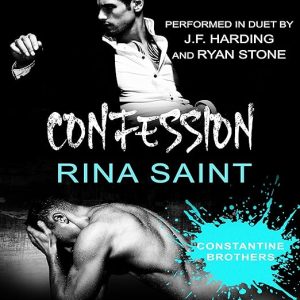
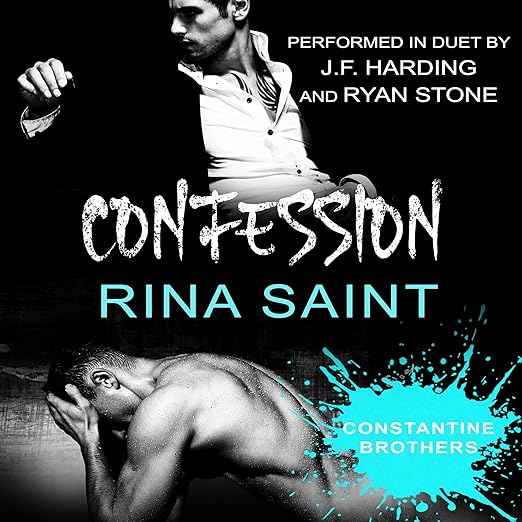
Confession by Rina Saint is book two in the Constantine Brothers series, narrated by J.F. Harding across five hours and forty-one minutes. Quinn is a bodyguard who has been in love with Vitali for years. Vitali is straight, or so Quinn has believed. That is the premise the audiobook begins with, and the story Saint constructs around it is less about whether the attraction is mutual and more about what it costs Quinn to maintain his silence, and what it costs Vitali to finally stop pretending not to see what is directly in front of him.
Harding Holds Two Emotional States at Once
J.F. Harding's narration carries significant weight here. The dual tension of Quinn's self-suppression and Vitali's increasingly difficult-to-deny behavior requires a narrator who can hold two emotional states in the same performance: the controlled surface of someone who has locked down his feelings for self-protection, and the fraying edges of that control under sustained pressure. Harding manages that balance with a focused intensity that suits the material well.
The Constantine Brothers series sits in the darker end of LGBTQ plus romance, and reviewer Deni notes that this second entry is less dark than the first but works better for its specific character pairing. That calibration is useful: Confession is emotionally violent without being nihilistic, which is a harder balance to sustain than it sounds. The reviewer who notes the book will leave you raw is accurate. The hard conversations Deni references are not softened for palatability. Quinn's belief that he does not deserve the things he has, a home, a position, trust, surfaces throughout the narrative as an organizing psychology, and Saint does not resolve it cheaply. The moment Laurie Jean quotes from Vitali's declaration is positioned to land as a release of pressure that has been building since the first pages, and the reviews suggest the setup earns that weight.
Withholding Is the Whole Narrative Structure Here
The audiobook format serves this kind of internally focused dark romance particularly well. Quinn's narrative voice is built on what he withholds as much as what he says, and Harding's performance makes that structure audible in a way that a reading experience delivers differently. The restraint in the narration, the moments where Harding holds back emotional intensity to match Quinn's suppression, creates a tension that audio sustains more effectively than a reader's internal pacing might allow.
The explicit content in Confession is handled by J.F. Harding with the same directness that the narrative voice requires. Dark romance readers who have encountered audiobook narrators who soften or detach from the more intense content will notice that Harding does not. The commitment to the material across five hours is consistent, which matters considerably for a book whose emotional intensity needs to stay pressurized rather than releasing between chapters.
For listeners invested in the Constantine Brothers series from book one, this entry extends the world without repeating its predecessor's dynamic. The boss and bodyguard configuration over two-plus years of proximity, as Laurie Jean describes it, creates a relationship history that Confession can draw on without needing to build from scratch. That accumulated history is part of what makes the emotional stakes legible; by the time Quinn's shooting forces Vitali's eyes open, the listener has the context to understand what that moment means within the full weight of what both men have been carrying. At nearly six hours, the audiobook has room to honor that weight without rushing.
Saint Renders Power Dynamics Without Interrogating Them
Saint's writing operates in a space where violence, possession, and emotional intensity are features rather than narrative problems, and listeners who approach dark romance expecting those elements to be critically examined rather than dramatized may find the framing uncomfortable. The book is less interested in interrogating its power dynamics than in rendering them with emotional honesty, which is a legitimate artistic choice but one that requires a reader who accepts that framework. The violence in the story is real and present, not stylized into abstraction, and the emotional cruelty of some interactions is written without the softening that more mainstream romance typically applies.
The series context also matters. Readers arriving at Confession without book one will find that Quinn and Vitali's dynamic is legible, but the world, the other Constantine brothers and the organized crime infrastructure, will feel less coherent. The premise that pieces of Quinn's life have been held together through effort rather than ease has more resonance if the first book's atmosphere has already established the stakes of that world. First-time readers of dark MM romance should also be prepared for explicit content and a high emotional temperature throughout.
Dark MM Romance Readers Who Finished Book One
Confession is ideal for readers of dark MM romance who want emotional depth alongside intensity, who have read or listened to the first Constantine Brothers book and want to continue the series, and who are comfortable with violence, emotional darkness, and explicit content in a same-sex romance framework. Readers who prefer lighter, low-angst romance or who want the power dynamics interrogated rather than dramatized should look elsewhere. Listeners new to dark romance who want to start with this series should begin with book one first.
Frequently Asked Questions
Does this audiobook work as a standalone or do I need to have listened to book one first?
The core romantic story between Quinn and Vitali is self-contained enough to follow without book one, but the Constantine Brothers world and supporting characters will feel less fully realized. Reviewer Deni describes it as the second book in the series, and the emotional impact lands more completely with the first book's context.
How explicit is the content in this audiobook?
The book sits at the explicit end of dark romance and contains detailed sexual content alongside violence and emotionally intense scenes. Saint writes in a no-fade-to-black register and the audiobook reflects that. It is labeled as containing mature themes and is intended for adult listeners comfortable with the dark MM romance subgenre.
Is Confession darker in tone than typical LGBTQ plus romance audiobooks?
It sits in the darker range of the subgenre. Reviewer Deni notes it is less dark than the first Constantine Brothers book but describes the emotional register as raw and the conversations as hard. Violence is present and treated seriously. It is darker than most contemporary romance but calibrated for readers already familiar with dark romance conventions.