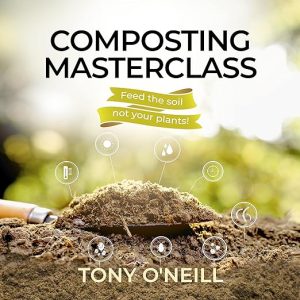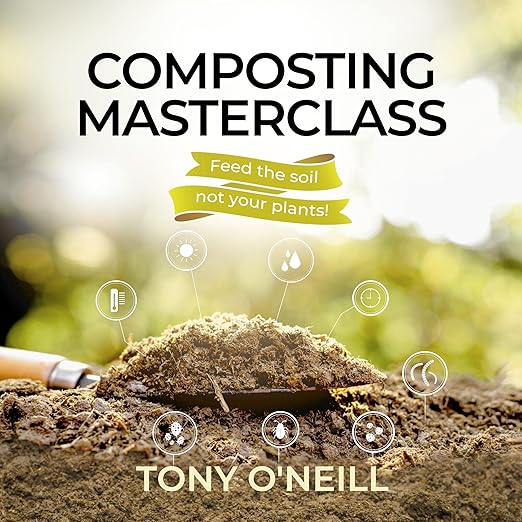
Composting is one of those gardening practices that most people do at a rough approximation of correctly. Bags of kitchen scraps go in, something brown and soil-like eventually comes out, and the intermediate steps remain mysterious. Tony O'Neill's Composting Masterclass, narrated by Ric Chetter, is for listeners who want to understand what is actually happening in the pile rather than simply hoping for the best. At eight hours and thirty-nine minutes, this audiobook is substantially longer than most composting guides, and that length is intentional. O'Neill brings to this the same depth that distinguishes his teaching from the surface-level advice that fills most beginner gardening content.
The premise of the book is direct: millions of people struggle with composting because they have never been shown the underlying science. Most compost guides tell you what to do without explaining why, which means that when things go wrong, the composter has no framework for diagnosing the problem. Composting Masterclass builds that framework from the soil food web upward, treating compost not as a product you make but as a living system you participate in.
Microbiology First, Then Wet Versus Dry Piles
O'Neill's structural choice is to begin with microbiology before moving into practical application, which is either the book's greatest strength or its most demanding characteristic depending on what the listener brings to it. He covers the soil food web, the microbial ecology of decomposition, the chemistry of carbon and nitrogen ratios, and the physics of heat management in a working pile. One reviewer, a professional soils engineer with 45 years of experience, described this as "almost an advanced textbook" and recommended not trying to master it all in one reading. That is honest and useful guidance from someone who already knew a great deal going in.
The chapter sequence is logical and cumulative: what composting is and why it matters, soil food web introduction, the elements of a compost pile, site selection, aerobic and anaerobic composting processes, composting vessels, and finally applying finished compost to the garden. Each chapter builds on what preceded it, and the instructional logic holds throughout. O'Neill's treatment of aerobic versus anaerobic processes is particularly useful for troubleshooting, since most compost failures fall into one of two categories: too wet and airless, or too dry and inactive. Having the science behind both failure modes makes diagnosing a struggling pile far more practical.
Chetter's Calibrated Tone for Hands-Free Garden Listening
Ric Chetter's narration suits the material well. The technical sections require a delivery that is neither rushed nor condescending, and Chetter finds that register consistently. He makes the microbiology sections feel accessible without flattening the complexity, which is exactly the right calibration. For a listener absorbing content about fungal networks and bacterial succession in a compost pile, the tone of the narration matters considerably. Chetter does not perform enthusiasm he does not have, which makes the sections where O'Neill's genuine passion for soil ecology comes through feel earned rather than manufactured.
The audiobook format is well suited to composting content in a way that might not be immediately obvious. Much of what O'Neill teaches is best absorbed when the listener is already in the garden context, turning a pile or layering materials. The hands-free nature of audio means you can listen while doing, which is exactly how instructional content about physical practices should work. The nearly nine-hour runtime spreads naturally across a season of active garden work, with listeners returning to specific sections as their composting practice encounters particular challenges.
Reviewers with very different levels of experience consistently find the material valuable. The range of feedback, from experienced soils professionals to beginning gardeners who found it "comprehensive and inspiring," suggests the material holds up across a range of starting knowledge levels, though the more technical sections will require more from listeners with less background and may warrant re-listening.
Genuinely Dense Science, and a Fixed Early Printing
The density of the scientific material is the honest caveat for listeners approaching this with basic gardening knowledge. O'Neill covers chemistry, physics, and microbiology in real depth, and listeners who came to composting for simple kitchen-waste management may find the material more intensive than they expected. The soils engineer reviewer noted explicitly that the math should not intimidate listeners, but also acknowledged it is present. This is not a ten-point list of composting tips. It is a genuine deep dive into why decomposition works the way it does, and listeners who want the practical tips without the underlying science may find it more than they signed up for.
One early printing documented formatting and content issues that led to negative reviews, but those were corrected in a subsequent version. At least one reviewer edited their assessment to reflect that the revised version resolved the problems they had encountered. Listeners accessing the current audiobook should not encounter the issues documented in those early reviews.
Aimed at Piles That Stalled or Smelled Wrong
This audiobook is built for gardeners who have tried composting and want to understand why their piles stalled, smelled wrong, or failed to break down properly. It is equally valuable for growers who are getting composting right intuitively but want the scientific framework behind what they are doing, so they can explain it to others or adapt their approach when conditions change. Complete beginners can start here, but should expect to revisit sections and take their time rather than absorbing it all in one pass. Listeners who want a quick overview of composting basics will find Composting Masterclass more comprehensive than necessary for that purpose. O'Neill rewards the gardener who is ready to go deep, and Chetter's narration makes that depth accessible across the full eight-and-a-half-hour runtime without ever making it feel like a lecture.
Quick Take
- Voice: Ric Chetter delivers Tony O'Neill's technical material with appropriate gravity, making the microbiology sections accessible without dumbing them down.
- Big ideas: Soil food web science, aerobic versus anaerobic composting, building garden fertility from the ground up
- Atmosphere: Methodical and genuinely illuminating, with the kind of depth that rewards a second listen
- Worth it?: The most scientifically substantive composting audiobook in the genre, built for gardeners ready to understand why things work, not just how.
Before You Listen
Is the Composting Masterclass audiobook appropriate for complete beginners, or does it assume prior gardening knowledge?
O'Neill structures the book to be accessible from the beginning, but the scientific depth means complete beginners should expect to absorb the material in multiple sessions rather than one straight listen. The soil food web and chemistry sections in particular reward patience and may require re-listening. A professional soils engineer found sections 'almost an advanced textbook,' so the depth is real.
How does the Composting Masterclass audiobook handle the technical science of microbiology and soil chemistry?
O'Neill covers the science genuinely rather than glossing over it, and Ric Chetter's narration makes the technical sections accessible without oversimplifying. The book treats the science as necessary rather than optional context. Listeners who want to understand why composting works, not just how to do it, will find the level of detail valuable.
Is the Composting Masterclass audiobook more detailed than other composting guides available?
For listeners who want scientific depth, yes. A soils engineer with decades of experience described it as more thorough than other books on the subject. For listeners who want practical tips without the underlying science, other shorter guides may be a better fit. This audiobook rewards the gardener who wants to understand why things work, not just what to do.