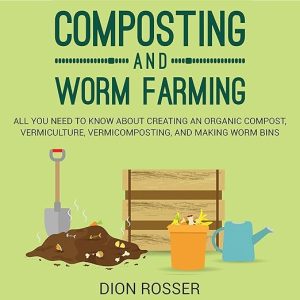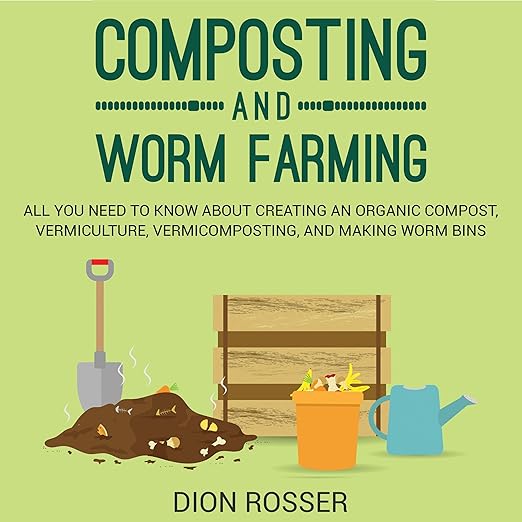
I picked up this two-part audiobook on a rainy Sunday afternoon when I was trying to figure out what to do with the sad pile of kitchen scraps accumulating on my counter. I had been composting loosely for a year, tossing things into a heap in the corner of my backyard with very little system behind it, and I suspected I was doing most of it wrong. By the time Ivan Busenius had walked me through the first few chapters of Dion Rosser's composting guide, I had a list of three things I was already getting wrong and a genuine sense that this was fixable.
That felt like a good sign. The audiobook packages two separate manuscripts into one 6.5-hour listen: the first on building and maintaining a traditional backyard compost pile, the second on worm farming, also called vermiculture. Both manuscripts share a stripped-down instructional style. Rosser is not here to entertain you; he is here to teach you a process. Whether that reads as focused or dry depends entirely on your tolerance for sequential how-to content.
From Carbon Ratios to Black Gold
Packaging two full guides into a single audiobook is a practical choice, but it does create some unevenness in the listening experience. The composting section moves efficiently from the basics of what makes a healthy heap, the carbon-to-nitrogen balance, moisture levels, turning frequency, through to troubleshooting common problems like slow decomposition or pest intrusion. The material never talks down to beginners, but it also never loses those who already know their way around a compost bin. One reviewer who had been composting for years noted learning new things despite existing experience, which is a fair endorsement of the depth here.
The worm farming section shifts the focus considerably. Vermiculture is a more contained, indoor-friendly practice than traditional composting, and Rosser treats it with matching specificity. He covers worm species selection, the differences between composting bin types, layering techniques, and crucially, the harvesting of worm castings, sometimes called black gold, along with what actually kills a worm population if you are not careful. For complete beginners to worm farming, this section alone is worth the listen.
Verbal Blueprints Struggle to Build a Bin
This is exactly the kind of content that some listeners find effortless in audio format and others find genuinely frustrating. Because both manuscripts are process-driven and sequential, the audio format works well for the conceptual layers, understanding why a carbon-to-nitrogen ratio matters, or what makes worm castings more bioavailable than standard fertilizer. You can listen while doing the very work being described. That practical hands-free quality is one of the better arguments for this title as an audiobook rather than a print guide.
The limitation is real, though. Building a compost bin or worm bin from scratch requires spatial visualization. One reviewer who returned the book specifically mentioned that the construction instructions lacked accompanying images, rendering the building directions difficult to follow. In audio, that problem is compounded. Rosser describes several bin configurations, but without a picture or diagram, listeners are essentially building from verbal blueprints. If your primary goal is constructing a specific bin type, a companion visual source would help enormously.
Busenius Keeps Compost Talk Undramatic
Ivan Busenius brings a calm, measured delivery to the material that suits the subject. He does not inject dramatic flair into passages about nitrogen content, which is appropriate, nobody needs theatrical compost instruction. The pacing is steady rather than energetic, and the production quality is clean. Busenius's voice has a neutral quality that makes sustained listening comfortable even when the content becomes repetitive, as instructional audio sometimes does during the troubleshooting sections. Those expecting a more engaging storytelling voice will not find it here, but the narration serves the book's core purpose well enough.
New Composters Get Two Guides in One
If you are new to composting and want a structured introduction to both traditional pile composting and worm farming in a single affordable listen, this delivers real value. It works especially well for people who garden and already understand why soil health matters but have not gotten around to closing the loop on kitchen waste. Experienced composters with specific questions about troubleshooting or worm species selection may also find the depth satisfying. Skip it if you need to build a physical structure from the instructions, pull up a YouTube video for that part, or if you are hoping for inspiration and narrative context alongside the technique. This is a how-to guide, plainly and fully.
The Short Version
- Narration: Ivan Busenius delivers a clear, steady performance suited to instructional content, serviceable and unfussy, which works for the subject matter.
- Themes: Soil health and closed-loop gardening, self-sufficiency, vermiculture as a household practice
- Mood: Practical and grounded, with the quiet enthusiasm of someone who genuinely loves dirt
- Verdict: A solid double-header for anyone who wants to stop buying fertilizer and start making their own, though listeners wanting visual guidance on bin construction may feel the format's limits.
Does the audiobook cover both traditional composting and worm farming equally, or is one section more developed than the other?
Both sections receive substantial coverage across the 6.5-hour runtime. The composting section covers heap construction, balance ratios, and troubleshooting; the worm farming section goes deep on species selection, bin setup, feeding rules, and harvesting castings. Neither feels like an afterthought.
What is the narration style like, is it engaging or purely instructional?
Purely instructional. Ivan Busenius delivers a clear, unhurried reading that suits the content, but there is no storytelling flair or humor. Think of it as a well-read manual rather than a conversational guide. Listeners who like their how-to content delivered with personality may find it monotonous over the full runtime.