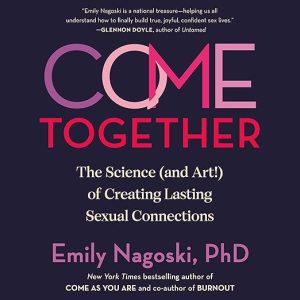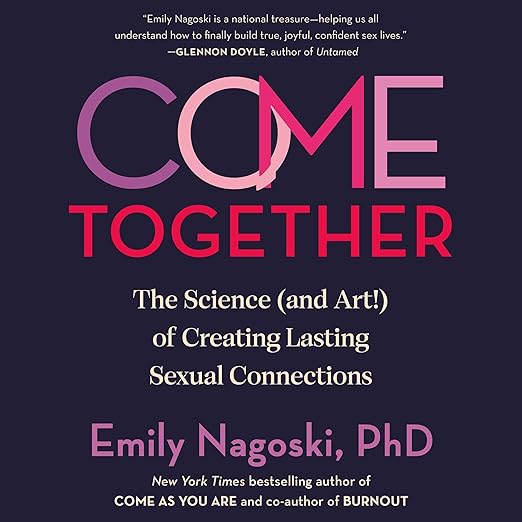
Emily Nagoski's earlier work, Come as You Are, rewired a generation's understanding of women's sexuality. Her follow-up audiobook, Come Together, narrated by Nagoski herself across twelve hours and two minutes, takes that foundation into the specific territory of long-term relationships. The central argument here is more counterintuitive than the title suggests: this book is not about how to want sex more often. It is about whether you like the sex you are having, which is a different question entirely, and one that most popular intimacy advice either ignores or actively misframes. A downloadable PDF of visuals and resources is available alongside this edition.
Emotional Floorplans Belong in the Kitchen
The opening move of the book is to dismantle the myth that sexual desire is highest at the start of a relationship and inevitably declines over time. Nagoski presents this as not merely pessimistic but factually incorrect, and the distinction matters because the belief itself becomes a self-fulfilling architecture: couples who accept inevitable decline stop doing the things that maintain connection, which produces the decline they expected to be inevitable. What Nagoski offers instead is a model of responsive desire, where spontaneous desire is identified explicitly as not the goal for sustained long-term intimacy. That reframing is the load-bearing structure of the book, and she returns to it from multiple angles across the twelve-hour runtime without the repetition ever feeling like padding. Nagoski's argument about barriers to desire, from stress and body image to gendered scripts about how sex should look, is one of the more practically useful sections. She does not treat these as personal failings to overcome but as structural features of the context in which desire operates, and naming them as such removes a layer of shame that often compounds the original difficulty.
The emotional floorplan concept is the audiobook's most original practical contribution. Nagoski defines this as a map of the psychological terrain a person needs to traverse to arrive at a genuinely erotic state of mind, including the conditions that help and the conditions that reliably prevent it. Teaching couples to understand both their own and their partner's emotional floorplan is presented as the primary mechanism through which long-term sexual connection can be maintained without performance or coercion. Reviewer W. Noble described it as a book that belongs in the kitchen with the cookbooks, meaning it is practical, reference-worthy, and applicable in daily life rather than aspirational theory. That description is unusually precise and unusually accurate for a review.
Doyle Calls Nagoski a National Treasure
Nagoski's self-narration is the most significant argument for the audio format here. Glennon Doyle called her a national treasure for her ability to help people build true, joyful, confident sex lives, and that quality, the combination of scientific rigor with genuine emotional investment in the listener's wellbeing, is present throughout the narration. She does not perform warmth; she delivers information in the tone of someone who has thought carefully about these questions for a long time and wants the answers to be useful to real people in real relationships. The humor she brings to some of the more clinical material, the vocabulary sections, the discussions of responsive versus spontaneous desire, prevents the audiobook from ever feeling like a lecture or a therapy transcript.
Reviewer Emily described reading it with her spouse to get the most from the content, and that is a reasonable way to approach the audiobook as well. The material is designed for application in a relationship, and the vocabulary Nagoski provides for discussing desire, barriers, and the mood-as-destination concept works better when both partners have the same reference frame. At twelve hours and two minutes, the audiobook is substantive enough to function as a proper course rather than a surface treatment of its subject. The downloadable PDF companion provides visuals and additional resources that extend the listening experience into a practical toolkit for ongoing use. The audiobook is particularly effective for the vocabulary sections, where Nagoski introduces terminology for discussing desire with a partner. Hearing the language spoken rather than reading it on a page makes it more immediately usable in actual conversation, which is the audiobook format's clearest advantage for this kind of material.
Nagoski Redirects the Question Away from Frequency
Nagoski is explicit that this book is not about frequency. Come Together does not promise more sex or hotter sex; it promises a framework for understanding and improving the quality of the sexual connection you want to have, at whatever frequency makes sense for your specific relationship. Listeners who arrive expecting a technique manual for increasing desire will find that the book keeps redirecting toward the question of whether you are enjoying what you are having. That redirection is deliberate and is the book's central intellectual move, but it can feel like a sidestep if you arrived expecting a different kind of answer.
The scope of the book is primarily partnered and couples-oriented in its examples, though Nagoski explicitly notes the framework extends to any partnered configuration. The gendered beliefs about how sex should be thread is genuinely critical of normative sexual scripts, and the book is more intersectional in its awareness than most mainstream sex-science writing. Its central case studies are drawn predominantly from cisgender, coupled experiences, and listeners outside that frame will find the principles applicable but may need to do more translation work than the text directly facilitates.
Long-Term Couples Are the Ideal Audience
Couples navigating the specific challenge of maintaining sexual connection across years and decades are the ideal audience for this audiobook. Anyone who found Come as You Are useful and wants to apply that foundation to a long-term relationship will find this the direct continuation they are looking for. People who want science-grounded, non-prescriptive tools for honest conversations about desire with a partner will find the emotional floorplan framework and the responsive desire vocabulary genuinely practical. Listeners expecting a sex technique guide will find the book's consistent redirection frustrating, though the argument Nagoski is making suggests that the redirection itself is the most useful intervention she can offer.
Before You Listen
Should I read Come as You Are before listening to this audiobook?
It is not required. Come Together is designed to stand on its own, and Nagoski reintroduces her core framework within this volume. However, readers who have already internalized the Come as You Are material will find this audiobook's specific focus on long-term relationships builds on that foundation in a way that deepens both works.
How explicitly does the audiobook address sexual content?
The content is frank and scientifically grounded but not graphic. Nagoski writes and speaks about sexuality with clinical precision and warmth rather than explicit description. The audiobook is aimed at adults navigating real relationship questions, not at a prurient or entertainment-oriented audience.
Is the Come Together audiobook better than the print book?
The self-narration by Emily Nagoski PhD is a genuine asset. Her voice carries the authority of the researcher and the warmth of someone invested in her audience's wellbeing simultaneously, and the humor she brings to clinical material prevents the audiobook from ever feeling like a lecture. The PDF companion also extends the experience into a practical reference tool.