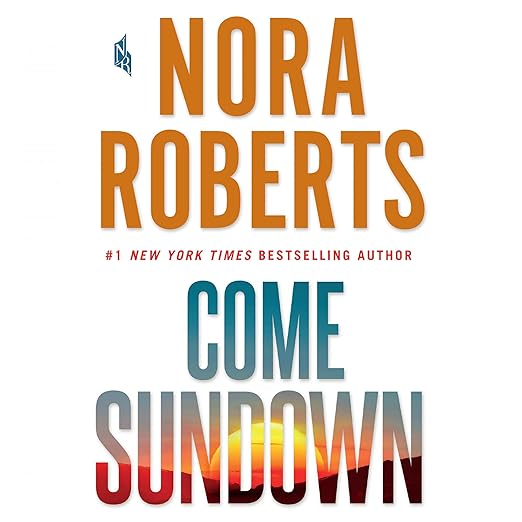
- Read by: Elisabeth Rodgers handles Roberts's multi-strand Montana story with composure, maintaining tonal control across the book's sharp shifts between ranch romance and genuinely dark psychological territory.
- At its heart: Generational family bonds under siege, survival and identity after prolonged trauma, romance as stability against chaos
- Vibe: Warm and grounded, with a current of genuine dread underneath
- Short version: One of Roberts's more structurally ambitious standalones, and it earns the darkness it asks you to sit with, though listeners sensitive to depictions of abuse should approach with care.
I remember finishing Come Sundown on a Tuesday night when I should have been asleep. I had about four hours left and could not stop. Nora Roberts has written well over two hundred books, and I say that not to diminish what she does but to acknowledge that her output invites a certain expectation of smoothness, of the reliable. This book is something a little different from her standard formula. It is darker, more structurally layered, and it carries a weight that lingers after the final chapter.
The setup involves the Bodine/Longbow family ranch and resort in western Montana, a thirty-thousand-acre operation run by Bodine Longbow and managed across four generations. Into this stable world arrives Callen Skinner, a new hire with history in the valley. Romance between Bo and Cal develops in parallel with a separate thread that the synopsis discloses upfront: Alice, Bodine's aunt who disappeared before Bodine was born, is alive and not far away, and her story involves captivity, psychological destruction, and eventual return. These two storylines move on separate tracks for most of the book before converging in the final act.
Roberts does something structurally interesting here that not all her readers will warm to. The novel switches between the present-day ranch story and flashbacks building Alice's ordeal, and the tonal contrast is severe. On one side you have Bodine's capable, grounded world, ranch operations, slow-building romance, family banter. On the other you have Alice's chapters, which one reviewer accurately described as involving horrific verbal, sexual, and physical abuse too overwhelming to read straight through. Roberts does not flinch or soften what happened to Alice. That honesty gives the eventual reunion its weight, but it also means listeners who prefer their Roberts without that darkness will be caught off guard.
Elisabeth Rodgers is a reliable Roberts narrator, and she demonstrates why here. She keeps Bo's voice distinct from Alice's fractured interiority, and she handles Cal with enough warmth that the romance thread feels earned rather than obligatory alongside everything else the novel is carrying. The Montana setting comes through in the pacing Rodgers brings to the ranch scenes, unhurried and rooted, which creates an effective contrast with Alice's confined world.
What Makes Come Sundown Worth Hearing
The Bodine/Longbow family is the best thing about this book. They function as a credible unit, and their dynamic gives the suspense plot its stakes in a way that simple romance would not. When the murders begin, with a bartender found battered in the snow, the danger registers because these characters feel worth protecting. The police suspicion falling on Cal is handled with more sophistication than the usual romance thriller red herring, and Roberts earns the eventual convergence of the two plotlines in a way that does not feel manufactured. The physical setting of western Montana also functions well; Roberts renders it as a place with real weather, real distances, and real isolation.
Things to Know Before Starting Come Sundown
The trigger warnings matter here. Multiple reviews flagged the rape and abuse content as genuinely intense, not background darkness but detailed and sustained. Readers who found similar content in books like Big Little Lies manageable will likely be fine, but it is content worth knowing about before you commit seventeen hours. The pacing in the middle section can also stretch, particularly in the ranch-management sequences Roberts uses to establish Bodine's world. These sequences do genuine character work, and Bodine is better for them, but they slow the thriller momentum noticeably.
Who Should Pick Up Come Sundown
Roberts fans who want something with more emotional weight than her standard romantic suspense will find this rewarding. Listeners who enjoy Montana ranch fiction but want darker stakes are well-placed here. Avoid this one if you are sensitive to prolonged depictions of psychological and physical abuse, which are central to Alice's chapters and cannot be easily skipped without losing important context for the ending. The book earned its Whoopi Goldberg summer read endorsement, but it earns it in a more complicated way than that designation might suggest.
Questions Listeners Ask
How graphic is the depiction of Alice's captivity in Come Sundown?
Several reviewers described the abuse sequences as intense and difficult to read, covering verbal, physical, and sexual violence over years. Roberts does not soften this material. The audiobook format, where you cannot easily skim, makes the content more immersive than print might be for sensitive listeners.
Is Come Sundown part of a series, or is it a standalone?
It is a standalone novel. There are no narrative threads left open requiring a sequel, and no prior Roberts books need to be read for context.