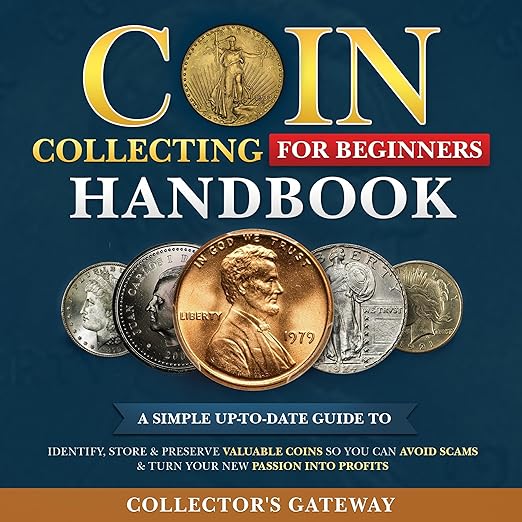
I have a small collection of coins that came from my grandmother, a few French and Belgian pieces from the early twentieth century that I have kept in a drawer for years without knowing what I actually have. The Coin Collecting for Beginners Handbook arrived in my queue at exactly the right moment: I had been meaning to find out what those coins were worth, and this audiobook gave me the framework to start asking the right questions rather than the wrong ones. That personal applicability is worth noting because one reviewer's account of inheriting her grandmother's collection, including the buffalo nickels and mercury head dimes in classic blue coin holders from the sixties, captures something real about how many people come to this hobby.
Collector's Gateway has produced a guide that does something useful for the beginner market: it takes numismatics seriously as a discipline with its own history and terminology rather than treating coin collecting as a diluted version of adult behavior that beginners need to be protected from. That approach shows up throughout.
Numismatic Terms and the History Behind the Coins
The handbook covers a genuinely broad range of material across just over four hours of audio. The essential numismatic terminologies section is a necessary foundation that most beginner guides handle superficially; this one is substantive enough that reviewers with years of casual collecting experience describe it as filling gaps they had not identified. The strategies for identifying and categorizing coins move logically from terminology into practical application, and the sections on storage, preservation, scam avoidance, and value assessment give the book a practical usefulness that extends well beyond the initial listen.
One reviewer describes it as a "deep dive into the hobby" rather than a run-of-the-mill beginners guide, and that distinction is accurate. The historical grounding, tracing the cultural significance of coinage and its relationship to broader history, gives collectors a reason to care about their coins beyond their monetary value, which is where the hobby tends to deepen into something lasting.
Jason Tibor's Steady Read, Backed by a PDF
Jason Tibor's narration is well-calibrated to the material. He maintains the approachable tone the guide aims for without flattening the content into the kind of enthusiastic sameness that makes four hours of hobby content feel like an endurance exercise. The terminology sections, which could easily become dry in less considered hands, come through with enough variation to hold attention.
The accompanying PDF, available alongside the audio in the Audible library, is genuinely useful for this content. Coin identification, grading criteria, and storage practice are all areas where visual reference material supplements the audio effectively. Listeners who plan to apply the material practically rather than just absorbing it will want to engage with both.
Honest About What Grading Advice Cannot Teach
One reviewer flags a minor production concern about the companion book's illustrations, preferring actual photographs of coins and coin shows over the AI-generated images used throughout. That is a text edition observation rather than an audiobook one, but it signals something about the publication's production values worth noting: the content is strong, the packaging somewhat generic. The audio itself does not carry that limitation.
The valuation sections are thorough but honest about their own limitations. The handbook explains the features that affect a coin's value and how to spot them, but as one reviewer observes, accurate grading at the level required for professional valuation requires experience that a book cannot fully transmit. The guide is clear about this rather than overselling what beginner knowledge can accomplish, which is the right approach.
Inherited a Coin Collection? Start Listening Here
The most immediately useful audience is someone who has inherited a coin collection and wants to understand what they have before doing anything with it. The handbook gives that listener enough framework to have informed conversations with dealers or appraisers, to recognize basic grades and conditions, and to understand what makes certain coins more significant than others. That knowledge is protective as well as educational.
New collectors who want to begin intentionally rather than randomly will also find the buying guidance and scam avoidance sections practically valuable. The guide's promise that starting is not as expensive as most people assume is born out in the content, there is a section on accessible entry points into the hobby that opens doors rather than closing them with intimidating price tags. Experienced collectors looking for advanced grading or investment analysis will find this too introductory, but that is accurate to the title's intentions rather than a flaw in its execution.