Before You Press Play
- Performance: Virtual Voice AI narration, functional and clear but toneless, which flatters practical content more than prose.
- What it covers: Hobbyist education, fraud prevention, building a legacy collection on a modest budget
- Feel: Practical and encouraging, with an informercial energy that is mostly useful
- Our call: A decent primer for absolute beginners that covers the essentials, though the AI narration and a few structural gaps keep it from being the definitive reference it presents itself as.
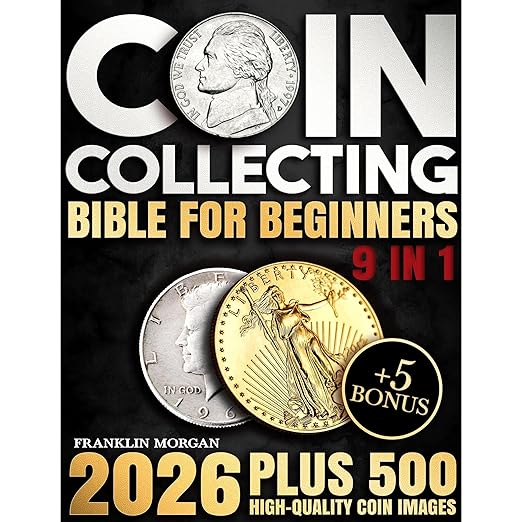
My late grandfather collected coins. Not seriously, not with any system, but with the persistent acquisitiveness of someone who simply found old money beautiful and interesting. After he died we found Whitman folders of Lincoln cents stuffed in a shoebox alongside a 1921 Morgan dollar that, it turned out, was worth considerably more than anyone had guessed. That experience is not unusual. Most people who come to coin collecting come through inheritance or accident, and most of them have no idea where to go next. Coin Collecting Bible for Beginners positions itself as the answer to exactly that moment, and for the most part it delivers what it promises.
Franklin Morgan's guide covers the foundational questions a new collector faces: how coins are graded, how to identify genuine value versus hype, where to source coins without getting defrauded, and how to store a collection properly so it holds rather than loses value. The synopsis promises insider techniques for decoding real value and methods for spotting ultra-rare error coins, the kind that can hide in pocket change or junk lots. Those sections represent the strongest material in the book, and the promise is mostly kept.
Where Virtual Voice Meets a Visual Gap
The book's title oversells its scope slightly. It is not a bible in the encyclopedic sense, it is a solid beginner's guide with some genuinely useful practical content. One reviewer who described themselves as a complete novice confirmed they learned a huge amount, but also identified missing elements: no glossary despite a fair amount of specialized terminology, some grammatical errors, and fewer illustrations than the subject probably requires. These are real limitations. Coin grading in particular is a highly visual discipline, and a text-first approach creates an inherent gap that the digital bonus materials the book promotes partially address but do not fully close.
The AI narrator, listed as Virtual Voice, handles the practical content adequately. Where AI narration struggles most is with anything that requires interpretive emphasis or conversational warmth, and those are precisely the qualities that distinguish good instructional content from a manual. The result is serviceable rather than engaging, and five hours of steady AI delivery does require some listener patience. That said, for reference material that you might revisit in sections rather than consume straight through, the tonelessness matters less.
Estate Sales and Roll Hunting Beat the Fakes
The strongest argument for this guide is its coverage of fraud avoidance. The coin collecting market is rife with fakes, overgraded coins, and opportunistic dealers, and Morgan gives this topic enough sustained attention to be genuinely useful. The sections on where smart collectors actually find deals, estate sales, roll hunting, online communities, are practical and specific in a way that general collecting guides often are not. For someone standing in front of a coin show table for the first time, this information is worth having.
The digital bonus materials are also worth noting. The synopsis lists a printable tracking template, a digital inventory system, grading guides, and a high-resolution gallery featuring over five hundred images of U.S. coins including Lincoln cents from 1793 to the present. Whether those materials justify the purchase for audio-only listeners depends on whether you plan to engage with the companion resources, but they represent genuine added value for the price.
Legacy-Worthy Hype Masks More Modest Content
The marketing language throughout is aggressive in the infomercial style that has become common in self-published hobbyist guides. Phrases like legacy-worthy collection and a million bucks worth of knowledge do not undermine the content, but they are signals about the register the author is working in. Listeners who prefer understated instructional writing may find the promotional energy tiresome. The content underneath the packaging is more modest and more useful than the presentation suggests.
Error coin identification is covered in the visual bonus materials but is harder to communicate in audio alone. If your primary interest is spotting rare mint errors, doubled dies, off-center strikes, repunched dates, the audiobook alone is an incomplete tool. You will need the companion materials, and ideally a loupe and a copy of the Red Book alongside.
Real Value for Beginners and Accidental Inheritors
Absolute beginners who want orientation before spending any money will get real value here. The same goes for people who have inherited a collection and need a framework for thinking about what they have. Experienced collectors will find little new. Those who need the grading and identification content visually rather than verbally should prioritize the digital supplements over the audio narration itself.
Does the Virtual Voice AI narration make this harder to follow than a human-narrated guide?
For practical how-to content the narration is adequate, but it lacks the emphasis and warmth that help listeners distinguish key points from background detail. For reference material you plan to revisit rather than absorb linearly, the limitation is less significant.
Are the bonus digital tools accessible after purchasing the audiobook?
The book references a 500+ image coin gallery, grading guides, and tracking templates as companion materials, but access details are in the text itself. Verify what format the bonuses come in before purchasing if digital access is a primary motivation.
Does this guide cover coins outside the United States?
The focus is heavily on U.S. coinage, including Lincoln cents from 1793 forward and quarters through 2025. World coin collectors will find the fundamental principles applicable but the specific references US-centric.
Is the grading guidance detailed enough to help a beginner assess coin condition without a professional?
It provides a workable introduction to the major grading grades (Good through Mint State), but coin grading is a nuanced, largely visual skill. This guide gives you the vocabulary and framework; developing real proficiency still requires handling coins and studying examples over time.