- Performance: Kreinik doesn't appear to have narrated anything else I could find; the role demands clear handling of four interwoven timelines, a real technical test for any narrator.
- What it covers: real world Resistance heroism, reinvention through wartime code names, the cost of a hidden identity on personal relationships.
- Feel: Tense and propulsive, with real historical weight behind the drama.
- Our call: A strong pick for WWII fiction fans willing to work through a nonlinear structure that at least one listener found genuinely disorienting.
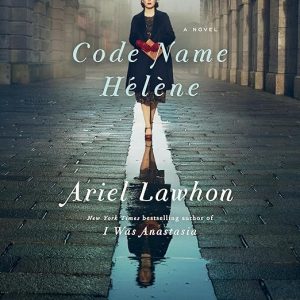
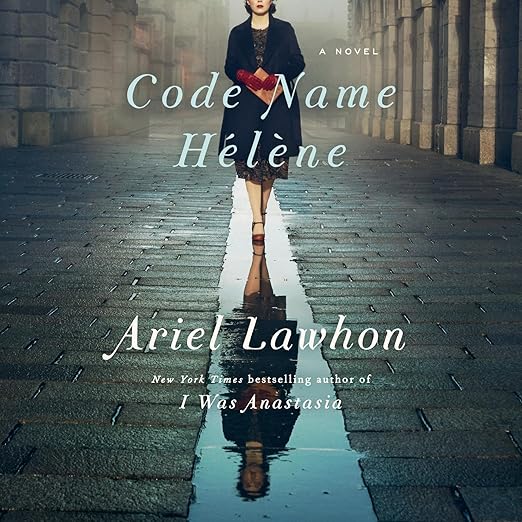
Nancy Wake talks her way into a Paris newsroom job in 1936 on nerve more than qualifications, and that same audacity carries her through four different wartime code names by the time this audiobook reaches its final act. Barrie Kreinik narrates all seventeen hours of Ariel Lawhon's Code Name Helene, a novelized account of a real woman whose actual wartime record reads more improbable than most invented spy fiction.
First, the Big Picture
The novel organizes itself around Nancy's four code names, interweaving timelines rather than marching through her life in a straight chronological line. She arrives in Paris an intrepid Australian expat who bluffs her way into reporting for a Hearst newspaper, marries wealthy French industrialist Henri Fiocca, and then watches the German invasion transform her from journalist into one of the most effective leaders in the French Resistance, known for smuggling weapons straight from Allied forces and for keeping her signature red lipstick on even in the field.
Ariel Lawhon has built a career, including her New York Times bestselling The Frozen River, on exactly this kind of research driven historical fiction about real, underrecognized women, and Code Name Helene fits that pattern precisely. Nancy Wake was a genuinely documented Resistance operative and one of the most decorated Allied servicewomen of the war, and Lawhon's framing, that she deserves to be a household name, is less a marketing claim than the book's actual argument, backed by a wartime record most readers will not have encountered before.
The four code name structure is not an invented literary device so much as a reflection of Wake's actual documented history. She really did operate under multiple aliases in the field as Resistance networks collapsed and reformed around her, and organizing the novel this way lets Lawhon dramatize how thoroughly a hidden identity can fracture a person's sense of self even when every version of that identity belongs to the same woman underneath.
Barrie Kreinik doesn't have a prior credit I could track down, so I am assessing this performance strictly on its own terms, without an established baseline to compare it against. What the role demands is real: guiding listeners through four different code names and interwoven timelines using voice and pacing alone, since audio removes a print reader's ability to flip back and check a timeline marker. Whether that structural challenge lands cleanly is the single biggest question mark going into this listen.
Nancy Wake's documented history raises the stakes well above typical spy romance fiction, and the audiobook format suits the vivid physical detail listener reviews keep returning to: a lipstick tube doubling as cover, explosives carried in an ordinary suitcase, a woman moving through occupied France by force of nerve as much as tradecraft. Hearing those details narrated rather than reading them adds a layer of immediacy that print alone does not quite deliver.
Readers who enjoyed Kate Quinn's The Alice Network or The Rose Code, both built around real or real feeling women operating inside hidden wartime intelligence networks, will find familiar pleasures here: meticulous period detail, a protagonist whose danger feels genuinely earned rather than manufactured for tension, and a central relationship, in this case Nancy's marriage to Henri Fiocca, that raises the emotional stakes of every operation well beyond the mission itself.
Weak Spots in Code Name Hélène
The nonlinear timeline structure is the single biggest risk factor here, and one listener review flags it directly, describing the code name jumps as annoying and confusing about what happened when, where, and why. That is a real structural risk specific to audio, since a confused reader can flip back three chapters in seconds while a confused listener has to rewind and relisten, and it is worth knowing that risk exists before committing to all seventeen hours.
At just over seventeen hours for essentially one espionage arc told across four names, some plot compression and dramatic embellishment is inevitable given this is explicitly novelized rather than straight biography. Listeners who want strict documentary accuracy about Nancy Wake's actual wartime activities should treat this as fiction inspired by a real life rather than a factual account, and seek out nonfiction sources if precision matters more than narrative shape.
Code Name Helene sits squarely inside a specific, currently popular subgenre: the underrecognized real world resistance heroine reimagined as commercial historical fiction, blurbed here alongside Lisa Wingate's Before We Were Yours. Readers who have already worked through a stack of comparable World War II heroine novels in recent years may find some beats familiar even as Nancy Wake's specific story remains genuinely distinctive material.
Beyond the timeline structure itself, Kreinik faces a real accent challenge across this cast: an Australian protagonist operating inside French Resistance networks while dealing with German occupying forces, plus a wealthy French industrialist husband, all rendered in English language narration. How distinctly those national registers come through, without tipping into caricature, matters as much to the listening experience as the timeline management does, and it is a technical demand easy to underestimate on a first pass through the material.
Is This One for You?
Recommend this to World War II historical fiction fans, readers who gravitate toward real underrecognized women reimagined as fiction protagonists, and existing fans of Lawhon's earlier novels including The Frozen River. Listeners who enjoy interwoven timeline structures in other formats, and who are willing to stay patient through some initial disorientation, will likely find the payoff worth the setup.
Skip it if timeline jumps genuinely frustrate you in audio specifically, or if you want strict biography rather than novelized history built around a real person. Readers newer to this subgenre might also start with a more linear entry point before committing seventeen hours to a structure one listener found actively disorienting by the book's end.