This Rex Sterling Byline Is Simply Wrong
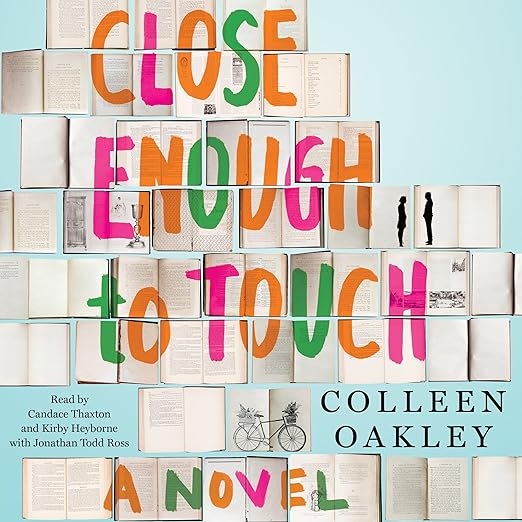
This audiobook is credited to an author named Rex Sterling, and that credit is simply wrong. Everything else about this listing, the synopsis text, the reviewer comments, the comp titles, points unmistakably to one real book: Colleen Oakley's Close Enough to Touch, first published in 2017. The synopsis even names her actual prior novels, The Mostly True Story of Tanner & Louise and Jane and Dan at the End of the World, twice over, and Publishers Weekly's own description, 'heart-wrenching and humorous,' appears directly in the listing's text. Whatever produced the Rex Sterling byline, a data error somewhere upstream seems far more likely than an actual second author, and I'd disregard it entirely when searching for this book elsewhere.
The genre tagging compounds the confusion. This listing carries both erotica and literature-fiction tags, but nothing in the synopsis, the three attached reviews, or Oakley's own established body of work supports the erotica classification. One reviewer calls it a beautiful, complex, deeply unique love story; another describes 'courage, hope, acceptance and heartbreak'; a third emphasizes touching and sensitive over anything explicit. This reads, by every available signal, as warm contemporary women's fiction with an unusual central premise, not erotica, and readers browsing by that genre tag are likely to be misled in both directions, either drawn in expecting content that isn't here, or scared off from a book they'd actually enjoy.
The premise itself is genuinely distinctive: Jubilee Jenkins, a librarian with a rare allergy to human touch severe enough that skin contact could kill her, has spent nearly a decade in self-imposed solitude before deciding to reenter the world with gloves, long sleeves, and a bicycle. Eric Keegan, dealing with an estranged daughter and a son attempting telekinesis, meets her over a library check-out desk. Narrator Candace Thaxton takes on both perspectives across eleven and a half hours, and I could not track down any earlier narration credits for her anywhere, so how she differentiates and sustains two such different voices is genuinely worth sampling before committing.
The premise draws, at least loosely, on the real existence of extremely rare severe allergic and dermatological conditions where skin contact triggers serious physical reactions, even if Jubilee's specific case is fictionalized for dramatic effect. That grounding in something medically plausible, rather than a purely fantastical conceit, is part of why the book reads as literary fiction with an unusual hook rather than as speculative fiction; Oakley treats Jubilee's condition with the same procedural seriousness a writer would bring to any chronic illness, doctors, precautions, and constant low-grade vigilance, rather than treating it as a plot device to be forgotten between key scenes.
Eric's Own Crisis Adds Strange Texture
The comp titles the synopsis reaches for, Jojo Moyes' One Plus One and Graeme Simsion's The Rosie Project, are doing real, accurate work here rather than generic marketing shorthand. Like those books, this one builds its emotional core around a protagonist whose specific, unusual condition shapes every interaction, and finds warmth and humor in that difference rather than treating it purely as tragedy. If you know either of those comp titles and responded to their particular blend of genuine feeling and gentle comedy, this listing is reaching for exactly the right shelf to place itself on.
All three reviewers independently emphasize the same emotional register: complex and unusual per one, extraordinary courage and acceptance per another. That consistency across three separately written reviews suggests the book's central achievement, making an extreme, almost fantastical premise, an allergy to human touch, feel emotionally grounded and universal rather than gimmicky, actually lands for real readers rather than just working in theory. One reviewer specifically says she 'loved and absolutely inhaled' the book, which tracks with a story built to generate genuine narrative momentum despite its literary, character-driven ambitions.
Eric's own crisis, a grown daughter who has cut him off and a son whose telekinesis claims sit somewhere between delusion and possibility, adds a strange, specific texture that keeps the book from being purely Jubilee's story. That structural choice, two flawed, isolated people each carrying their own separate crisis before the library brings them together, gives the eventual connection more weight than a simpler single-protagonist romance would, and it's part of what earns the heartbreak half of Publishers Weekly's description alongside the comedy.
This fits a consistent pattern in Oakley's career worth knowing about if you like this book and want more from her. Her novels tend to anchor a fundamentally warm, character-driven story around one deliberately unusual, high-concept premise, the touch allergy here, different hooks in her other books, using that central conceit less as a gimmick than as a lens for examining isolation, connection, and what people will risk for intimacy. Readers who respond to Jubilee's specific situation are likely to find her broader catalog rewarding too, once the correct author name is actually in hand rather than the Rex Sterling byline this listing mistakenly supplies.
Candace Thaxton Must Signal Perspective by Voice
The erotica tag is the second correction worth carrying forward from the byline issue above; readers specifically seeking explicit content will find this listing mislabeled in their favor by accident, while readers avoiding explicit content have nothing here to actually worry about. This is unusual-premise contemporary fiction in the vein of Moyes and Simsion, full stop, and going in with either the wrong author or the wrong genre in mind is likely to produce a mismatched, confused listening experience regardless of how good the actual book turns out to be.
Audio adds a specific challenge print doesn't have here: a chapter heading on the page instantly signals whose perspective you're in, but an audiobook has to establish that shift through voice and pacing alone, which puts real pressure on a narrator's ability to differentiate Jubilee's guarded interiority from Eric's messier, more reactive parenting stress. A 4.3 average across 881 ratings suggests the overall experience lands well for most listeners, though that number alone doesn't isolate narration quality from the writing itself.
Skip It If You Came for Erotica
This audiobook is a strong fit for fans of unusual-premise contemporary fiction, especially readers who loved One Plus One or The Rosie Project and want another story that finds real warmth inside an extreme central conceit. It also suits listeners drawn to found-connection stories between two isolated, flawed people, and anyone who wants emotional depth balanced with genuine humor rather than a purely heavy, issue-driven read.
Skip this one if you're specifically browsing for erotica, since despite the genre tag, that's not what's actually here; you'll want to look elsewhere for that content and won't find it under Colleen Oakley's real name in any case. It's also not the right pick if you want fast, plot-driven pacing over character-focused, emotionally layered storytelling, since the book's real strength lies in its two central voices rather than external incident.