- Read by: Graham McTavish narrates solo, carrying his established dry-wit franchise energy across both his own reactions and Heughan's presence in the prose.
- At its heart: travel and friendship, New Zealand culture and landscape, adrenaline-fueled adventure
- Vibe: Warm, funny, and competitive
- Short version: A worthy sequel for existing Clanlands fans, carried by real chemistry more than by its light historical content.
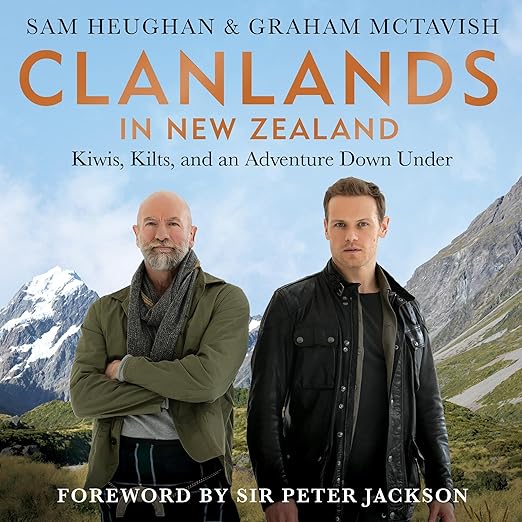
Peter Jackson writes the foreword to Clanlands in New Zealand, and a nice symmetry sits inside that choice: the director most responsible for New Zealand's cinematic reputation introducing two Scotsmen about to test how much of the country's beauty survives being viewed from inside a cramped camper van. This audiobook is Sam Heughan and Graham McTavish's follow-up to their original Clanlands, the Outlander co-stars once again turning a real trip, this time across what the synopsis calls 'the Land of the Long White Cloud,' into a travel memoir built on genuine friction between two very different temperaments. Graham McTavish narrates, and since New Zealand is the country he actually calls home, his half of this particular story carries a returning-local's stake that the original Scotland-set book didn't quite have for him in the same way.
The content follows the pattern the pair established the first time around: stunning landscapes, serious food and drink, and a running thread of adrenaline-fueled activities that generate what the synopsis describes as 'Graham's mounting anxiety and Sam's deep satisfaction.' Add in a camper van without nearly enough space for two grown men and their gear, and the friction that drives the whole format writes itself, good-natured tormenting layered over a friendship that's clearly real underneath the bickering.
Reviewer Sherry calls it simply 'lovely,' having already owned the first Clanlands and specifically returning for more of their New Zealand adventures. Kristine A McNaney zeroes in on what actually sells this format: 'I love the banter of S & G,' she writes, noting the book left her wanting to visit Scotland even though this particular entry is set entirely on the other side of the world, a sign of how much the chemistry between the two men carries the material regardless of location.
Fans arrive here already knowing exactly who these two are to each other on screen: Heughan plays Jamie Fraser and McTavish plays Dougal MacKenzie on Outlander, characters whose own relationship runs through real tension and loyalty in roughly equal measure, which gives an extra layer of dramatic irony to watching the actors needle each other good-naturedly in real life across a shared camper van.
Structurally, the book follows the pair's actual New Zealand itinerary chronologically, letting each stop, each activity, and each meal function as its own small episode inside the larger trip, a format that mirrors how the companion television series is built and makes the audiobook easy to pick up and put down between sessions without losing the thread.
The synopsis promises 'world-class food and drink' as a real pillar of the trip, and that's consistent with the wider travel-memoir genre's reliance on meals as a natural, low-effort way to structure an episode: a good dinner scene gives two hosts a built-in reason to sit still, talk, and let their actual personalities come through instead of just narrating scenery.
McTavish Solves the Pronunciation Problem Himself
McTavish's established reputation in this specific franchise is built on a dry, deadpan energy that plays off Heughan's more visible enthusiasm, and narrating solo here means his delivery has to carry both halves of that dynamic at once, his own reactions plus a sense of Heughan's energy coming through the prose, a real technical demand distinct from a true dual-narrator recording.
One specific detail from reviewer red hen's account is worth calling out directly: as a print reader, she notes that not knowing how to pronounce certain New Zealand words limited her enjoyment of the material. That's exactly the kind of friction the audio format resolves outright. With McTavish actually living in New Zealand and presumably comfortable with Maori place names and terms most English-only readers would stumble over silently on the page, this edition turns a stated weakness of the print book into a genuine strength unique to audio.
The Clanlands franchise has also expanded into television with Men in Kilts, the pair's Starz travel series built on the same real-friendship format as the books. That cross-media presence means listeners coming to the audiobook from the show already have a strong sense of the two men's specific comic rhythm, while listeners discovering them here for the first time have a whole additional show waiting once the audiobook ends.
The synopsis's own description of 'good-natured competition and tormenting' between the two men is a useful tell: genuine friends needle each other in ways a more careful, professionally managed media partnership generally wouldn't risk on record, and that willingness to be caught bickering, rather than performing an idealized version of their friendship, is exactly what makes the format work as well as it does.
McTavish's own career beyond Outlander adds another layer for genre fans specifically: he played the dwarf warrior Dwalin across Peter Jackson's Hobbit trilogy, meaning the man writing the foreword and the man narrating this New Zealand travelogue already share real professional history on New Zealand soil, years before this specific trip.
Comedy First, History Second, Still Four Stars
Despite how this listing gets filed, treat it as a comedic buddy travelogue first and a history book only secondarily. The synopsis does promise real engagement with New Zealand's culture and history through 'the fascinating story of its people,' and that material is genuinely present, but it arrives woven through comedy and personal friction rather than delivered as standalone historical content.
Red hen's review offers a useful calibration point for existing fans specifically: having read every Heughan and McTavish book to date, she calls this one her personal least favorite, even while still rating it four stars and clearly enjoying it. That's a meaningful data point from a genuine completist, not a knock against the book so much as an honest ranking within a catalog she already loves.
Peter Jackson's specific authority for this foreword is worth spelling out rather than assumed: his Lord of the Rings and Hobbit trilogies were filmed extensively across New Zealand's landscapes and are directly responsible for a huge share of the country's modern tourism identity, which makes him about as credible a guide to the country's cinematic beauty as anyone could possibly be.
Outlander Fans Should Start with the Original
The cramped camper van itself has become something of a running visual joke across the whole Clanlands franchise at this point, books and television alike, and listeners who've enjoyed that specific device before will recognize it doing the same reliable comic work here that it always has.
Outlander fans, existing Clanlands or Men in Kilts followers, and travel-memoir listeners who enjoy a real, unscripted friendship dynamic over polished travel-writing prose will find exactly what they're looking for here.
Coming to this cold, without the original Clanlands, means missing where Heughan and McTavish's specific brand of good-natured antagonism actually got established, and a good chunk of this book's humor depends on already knowing the shape of that friendship.