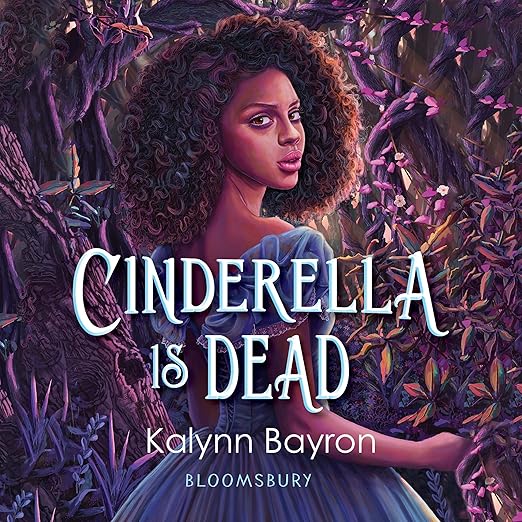
Sophia, the sixteen-year-old protagonist of Kalynn Bayron's Cinderella Is Dead, narrated by Bahni Turpin, is introduced to us in a world where the original Cinderella fairy tale has been weaponized into law. Two hundred years after Cinderella found her prince, the Annual Ball is not a celebration but a mandatory auction: the men of the kingdom choose wives, and girls who go unchosen disappear. That this audiobook belongs in the YA canon not just as a queer romance but as a coherent political fable is evident from the first chapter.
What We Made of It
Bayron's structural intelligence is what separates this from surface-level fairy tale retellings. The original Cinderella story is not simply reversed or modernized; it is treated as a document, a foundational text that an oppressive regime has distorted to justify its control over women's bodies and choices. Sophia's rebellion begins not with grand gestures but with a refusal to participate in the performance of femininity that the Ball demands, and Bahni Turpin plays that refusal with a precision that makes it feel personal and politically resonant simultaneously.
The second major structural choice is the partnership between Sophia and Constance, the last descendant of Cinderella. Their alliance and the revelations it produces about what actually happened in Cinderella's original story are the novel's most compelling thread. Reviews noted a plot twist that arrives without telegraphing, and the discovery of what the sanitized fairy tale has been concealing is genuinely surprising. Bayron trusts her readers with complexity, and Turpin's performance honors that trust by never over-explaining the emotional logic of each revelation.
What Makes Cinderella Is Dead Worth Hearing
Bahni Turpin is one of the most accomplished narrators working in YA audiobooks, and her performance here rewards careful listening. She is particularly strong with the scenes where Sophia must navigate the formal social requirements of the Ball while internally processing her own terror and desire. The gap between performed compliance and genuine resistance is carried almost entirely through tonal control. The sections where Sophia's relationship with Erin, her childhood best friend and the person she would actually choose to marry, is first described have a quiet ache to them that a less skilled narrator would flatten into generic longing.
The worldbuilding is dense in a way that audio handles especially well. Bayron layers the political architecture of the kingdom through scene and dialogue rather than exposition, which means the audiobook format does not require the kind of page-flipping reference work that some heavily built fantasy worlds demand. By the time the resistance plot fully accelerates, listeners have already absorbed the rules of this society through Sophia's lived experience of them.
The mausoleum scene, where Sophia hides from the Ball's enforcers and first encounters Constance, is where the audiobook's political argument becomes personal. Turpin plays Sophia's terror and her sudden sense of recognition when she meets someone who shares her refusal as distinct registers, and the shift between them is precisely handled. This is the moment where the story stops being about a girl refusing the system and becomes about what it costs to find your first ally in that refusal.
What Might Not Land
Several reviewers noted that characterization takes a back seat to plot in certain sections, and that observation has merit. The secondary characters are occasionally thinly sketched in service of moving the conspiracy forward. Constance, as Sophia's most significant secondary relationship, is drawn with more care than the supporting cast, but listeners who prioritize deep ensemble characterization may find the narrative's emphasis on revelation and momentum comes at some cost to individual texture.
The ending has been described as fast, with the final confrontation arriving and resolving quickly after a long build. Reviewer Eldweena, who found the pacing of the climax rushed, was not alone in that response. This is a characteristic of Bayron's debut work rather than a flaw of the audiobook format specifically, and the plot twist preceding the conclusion is satisfying enough that most listeners will find the overall balance acceptable.
Reviewer Paige G.'s note that the book features a Black, lesbian main character alongside other queer side characters is worth naming explicitly because representation quality is a real criterion for LGBTQ+ readers evaluating whether to invest time in a title. Bayron writes Sophia's Blackness and queerness as intrinsic to who she is rather than as narrative complications layered onto an otherwise default protagonist, and Turpin's performance reflects that integration. The character is not performing her identity for the reader's benefit; she is simply living it in a world that has decided both aspects of who she is are threats.
Who Should Listen to Cinderella Is Dead
This audiobook belongs in the collection of any YA listener interested in feminist retellings, particularly those with queer protagonists at the center rather than in supporting roles. Bahni Turpin's performance makes it an especially strong audio choice, and listeners who have responded to Dhonielle Clayton or Melissa Albert's work will find the thematic and tonal register familiar. The political content, the critique of how societies use inherited stories to normalize control over women, is sophisticated enough to reward adult readers while remaining fully accessible to the intended teen audience.
Listeners who want their fairy tale retellings light and romantic will find Bayron's approach considerably darker and more structurally demanding. This is a story about dismantling a system, not finding your prince, and it commits to that premise completely.
Before You Listen
Does this audiobook work as a standalone or does it require knowledge of the Cinderella story?
Basic familiarity with the Cinderella fairy tale is helpful since the novel's tension depends on the contrast between the original story and what the kingdom has made of it. No detailed knowledge is required, and Bayron recaps the relevant elements efficiently.
Is this audiobook the beginning of a series or a standalone?
Cinderella Is Dead functions as a complete standalone. The narrative arc resolves within a single volume, and while Bayron has published other YA work, this title is not part of a continuing series.