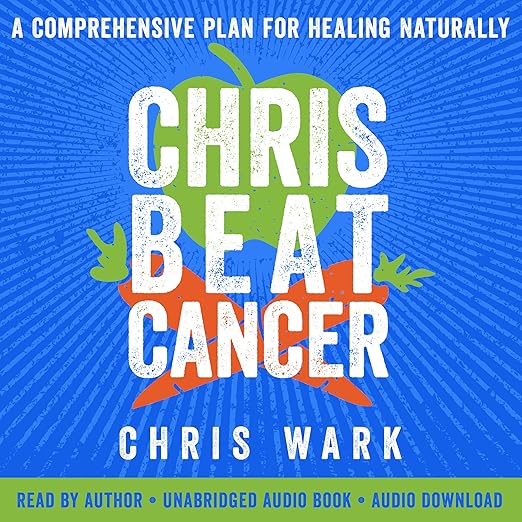
Picture a hospital room two days before Christmas. Chris Wark is twenty-six years old and has just been told he has stage 3 colon cancer. Surgery removes a golf-ball-sized tumor and a third of his colon. The conventional next step is chemotherapy, and Wark declines it. What follows, described in his own voice across more than eight hours of audiobook, is the story of what he did instead and why he believes it worked. Chris Beat Cancer is not a book I would recommend uncritically, and I will say more about that, but it is a book that demands engagement on its own terms before you decide where you stand on its claims.
How Chris Beat Cancer Holds Up
Wark narrates his own story, and that choice matters enormously here. This is a memoir as much as it is a wellness guide, and the self-narration gives it the directness and conviction of someone speaking from lived experience rather than a professional performer approximating it. His voice is calm, conversational, and carries a quiet certainty that will feel reassuring to some listeners and unsettling to others depending on where they stand on integrative medicine. He is not a doctor, and the book does not pretend he is. He is a man who got a diagnosis that terrified him, made a radical choice, and is still alive to talk about it more than two decades later.
The structure of the book moves from memoir to manifesto. The first third is personal history: the diagnosis, the surgery, the fear, the decision. The middle portion is dense with practical information about diet, lifestyle, and specific healing strategies that Wark outlines as the Beat Cancer Mindset. The final section addresses mental, emotional, and spiritual dimensions of healing. Readers familiar with the integrative oncology space will recognize the broad strokes; Wark's contribution is the specificity of his own case and the accessibility of his explanations.
The self-narration is a genuine asset. Wark's delivery in the personal sections is raw and specific in ways that a hired narrator might smooth over. When he describes the moment of diagnosis and the weight of the choice he faced, he is not performing emotion; he is recalling it. That distinction is audible, and it gives the early chapters a texture that clinical wellness books typically lack. Reviewers consistently describe the book as emotionally affecting, with one noting that it prompted genuine tears of connection. The audio format amplifies that quality.
For listeners already sympathetic to integrative and alternative approaches to cancer treatment, the practical sections will feel validating and detailed. Wark covers raw food protocols, specific nutritional strategies, and the role of mindset in immune function with a level of specificity that goes beyond generic wellness advice. He also addresses the cancer industry directly, and his critique of conventional treatment, while contentious, is argued rather than asserted.
Weak Spots in Chris Beat Cancer
The claims in this book are significant and contested. Wark believes his dietary and lifestyle changes healed his cancer; oncologists would note that surgery alone has high cure rates for stage 3 colon cancer in a twenty-six-year-old patient, and that the relationship between diet and cancer healing is far more complex than the book suggests. The book is not peer-reviewed, and its characterization of the cancer industry as corrupt is a strong claim that Wark does not fully substantiate with the depth a skeptical listener might want. The eight-hour runtime includes sections where the advocacy tone sharpens into something that may feel like proselytizing rather than informing.
None of that means the book is without value. It means it should be heard as a personal testimony and integrative wellness argument, not as medical advice or settled science. Listeners facing cancer diagnoses or supporting someone who is should engage with this audiobook alongside, rather than instead of, conventional medical consultation.
The broader cultural context for this book matters. Chris Beat Cancer arrived at a moment when integrative oncology had moved from the fringes into mainstream conversation, when patients were increasingly demanding to understand their options beyond the standard protocol and when the internet had made certain kinds of wellness information available in ways that disrupted the traditional patient-physician information asymmetry. Wark's book is partly a product of that cultural moment, and it speaks to listeners who are navigating that same landscape of competing information. Understanding it in that frame makes the book more useful to engage with critically, whether you ultimately find his argument persuasive or not.
The audio format suits this material in a specific way. Wark's website, YouTube channel, and speaking presence mean that many listeners will already have some sense of how he sounds before opening the audiobook, and that context shapes the listening experience. He speaks like someone who has spent years explaining his choices to skeptical audiences without losing patience with the skepticism. That quality of sustained, calm conviction is more present in audio than it would be in print, and it is part of what makes the book function as community-building as much as argument.
The Right Listener for Chris Beat Cancer
This audiobook will mean most to listeners who have faced a cancer diagnosis personally or in someone close to them, and who are actively researching integrative approaches alongside or in place of conventional treatment. It is also worth a listen for healthcare practitioners curious about what patients are finding compelling in the alternative wellness space. Listeners who approach wellness content with a strong evidence-based framework should be prepared to push back on specific claims while still finding the memoir sections valuable. Those seeking purely clinical information will want to pair this with peer-reviewed sources. As a first-person account of one man's radical bet on his own body, it is honest, specific, and earnest in ways that make it worth the eight hours.
Common Questions
Is this audiobook narrated by Chris Wark himself?
Yes, Wark narrates his own memoir and wellness guide. His voice is calm and conversational throughout, which gives the personal sections in particular a quality of direct testimony.
Does this audiobook recommend against chemotherapy?
Wark describes his own decision to decline chemotherapy after surgery and explains the dietary and lifestyle approach he pursued instead. He argues against what he calls the corruption of the cancer industry, but does not instruct listeners to refuse specific treatments. Decisions about cancer treatment should always be made with qualified medical professionals.