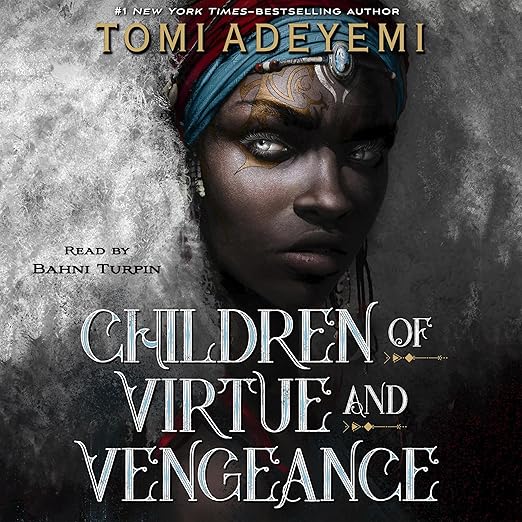
When I finished Children of Blood and Bone, I waited about forty-eight hours before starting the sequel. I wanted a little distance, a chance to process the cliffhanger. Then I started Children of Virtue and Vengeance on a Thursday morning and came up for air somewhere around Friday night. The 13-hour runtime should have given me more natural pauses. It did not.
Tomi Adeyemi picks up almost immediately after the first book ends. Zelie and Amari have restored magic to Orisha, but the victory has already curdled. The ritual that brought back the maji's powers also reignited magic in nobles, people who have spent generations enforcing the system that oppressed the maji. Now the enemies are equally matched and equally angry, and civil war is not a future possibility but a present fact. Zelie is at a breaking point, still grieving, still trying to lead, still trying to figure out who she is when she is not fighting.
Liberation Creates a New Power Imbalance
What Adeyemi does well in this volume that she could not do as fully in the first is show the cost of liberation itself. Bringing magic back was supposed to be the answer. Instead it created a new power imbalance with a different shape. The maji, newly empowered, are not uniformly noble. Some of them want revenge, and revenge and justice can start to look alike when you have been harmed enough. That moral complication, the refusal to let the previously oppressed be automatically righteous, is where the series grows up significantly between books. Reviewers who came to book two expecting the propulsion of book one found something denser and more psychologically demanding, which is the right kind of sequel to write.
Turpin Holds Three Fractured Characters Together
Bahni Turpin was the reason to listen to book one in audio. She is an even stronger reason here. The characters she voices are more internally fractured than they were in the first book: Zelie is operating near collapse, Amari is making choices that alienate listeners who loved her, Inan is trying to locate something redemptive in himself and not always finding it. Turpin holds all of that without smoothing the edges. A reviewer who chose the audiobook specifically to hear the accents described being fully immersed in the world of Orisha in a way that the text alone could not provide. AudioFile gave the performance an Earphones Award and the Good Morning America book club selection confirms the series' mainstream reach.
Amari's Choices Divide Even Her Fans
Amari's arc in this book is the most divisive element, and deliberately so. Readers who admired her in book one will find some of her choices here difficult to defend. Adeyemi is not writing a mistake into the character but testing what happens to even sympathetic people when they have access to power and face existential threat. Watch how Zelie processes Amari's shifts, and how the narration makes you feel the distance growing between them even as the physical stakes keep forcing them together. The cliffhanger is real. The final hour escalates into a genuinely destabilizing place. One reviewer described crying, smiling, and laughing in close succession and then being wrecked by the ending. That is an accurate emotional roadmap for the final stretch.
Finish the Book Before Judging Its Pace
Do not start here. Book one is a prerequisite, full stop. If you have finished Children of Blood and Bone and want to continue, the answer to whether you should is yes, with the understanding that this entry is darker in mood and structurally more demanding. Listeners who found the first book too action-focused may actually prefer this one, since it trades some plot propulsion for deeper character work. Those who loved the sweep and speed of the original may find the middle sections slower. Both reactions are fair. Finish the listen before judging the pacing, because the final hours earn what comes before them.
Quick Take
- Voice: Bahni Turpin returns and, if anything, deepens her work here. Her steady pace and West African accent grow more assured as the characters become more fractured. AudioFile gave this one an Earphones Award and the recognition is deserved.
- Big ideas: The corruption that can follow liberation, civil war as the cost of complicated victories, grief layered on top of grief
- Atmosphere: Tense and emotionally relentless, with almost no breathing room
- Worth it?: A sequel that expands the moral complexity of the first book rather than simply escalating its action.