Quick Take
- Voice: Cynthia Erivo is credited alone for the full ten hours, and the description bills that credit ahead of the author's own name.
- Big ideas: A series conclusion, capture and trafficking across the sea, magic against an enemy who has already destroyed civilizations, the cost of war on the young.
- Atmosphere: Grief-heavy and propulsive, closing hard.
- Worth it?: The ending the series owed its readers, weakened by recaps that a sizeable minority of its readers found excessive.
Cynthia Erivo's name comes before the author's in the opening sentence of this description, which is not how publishers usually arrange a book. The line leads with three awards, then the narrator, then the verb narrates, and only after all that arrives Tomi Adeyemi and the series. Whatever else is happening on this audiobook page, somebody decided the reading was the headline. That decision makes sense for a conclusion that has kept its audience waiting for years, and it also raises the stakes on the one thing a product page cannot demonstrate. Ten hours and two minutes is the runtime. One voice is credited for every minute of it.
Cynthia Erivo Gets Billed Before Adeyemi
That headline placement finds a strange echo in the response column, in the single entry that mentions narration of any sort. chemyeeka, at five stars, writes that this book was truly different from the first two and puts the reason inside a parenthesis: "the narrator shift was very present." What the entry never settles is which shift it means. A change of reader between volumes and a change of viewpoint inside the prose are both live possibilities, and one word covers both. The rest of that entry discusses magic, war, youth making life-altering decisions, and the weight of a lost childhood, which are page concerns rather than booth concerns.
Baldyr is the new antagonist and the engine of the plot. The description lays it out cleanly. Zélie believed the fight was finished when the palace fell and the maji rose again, then woke caged on a foreign ship, trafficked with her people by warriors wearing iron skulls. King Baldyr is her true captor, ruler of the Skulls, the man who has ravaged whole civilizations to find her, and what he wants is her strength. That hunt sends Zélie, Amari, and Tzain looking for allies in lands the series has never visited, while catastrophe closes on the shores of Orïsha behind them.
Compact Conclusion, With Real Repetition Complaints
Hearing this one rather than reading it makes its case on scale and compression. Ten hours is compact for an epic conclusion, and the description promises a book that moves: a sea crossing, unknown lands, an enemy who arrives having already won everywhere else. Compression suits the format. So does a mythology built on names and invocations, which reward a voice able to hold them steady. The copy even sets its own hook in four hammered lines, allies rising, a blood moon nearing, a final enemy, a king who hunts a heart, which is the declarative drumbeat register this series has always worked in and which reads as though written to be spoken. The counter-argument sits in the same column and deserves serious weight, because two entries out of the five describe a book that repeats itself.
Lafmore, at three stars, is the sharper of the two: not a bad book, but not up to par with the previous ones, thin on relationship building beyond the wounds of the past, heavy with repetitive remembrances that helped at first and then became too much, and rushed at the close. Ursulandress, at four, took days to get through it and grew frustrated with a protagonist insisting on being a sacrificial lamb, with where Amari's story lands, and with an ending for Inan the entry rejects outright. Repetition costs more in audio than on a page, because you cannot skim past it. Anyone who found the recaps heavy in print will find them heavier aloud.
Cover Art Reviews Hide Three Publisher Names
Four point three is the badge, and the vote counter beside it says two. Both cannot be right. Two whole-star votes cannot average to 4.3 under any rounding convention in use anywhere, since two votes produce a set of possible averages far too coarse to land on that figure. Meanwhile five written responses sit on the page, each carrying its own star grade, which is already more graded opinions than the counter admits exist. Something in the plumbing behind this listing is stale or partial. Read the five entries and set the number above them aside, because it is not describing them.
Only Two Votes Behind an Impossible 4.3
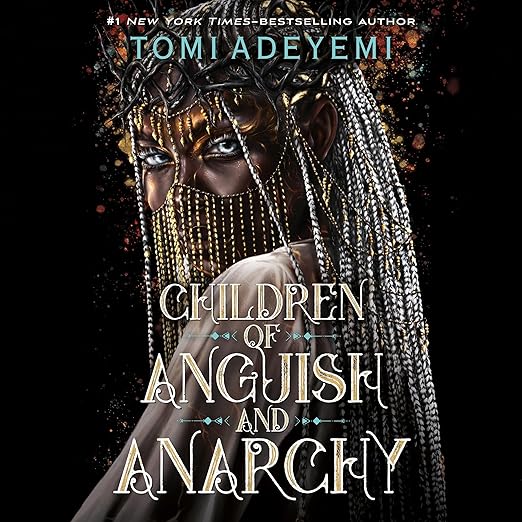
Jodi Townsend's five-star entry is about objects rather than about sound. It describes a sixteen-year-old daughter who owns the whole series and loves each book, praises the artwork on the covers and the prints along the page edges, and mentions reading the summary on a back cover. Every one of those pleasures belongs to a physical book. The entry tells you the series has real devotion behind it and tells you nothing whatever about ten hours of recorded audio. Lafmore, elsewhere in the same column, mentions having read the others, which places that response on paper too.
Three names claim this production between them. The publisher field says Macmillan Young Listeners. The description's closing line calls it a Macmillan Audio production from Henry Holt & Company. Those are layers rather than contradictions, but anyone trying to work out who actually made this recording is entitled to find the stack confusing. The series field carries its own small discrepancy, reading Legacy of Orisha with a plain letter i while the description writes Orïsha with the diaeresis from beginning to end. Trivial on its own, and worth knowing before you try to track down the other two volumes.
Series Completists Get the Ending They Feared
Series completists are the audience this exists for, and the copy states outright that this is book three, naming Children of Blood and Bone and Children of Virtue and Vengeance ahead of it. Anyone who has waited for the conclusion and wants that ending delivered by a performer the publisher thought worth naming first will get precisely that. Ten hours is a manageable sitting for a finale, and O. Taylor's five-star entry supplies the useful summary: disliked the ending, unchanged about the book and the series, and still says the storytelling does not disappoint. That is the shape of most finale reactions worth trusting, and it is more useful than a five-star rave with nothing specific in it.
It will frustrate you if you have come for the relationship writing that carried the earlier volumes, because the three-star response names its absence as the central failing. It will frustrate you again if long recaps of previous books are what usually make you abandon a recording. Nothing about a caged protagonist on a foreign ship makes any sense without the two volumes that come first, and the description lists all three titles in order for exactly that reason.
Frequently Asked Questions
Do I need the first two books before this audiobook?
Yes. Two earlier volumes are named on the page ahead of this one, and the story opens with the protagonist already caged on a foreign ship after a palace has fallen. None of that resolves cold. A three-star response also calls the recaps excessive, so they will not rescue a newcomer either.
Does Cynthia Erivo narrate this audiobook alone?
A single performer is credited for all ten hours and two minutes, with neither a second reader nor a cast listed anywhere. The description places that credit ahead of the author's name, which is unusual billing. One five-star response mentions a narrator shift making the book feel different, without ever saying whether it means the reader or the prose.