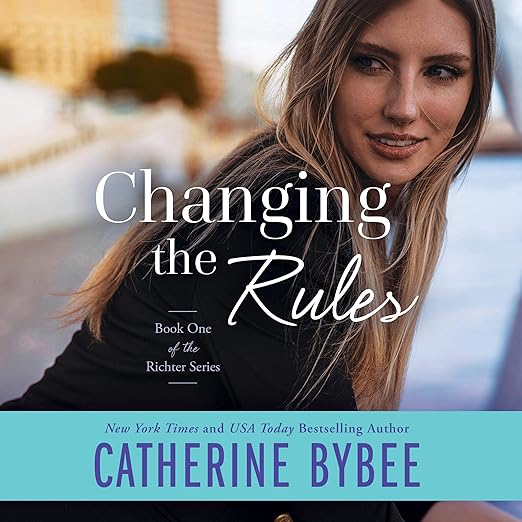
The Short Version
- Performance: Lori Prince handles the dual register of romantic tension and action plotting with ease, giving Claire's competence and vulnerability equal weight.
- What it covers: Undercover work and the ethics of false identity, professional partnership as romantic obstacle, the vulnerabilities of young people targeted by exploitation networks
- Feel: Fast-moving and fun, with darker underpinnings that the book handles more seriously than you might expect from the genre
- Our call: A strong series opener from Bybee that balances its romantic-suspense elements without letting either element crowd out the other.
I came to Changing the Rules having read a few of Catherine Bybee's earlier books, the Not Quite series specifically, and found this one operating in a noticeably different register. The romantic comedy sensibility is still present in the banter between Claire Kelly and Cooper Lockman, but the undertow here is darker. The case that brings them back together involves a prostitution ring targeting high school girls, and Bybee handles that subject with more moral seriousness than the romantic-suspense genre typically demands of itself.
The setup is efficient and genre-familiar. Claire and Cooper both work for MacBain Securities and Solutions, a private security firm populated with characters whose backgrounds suggest the kind of post-intelligence-community competence that romantic-suspense fiction loves. Cooper left for Europe six years ago because his feelings for Claire became professionally untenable. He comes back. They are assigned to the same mission. The unresolved attraction is immediately visible to everyone except, for a while, each other. This is not new. Bybee executes it with enough specific character detail that the familiarity is comfortable rather than stale.
A Closer Look at Changing the Rules
The undercover premise is genuinely imaginative. Claire goes into a California high school as a student. Cooper goes in as a teacher. The gap in their cover identities creates both logistical complications and romantic ones, and Bybee uses both with intelligence. The high school setting allows the book to explore how trafficking operates across socioeconomic lines, touching both a public school and a private one in ways that complicate the easy assumption that privilege is protection. One reviewer specifically calls out this dimension as adding genuine social substance to what could have been purely genre plotting.
The relationship between Claire and Cooper is a slow burn with the emphasis on slow. Bybee is building a series here rather than a standalone, and she is careful not to spend the romantic capital all at once. The tension is maintained through competence displayed under pressure, through moments of vulnerability that neither character is entirely prepared for, and through the professional stakes that make acting on that tension difficult. This structure serves both the romance and the thriller plot, which rarely compete for space in ways that damage either.
What Makes Changing the Rules Worth Hearing
Lori Prince is a natural fit for Bybee's voice. She handles the snappy dialogue with the timing it requires and brings warmth to Claire without softening the character's edge. At just under nine hours, the audiobook paces well, keeping the investigation and the relationship developing in tandem without either stalling. The opening installment of the Richter series is designed to hook listeners into the ongoing world, and Prince's narration makes that world feel inhabited rather than constructed.
Reviewers who followed the characters through earlier Bybee books describe the payoff of finally getting Claire and Cooper's own story as worth the wait. For new listeners, the book provides enough background that no prior reading is required, though some character references will carry more weight with series veterans.
Things to Know Before Starting Changing the Rules
The subject matter of the investigation is handled with seriousness but not at a level of graphic detail that would push the book into genuinely difficult territory. Bybee keeps the focus on the investigation and the human costs rather than on explicit description, which is the right call for this genre but means the darkness is gestured at rather than fully confronted. Readers who want a thorough engagement with the realities of trafficking will not find it here.
The romantic-suspense genre has specific conventions about pacing and resolution, and Bybee works within them rather than against them. The ending is satisfying on its own terms while clearly positioning the series for continuation. Listeners who want complete resolution of every emotional thread in a single book should know this is the first installment in an ongoing series.
Who Catherine Bybee Is Writing For
Fans of romantic suspense who appreciate protagonists with genuine professional competence will find Claire and Cooper satisfying leads. The book also works for Bybee readers from her earlier series who want to follow the world into its more action-oriented corners. The undercover premise is well-executed, and the social dimension of the investigation elevates the material above pure genre formula.
Those looking for hard-edged thriller fiction without romantic elements should look elsewhere. Those who want explicit content will also find this book lighter than they are expecting. Bybee is writing for readers who want both registers in balance, and that balance is where the book lives.
Before You Listen
How dark is the treatment of trafficking in the narrative? Is it suitable for sensitive readers?
Bybee treats the subject seriously but keeps graphic detail minimal. The investigation is focused on the mechanics of how the network operates and the human cost to the students involved, rather than on explicit description of abuse. Sensitive readers should be aware of the subject matter but the treatment is not exploitative.
Is the romantic subplot resolved in Book 1, or does it carry over into the rest of the Richter series?
The romantic tension is meaningfully advanced in Book 1, and the ending is satisfying within the genre's conventions while clearly positioning the relationship for continued development in subsequent books. Bybee does not leave readers without resolution, but she is building a series arc rather than burning all the romantic potential in the opener.