Before You Press Play
- Read by: Lily Reynolds handles Rowe's rapid-fire banter and the heroine's split-brain internal monologue with good comedic timing and warmth.
- At its heart: Enemies to lovers, forced proximity, family loyalty
- Vibe: Funny and propulsive
- Short version: A crowd-pleasing enemies-to-lovers romp that works best if you enjoy Rowe's wider Morgan Brothers universe, though it stands alone well enough.
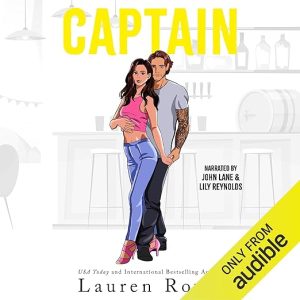
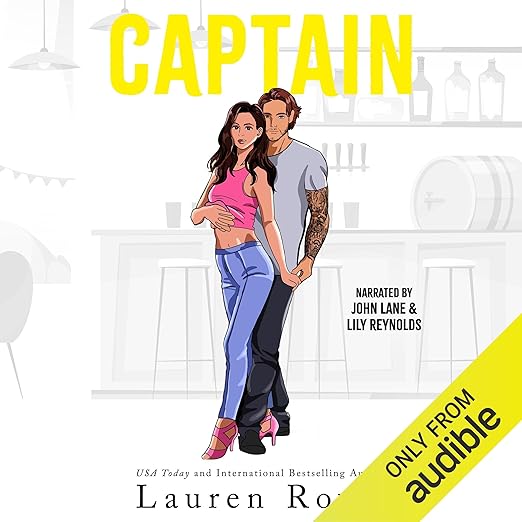
I'll admit I was primed to enjoy Captain before I even pressed play. Lauren Rowe's The Club series built up enough goodwill in our corner of the romance-listening community that when a new Morgan Brothers entry dropped, it landed near the top of my queue automatically. Captain is technically a prequel to Ball Peen Hammer, it takes place one year earlier and follows Ryan Morgan, but it functions as a full standalone, and Lily Reynolds' narration keeps the energy exactly where Rowe's material demands it: quick, warm, and consistently funny.
The setup is a reliable genre construction: enemies-to-lovers, forced proximity, a heroine who hates the hero and a body that disagrees. What Rowe does well with this formula is maintain the comedic voice without letting it crowd out the emotional development. Ryan Morgan is introduced as a lying, cheating player and has to earn his way out of that first impression across eleven hours of Hawaiian wedding events and mutual inconvenience.
The book's real engine is character voice. Rowe writes heroines who have opinions about everything and express them freely, and the internal monologue that drives the comedy is the best version of that tendency. When the heroine is simultaneously furious at Ryan and clocking how attractive he is, the split produces something genuinely funny rather than merely ironic. Reynolds delivers that contradiction with good timing, the comedy lands where it's supposed to, and she doesn't oversell the emotional beats when they arrive.
Ryan himself, nicknamed Captain, given that he's Ryan Ulysses Morgan, is the kind of hero Rowe writes with evident affection. The nickname is pure Rowe: slightly absurd, warmly deployed, and carrying just enough literary reference to wink at readers who catch it. He flashes his 'panty-melting smile' exactly as often as the text demands, and Reynolds makes it feel earned rather than repetitive.
The Best Parts of Captain
The eleven-hour runtime gives Rowe room to develop the ensemble, which is where the book earns its warmth. The Morgan family dynamic, the parents who instilled something genuinely functional into their children, the siblings who show up reliably, provides the emotional scaffolding that makes Ryan's romance feel like it has stakes beyond the central pair. One reviewer describes wanting to be adopted by the family, which is exactly the response Rowe is cultivating.
For listeners who have already spent time with Ball Peen Hammer or The Club Series, Captain offers the pleasure of familiar faces in a new context. Characters from both appear here, and Reynolds handles the expanded cast without confusion. For new readers, the Hawaii setting and wedding backdrop provide enough natural structure that the connections don't feel like homework.
Before You Commit to Captain
The book's pace is tilted toward comedy and ensemble interaction, particularly in the first half. If you need the central romance to escalate quickly, Captain will test your patience through a fair amount of group scenes and family business before the emotional pressure builds. The payoff arrives, but the route is circuitous.
One reviewer noted that the vernacular, the very American, very contemporary slang of Rowe's dialogue, is genuinely dense and can be a barrier for non-native English speakers. That's worth knowing. The book operates in a specific register of casual American speech, and Rowe leans into it rather than moderating it for broader accessibility.
Should You Listen to Captain?
Ideal for contemporary romance listeners who want their books to make them laugh as consistently as they make them swoon. Rowe's audience knows what they're getting, and Captain delivers it reliably. The Hawaii setting, the family warmth, and Reynolds' performance make this a particularly comfortable listen for a long weekend or a series of commutes.
Less suited to listeners who want their romance emotionally heavy or their heroes to carry complexity beyond the initial bad impression they have to overcome. Captain is not trying to be dark. It's trying to be fun, and it succeeds at that on its own terms.
Frequently Asked Questions
Do I need to have read Ball Peen Hammer or The Club Series before listening to Captain?
No. Captain is written as a complete standalone. Characters from both series appear, but the book provides enough context that new readers won't feel lost. Existing fans will simply get more out of the cameos.
Is Captain a full enemies-to-lovers story or does the conflict resolve too quickly?
The antagonism is sustained across most of the eleven-hour runtime. Rowe keeps the pushback credible for longer than the setup might suggest, and the forced proximity of the Hawaii wedding provides enough legitimate conflict to justify the timeline.
How does Lily Reynolds handle the dual voice demands of Ryan's POV versus the heroine's?
Reynolds stays primarily in the heroine's first-person voice, which is where the comedy lives. Ryan's dialogue is handled with enough warmth and swagger to make him feel distinct without requiring major tonal shifts.
Is there significant explicit content in Captain?
Yes. Lauren Rowe writes contemporary romance with explicit scenes, and Captain follows that pattern. Listeners who prefer closed-door romance should account for this before starting.