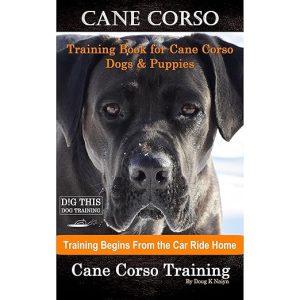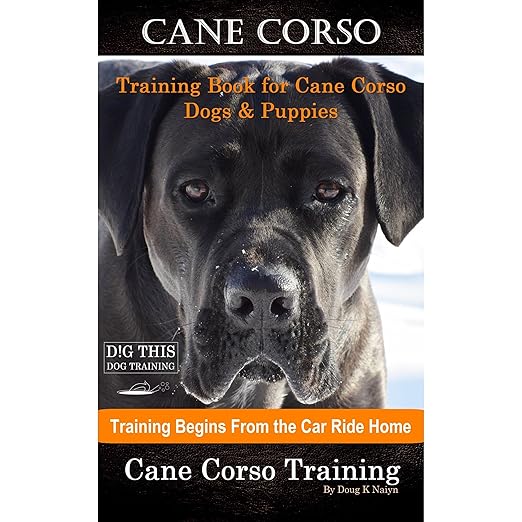
Training a Cane Corso is not like training most dogs, and any audiobook that treats it as a generic obedience exercise is doing you a disservice. The Cane Corso is a working mastiff with a deep need for clear, confident communication from the person responsible for it: a breed that has historically been used for protection, hunting, and livestock management, and that reads uncertainty or inconsistency in a handler as an invitation to fill the leadership vacuum itself. Doug K. Naiyn's training guide understands this, and what distinguishes this audiobook from general dog training content is its insistence that the work begins before you even get the dog home from the breeder or shelter.
"Training Begins from the Car Ride Home" is not a marketing slogan in this context but a genuine methodological commitment. Naiyn's D!G THIS dog training system is built on what he calls Dogmanship, a concept centered on communicating directly with the dog at the dog's own level of comprehension rather than expecting the dog to adapt to human communication norms. The approach synthesizes clicker training, treat rewards, verbal praise, and hand signals into a framework designed for immediate practical application. Reviewers describe starting to see results from the first day, and one owner noted that returning to the book as the puppy grew made earlier sections land differently with accumulated experience.
Alpha Dynamics and Hand Signals for the Cane Corso
The book's central argument about alpha dynamics is the section most likely to generate debate among modern dog trainers. Naiyn's framing of the alpha relationship draws on an older model of pack hierarchy that some contemporary behaviorists have moved away from, while others maintain it remains useful for powerful guardian breeds that are specifically selected for confidence and independent judgment. For the Cane Corso in particular, the question of who is making decisions in the household is not abstract: it has direct implications for the safety of everyone the dog encounters. Naiyn's treatment of this dynamic is practical rather than theoretical, and his recommendations align with the experience most Cane Corso owners report in terms of what actually works with the breed.
The D!G THIS methodology covers a substantial range of behaviors: basic commands, hand signals for silent communication, socialization protocols, and a detailed section on replacing problem behaviors including barking, destructive chewing, jumping, and aggression toward other animals. The hand signals section is particularly valuable for a breed as large and physically imposing as the Cane Corso. A dog of that size that responds reliably to silent hand cues is a fundamentally safer animal in public environments, and Naiyn treats this as a core training goal rather than an optional refinement.
Virtual Voice Struggles With Timing and Rhythm
The audiobook format is a reasonable choice for this material if you are training while working with your dog, but the Virtual Voice narration creates some friction. AI text-to-speech narration handles instructional content adequately when the material is purely informational, but dog training involves rhythm and timing, and those qualities are harder to convey without a human narrator's natural variation in pace and emphasis. The practical sections describing clicker timing and reward delivery are cases where a human voice reading the same text would communicate the urgency of precision more effectively.
That said, the content holds up independently of its delivery. One reviewer described re-reading the book several times as the puppy progressed through developmental stages, noting that the author's explanations became clearer with accumulated context. That is a genuine mark of a well-structured training guide: the framework should remain useful across the full arc of the dog's development, not just during the initial housetraining phase. Naiyn has written with that long view in mind, structuring the content so that the foundational communication principles underpin everything that follows.
Socialization Deserves More Space Than Two Hours Allow
The book runs to just over two hours in audio form, which means it covers significant ground efficiently but cannot go deep on every topic. The socialization section, in particular, deserves more space than it receives here. Proper socialization is arguably the single most important factor in producing a well-adjusted Cane Corso, and at the length this book treats it, listeners who are working with young puppies in critical socialization windows may want to supplement with additional breed-specific resources. The core methodology Naiyn provides is sound; the limitations are in depth rather than direction.
New owners with limited dog training experience may find the alpha and Dogmanship sections require careful attention, as the framework depends on a consistent application of principles rather than isolated techniques. Reviewers who had good success with the book describe implementing it systematically from the start; those who applied it selectively or inconsistently may find the results less reliable. The two-hour runtime makes a second listen feasible before starting to apply the techniques, and given the physical capabilities of a fully grown Cane Corso, that extra investment in understanding the methodology before executing it is time well spent.
New Cane Corso Owners Get the Most Value
New Cane Corso owners, whether with a puppy or a dog they have recently adopted as an adult, will find the breed-specific focus more useful than a general dog training guide. The early chapters in particular establish communication frameworks that are relevant from the first day, and the behavior problem sections are practical enough to serve as quick reference when specific issues arise.
Experienced trainers working with their first Cane Corso will find less that is novel in the methodology but may appreciate the breed-specific framing of standard clicker and reward techniques. Those who already have a trained adult Cane Corso and are looking for advanced work or competition preparation will need more specialized resources. The Virtual Voice narration is a factor to weigh: if you prefer human narrators for how-to content, be aware of what you are getting before committing. The value is in the training framework Naiyn provides, not in the delivery vehicle.
In Brief
- Narrator: Narrated by Virtual Voice, which handles the instructional material serviceably but without the warmth a human narrator would bring to breed-specific advice.
- Subjects: Dogmanship as communication philosophy, clicker and reward-based training, establishing confident leadership with a powerful breed
- Tone: Practical and encouraging, pitched at new owners with urgency
- Bottom line: A breed-specific training framework with a clear methodology and honest focus on the Cane Corso's particular communication needs, though the Virtual Voice delivery requires some listener patience.