In Brief
- Performance: Blair Stainton narrates with the kind of genuine, unhurried enthusiasm that works well for young listeners - curious rather than performative, which respects both the material and its audience.
- What it covers: Forest communication and ecology, the wood wide web, trees as living communities with shared resources
- Feel: Genuinely curious and warm, with a sense of outdoor adventure
- Our call: Peter Wohlleben's science-for-kids adaptation earns its AAAS prize - this is one of the more intellectually honest nature audiobooks available in the children's category.
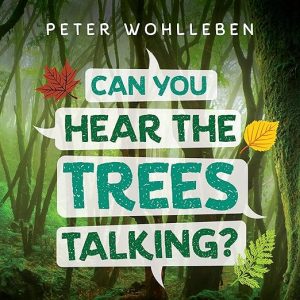
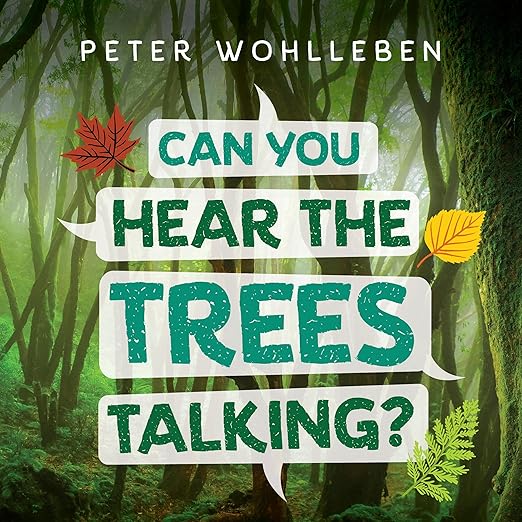
Can You Hear the Trees Talking? is an audiobook that made a nine-year-old I know ask whether trees could feel pain - which is about as high a compliment as a children's science book can receive. Peter Wohlleben's The Hidden Life of Trees became an unlikely bestseller among adults precisely because it treated forest ecology with genuine scientific seriousness rather than pastoral sentimentality, and this adaptation for eight-to-ten-year-olds carries that spirit forward without condescending to its audience. The AAAS/Subaru Prize for Excellence in Science Books is not given to titles that fudge their science for the sake of accessibility, and this book earned it honestly.
The audiobook version runs three hours and twenty-four minutes, which is a sensible length for the target age range. Long enough to cover real ground across multiple forest topics, short enough to be listened to across a few sessions without losing momentum. Blair Stainton's narration sustains a tone of genuine curiosity throughout - he sounds like someone who is genuinely interested in what he is reading rather than someone performing interest for a young audience, which makes a significant difference to whether children trust the information they are hearing.
Ants and Aphids as a Kind of Husbandry
Wohlleben explains how trees communicate through root networks and chemical signals, why trees in cities matter for human health and not just aesthetics, how a forest functions as a community rather than a collection of competing individuals, how trees can get sick and recover with help from their neighbors, and how the relationship between aphids and ants qualifies as a kind of animal husbandry happening in the canopy above most of our heads. The wood wide web concept - which describes how mycorrhizal fungal networks allow trees to share nutrients and information - is handled with appropriate complexity. Wohlleben does not reduce it to pure magic, but he makes the science accessible enough that listeners encountering the idea for the first time will leave understanding it in real terms rather than just absorbing a memorable phrase.
One educator who reviewed the book described it as suitable for adults as well as children and purchased multiple copies for grown-up neighbors. That observation reflects something real about how the audiobook reads. The science is not watered down. Adults listening alongside children will find material to engage with at their own level while the child engages with it at theirs, which is the ideal condition for a shared family listening experience. The activity suggestions and quiz elements from the print edition are adapted as verbal prompts in the audio, giving young listeners specific things to try outdoors between sessions.
Stainton Preserves Inquiry Instead of Flattening It
Parents and educators who care about children developing a genuine relationship with scientific reasoning - not just enthusiasm for nature as aesthetics - will find this audiobook does something that nature content for children rarely manages: it models curiosity as a method. Wohlleben does not simply deliver facts. He asks questions, follows implications, and shows children that the interesting thing about a tree is not how it looks from the outside but what it is actually doing, which is considerably stranger and more fascinating than anything a picture book about trees would suggest. Stainton's narration preserves that quality of genuine inquiry rather than flattening it into information delivery. The questions the book raises linger - which is the sign of science education that is working at the level it should.
The original print edition features full-color photographs and illustrations that reviewers described as lush and integral to the experience. Those visuals do not transfer to audio, and parents should weigh that before choosing format. For families who want the complete Wohlleben visual experience, having the physical book available alongside the audiobook is worth considering. For pure listening - in the car, before bed, during a nature walk - the audiobook stands on the strength of the content and Stainton's reliable delivery.
Captivating to a Five-Year-Old, Tough on Vocabulary
A homeschool parent reviewer noted using this with a five-year-old who found the subject captivating but the vocabulary challenging. The publisher's stated age range of eight to ten years is accurate and reflects the level at which the science is pitched. Below that age, the audiobook works best as shared listening with a parent or educator available to explain terms. The book is also more effective when paired with outdoor time - the activities Wohlleben suggests for observing trees directly, examining bark, looking for fungal growth, noticing how trees are grouped - are verbal suggestions in the audio format rather than illustrated steps, but they are workable instructions for a child motivated by what they have just heard.
Genuinely Educational, and the Better for It
Children aged eight to twelve who are curious about how the natural world works will find this one of the more substantive science audiobooks aimed at them. Wohlleben does not pretend that trees are simple, and young listeners who enjoy real explanations rather than simplified versions will respond to that honesty. Homeschooling families covering ecology, natural science, or environmental topics will find it valuable as an audio component alongside outdoor observation. Adults who enjoyed The Hidden Life of Trees and want to share Wohlleben's perspective with younger readers will find this a faithful adaptation. Families hoping for a purely entertainment-focused listening experience should know this is genuinely educational in intent - and the better for it.
Is this audiobook suitable for listening in the car with a mixed-age group including adults and younger children?
Yes, and multiple reviewers specifically mention sharing it across age groups. The science is substantive enough to hold adult interest, and the presentation is accessible enough for children in the target range of eight to ten. Below age eight, some vocabulary may need parental explanation during or after listening.
Does the audiobook retain the educational value of the print edition without the photographs and illustrations?
The science explanations are fully intact in audio form - nothing substantive is lost from Wohlleben's content. What is absent is the visual immersion from the full-color photographs, which reviewers described as lush and integral to the print experience. Families wanting both dimensions may prefer to pair the audiobook with a physical copy.
Are the outdoor activity suggestions from the print edition usable in the audiobook format?
The activities are mentioned verbally as suggestions for things to try outside. They are usable as listening prompts and work well for motivated children following a session of the audiobook. Families doing structured nature study will likely want the physical book for the illustrated step-by-step versions, but the audio suggestions are functional for informal outdoor exploration.