I was two cups deep into my morning when I started listening to Caffeine. By the time Pollan finished explaining what adenosine receptors actually do when caffeine is blocking them, I had pushed the third cup to the other side of my desk. Not because I stopped wanting it, that was rather the point, but because the desire itself had become visible to me in a new way, and that is the specific effect Pollan is best at producing.
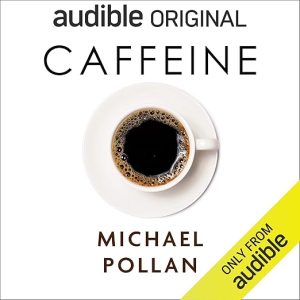
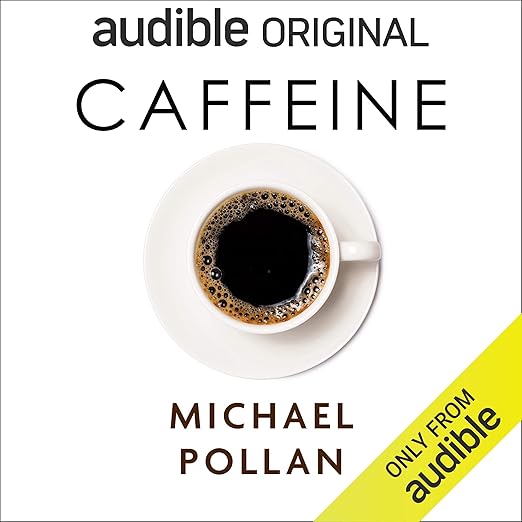
Caffeine: How Caffeine Created the Modern World began as an Audible Original, which matters more than it might seem. This is not an extracted chapter from a larger book or a repackaged lecture series. Pollan conceived and wrote it specifically for audio consumption, and the structure reflects that origin. At two hours and two minutes, it is one of the most efficiently constructed things he has produced, no padding, no digressive chapters that would work better in a longer format, no academic qualification that dilutes the argument. This is Pollan at his most focused.
The Drug That Enabled the Industrial Revolution
The central claim, that caffeine is the most widely used psychoactive drug on Earth, the only one we give to children as a treat, and the substance without which the Industrial Revolution as we know it would have been impossible, is stated plainly and then demonstrated rigorously. Pollan traces the geographic origin of the caffeine habit to a small part of East Africa, watches it spread across human civilization within a century via the coffee trade and the tea empire, and connects it to the disciplinary conditions of factory labor in a way that shifts how you understand both the history and the present.
The historical argument is the strongest section. Coffee's role in the coffeehouse culture of 17th and 18th century Europe, where merchants, intellectuals, and politicians conducted the business of Enlightenment, is documented with the narrative economy that Pollan does well. Tea's relationship to British imperial economics is given similar treatment. These are not new histories, but Pollan synthesizes them with the caffeine molecule as the organizing principle, and the synthesis is illuminating.
Pollan Narrates His Own Cold-Turkey Experiment
Pollan narrating his own work is the correct production decision for this particular Audible Original, and it is worth dwelling on why. The text includes a personal experiment in which Pollan goes cold turkey on caffeine for a defined period, tracking the withdrawal, the cognitive fog, the slow recovery, and finally the re-introduction of the drug. That experiment only works as a personal narrative, and it only works as a personal narrative when delivered in the first person by the person who actually underwent it. Reviewer Mamazabakaka described giving up caffeine entirely after listening, switching to a mushroom-based coffee alternative, an outcome that would not have been possible without the persuasive force of Pollan's self-implication in the story he is telling. He is not standing outside the addiction and describing it. He is in it.
The science of how caffeine evolved as a plant defense mechanism, why coffee and tea plants produce the molecule, and how humans co-evolved an addiction to something that began as a toxin designed to paralyze insects, is rendered in terms that are accurate without being clinical. Reviewer Evan Chandlee praised this section specifically: Pollan describes the molecule's interaction with adenosine in a way that makes the mechanism feel immediate rather than abstract.
Two Hours Is a Sketch, Not a Treatment
At two hours, this is a sketch rather than a comprehensive treatment. Pollan acknowledges this, the Audible Original format was not designed for the depth of The Omnivore's Dilemma or How to Change Your Mind. Some listeners may find the historical sections move too quickly, particularly the tea and the British Empire material, which could sustain a much longer investigation than Pollan gives it here. If the history and economics of caffeine genuinely grip you, this will function as an excellent primer that sends you toward more specialized texts rather than a destination unto itself.
The lack of engagement with the decaf market, the functional beverage industry, or the specific health literature around caffeine's long-term effects is also a gap that some listeners may notice. Pollan gestures toward health effects but does not resolve the contested evidence around coffee and mortality with any real satisfaction. He is more interested in history and psychology than in producing a verdict on whether you should quit.
An Easy Two-Hour Entry Point to Pollan
Anyone who drinks coffee or tea daily, which is most of AudiobookDaily's readers, will find this a productive two hours. It will not necessarily make you quit caffeine, but it will make your relationship with it more conscious, which is Pollan's typical goal. It is also ideal as an introduction to Pollan for listeners who have not previously engaged with his work; the brevity and accessibility make it a low-commitment entry point to his broader project of making eaters and drinkers more aware of what they are consuming and why.
A Few Questions About Caffeine
Does listening to Caffeine make people want to quit coffee?
It seems to have that effect on some listeners. Reviewer Mamazabakaka gave up caffeine entirely after listening and switched to a mushroom-based alternative. Reviewer Carlos from Florida moderated his consumption. Pollan's own cold-turkey experiment is a central part of the narrative and its effect is persuasive, even if he does not instruct listeners to quit.
How does Caffeine compare to Pollan's longer works like The Omnivore's Dilemma?
It is shorter and more focused by design. The Omnivore's Dilemma is a comprehensive investigation; Caffeine is a sharp, compressed argument that covers selected terrain rather than the whole landscape. Think of it as Pollan making a pointed case in essay form rather than building an exhaustive investigation.
Is the science in Caffeine accessible for non-specialists?
Yes, Pollan explains the adenosine mechanism, caffeine's plant-defense origins, and the neuroscience of withdrawal in terms that are accurate without requiring a biology background. Multiple reviewers with no scientific training describe the science sections as among the most interesting parts of the listen.