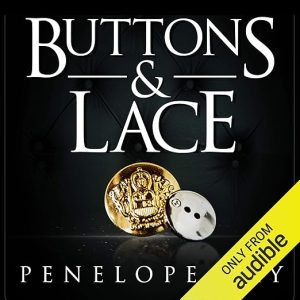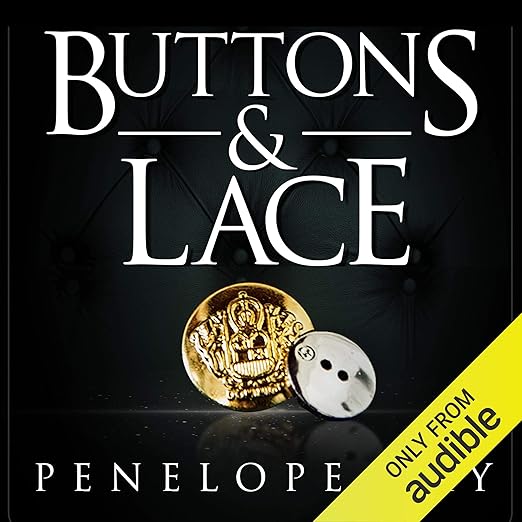
Listeners are told the terms in the opening lines of the description, and the terms are the entire book. A debt that cannot be settled with money or favors. A man who wants one thing. A jar that has to hold three hundred and sixty-five buttons before the debt clears, one button at a time, each one earned by submission. Seven hours and forty-two minutes of audiobook rest on that arithmetic of captivity. The description never names the woman counting or the man collecting; both names arrive from the review column instead, where readers call them Pearl and Crow.
Nothing about this is subtle, and its readers do not pretend otherwise. The most enthusiastic reader here describes Pearl as strong, smart and never a victim, someone who faces dark circumstances and fights back, and credits Crow with staying true to a cold, complex character instead of softening on schedule. That is the whole appeal of the dark romance register: the captor stays a captor, the captive stays a person, and the tension comes from neither one converting the other into something more comfortable. Books in this register often cheat by revealing the captor as secretly gentle inside an hour; the praise here for Crow staying cold and complex is a reader noticing that this one does not take the shortcut.
Two readers reach for comparisons, which tells you where the book sits. One names Tears of Tess and says the resemblance is exactly why the book worked. Another calls the series one of the best it has read, then adds that the review was held back until the whole thing was finished. Both of them use rating systems of their own invention, with stars for quality and small pepper icons for heat, a fair signal that the audience here knows precisely what it came for. Those improvised scales are also more informative than the star count: a reader who separates quality from heat is telling you which of the two they are actually rating.
Why Listen to Buttons and Lace
For a story built on confinement, the runtime is an asset. Seven and a half hours keeps the pressure continuous, and the first-person telling means every scene arrives from inside the situation with no outside perspective offered. Michael Ferraiuolo is credited alone, so Pearl's narration, Crow's dialogue and every other voice in the book pass through one performer. On material this claustrophobic, a single reader is arguably the right call: the listener gets no relief from the point of view, and that is precisely the point. Compare it with a dual-narrator production, where cutting to a second voice quietly reassures you that somebody else is in the room, and the choice here looks deliberate.
Once the button conceit takes hold, it also does something audio handles well. A physical counter, filling slowly, gives the book a clock, and a clock gives a listener a way to feel progress even when the scenes are hard going. E. L. Todd Books put the recording out in November 2016, and the listing places it first in the Barsetti Crime Family sequence, so this is where the counting starts. Anyone who has bounced off longer dark romance for pacing reasons should note how much this format benefits from a book that cannot wander: one house, two people, a number going up.
What to Watch For in Buttons and Lace
This is where the listing does its readers a disservice. The description carries a trigger warning, and it runs to a single line about dark and disturbing scenes of abuse and punishment. The column supplies a much longer inventory: one reader lists abuse, sexual abuse, kidnapping, rape and murder, and another warns off anyone sensitive to heavy topics including human trafficking. A one-line caution and a five-item list are not the same document, and the buyer only sees the short one before purchase. That gap is the single most useful thing this page can tell you, and you have to scroll past the description to find it.
If you want to know exactly where the boundary sits, the page frustrates you again. The most detailed warning here breaks off in mid-word. The reader begins the sentence that would name who should avoid the book, gets as far as if you are se, and the text stops. Whatever qualification was coming has been cut by the display, which leaves the most careful piece of consumer advice here unfinished.
Where the metadata gets genuinely confused is the series. The listing files this as volume one of the Barsetti Crime Family. One reader calls the story a trilogy and says the following two books were finished before the review was posted. Another closes with the news of owning all six books now. Trilogy, six volumes, book one: three different accounts of the same shelf, and the page picks none of them. The publisher field, meanwhile, reads E. L. Todd Books, a name that appears nowhere else on the listing and matches neither the byline nor the series.
Who Should Listen to Buttons and Lace
The audience is well defined and it knows itself. Readers who seek out dark romance, who want captivity plots played without redemption arcs on a schedule, and who treat content warnings as a map instead of a stop sign will find a short, propulsive, deliberately ugly book with a lead the column defends fiercely, in the words of one reader a true heroine who is never a victim. The comparison to Tears of Tess is the most useful pointer anyone here offers, and the single sitting one reader reports is a realistic plan at this length.
A great many listeners should stay away, and not gently. Abuse, punishment, sexual violence and captivity are the substance of the plot, not incidental to it, and audio removes the option of skimming a page and looking up again ten lines later. The material arrives at speaking pace whether you are ready for the next sentence or not, and a performer reading it well makes that harder, not easier. Consider the print edition if you want the option of looking away.
That distinction matters more in this format than in any other. If you are unsure which group you fall into, the one-line warning on the listing will not settle it and the fullest warning among the reviews stops before it can. Read the warning the readers wrote, not the one the publisher printed.