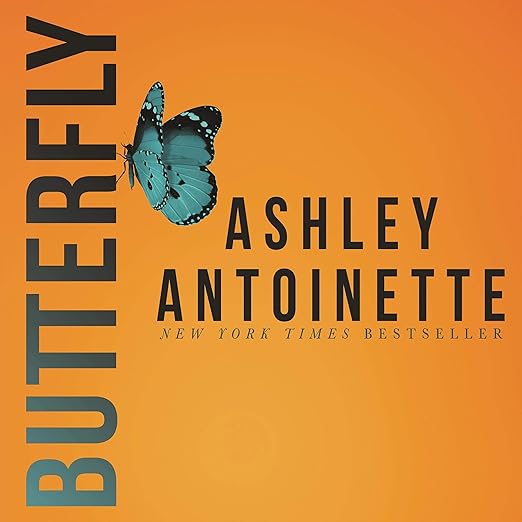
I have been reading Ashley Antoinette for years in the context of the Ethic series, so when Butterfly launched as a connected but separate story centering Morgan Atkins, I approached it with a mix of curiosity and mild apprehension. Spinoffs from beloved series carry their own weight, the reader brings expectations that the author did not set. I started Butterfly on a Saturday afternoon and finished it late Sunday night, which tells you most of what you need to know about its momentum.
Morgan Atkins has appeared in the Ethic books as a secondary character with a full life suggested but not always explored. Butterfly gives her the center frame, and Antoinette wastes no time establishing the particular texture of Morgan's internal world: spoiled in the truest sense of the word, not as a character flaw but as a condition, the result of having been loved extravagantly by people who also hurt her extravagantly. She has settled into something comfortable and hollow, and when the ghost from her past returns, the hollowness becomes impossible to ignore.
Is Butterfly Worth Your Time?
The central tension, Morgan caught between the respectable man she lives with and the bad boy who makes her feel alive, is a genre staple, and Antoinette knows it. What elevates the execution here is how clearly Morgan understands her own situation. She is not naive about what she is doing or why. Her choices are made with full awareness of the costs, which makes watching her make them considerably more interesting than the standard torn-heroine scenario. The phrase at the novel's heart, run away from the boy who gives you butterflies, he's going to break your heart, functions as both warning and invitation throughout.
The character of Bash, the man Morgan is leaving behind, is given more interiority than this kind of story usually allows. He is not simply the obstacle; he is a person being slowly comprehended by someone who chose comfort over love and is now paying attention for the first time. That texture matters.
Nicole Small's narration is the right choice for Morgan. She brings a warmth to the character that keeps the more reckless choices from feeling like authorial manipulation, and her pacing through the emotional flashback sequences is patient where impatience would have been easy. The production is clean and the eight-hour runtime feels genuinely propulsive rather than padded.
Antoinette's prose is distinctive and rhythmic in a way that translates well to audio. She writes dialogue that sounds like people actually talk, and she understands how to use silence, the pause before a response, the thing that does not get said, as a narrative tool. Small honors that instinct without over-performing it.
Before You Commit to Butterfly
The novel's most honest negative review flags something real: pacing issues in the middle section. Extended sequences of Morgan's internal deliberation, missing Messiah, her confusion about Ahmeek, her insecurities about what she deserves, consume a significant portion of the runtime. For readers already invested in Morgan from the Ethic books, this is likely not a problem. For new readers, the repetition of internal doubt can feel like the novel prolonging itself rather than advancing. The criticism that all male characters are described in similar physical terms is also worth noting as a legitimate aesthetic quibble, though it does not impede the emotional mechanics.
This is also book one of a series, and it ends with significant threads unresolved. If you are the kind of listener who wants a complete story in a single volume, Butterfly will frustrate you. The emotional arc reaches a meaningful point, but the plot situation is deliberately open.
The Right Listener for Butterfly
Readers who have been following the Ethic series will find this essential; Morgan's story here deepens the texture of what came before while opening new territory. New listeners can enter here but will want to know they are starting a series, not a standalone. Anyone who connects with fiction that takes the emotional stakes of desire seriously, not just as romantic plot fuel but as a genuine problem of self-knowledge, will find Butterfly doing that work with unusual honesty.
- Performance: Nicole Small brings a vivid, emotionally present performance to Morgan Atkins, conveying the character's internal contradictions with real skill.
- What it covers: Forbidden desire, emotional loyalty, the cost of wanting too much
- Feel: Electrifying and emotionally volatile
- Our call: A compulsive opening to a new series from Ashley Antoinette, strongest in its raw emotional honesty and the sheer pull of its central tension.
Frequently Asked Questions
Does Butterfly end on a cliffhanger?
Yes. The emotional arc reaches a meaningful point, but multiple plot threads, including the situation with Bleu and several open character questions, are left unresolved for the subsequent books in the series.
How does Nicole Small's narration handle the novel's multiple male love interests?
Small differentiates them adequately through tone and pacing, though the prose itself describes them in similar physical terms. Her stronger work is with Morgan's internal voice, which she delivers with real consistency throughout.
Is this appropriate for readers new to Ashley Antoinette's style?
It is a reasonable entry point, though Antoinette's prose style, rhythmic, emotionally intense, sometimes repetitive by design, is distinctive and will not suit every taste. New readers should be aware the series is ongoing and plan accordingly.