Before You Press Play
- Voice: Aiden Snow credited alone for a book a reviewer tags dual POV, so both first-person halves rest on one voice
- Big ideas: Second chance, forced proximity, a marriage nobody finished dissolving, a ranch used as leverage
- Atmosphere: Hot, possessive, small-town heat with real money on the table
- Worth it?: Trope shoppers have everything they need on the label, while anyone hunting a genuinely dark cowboy story should test that claim first.
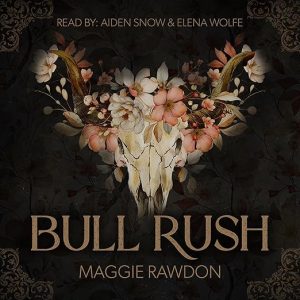
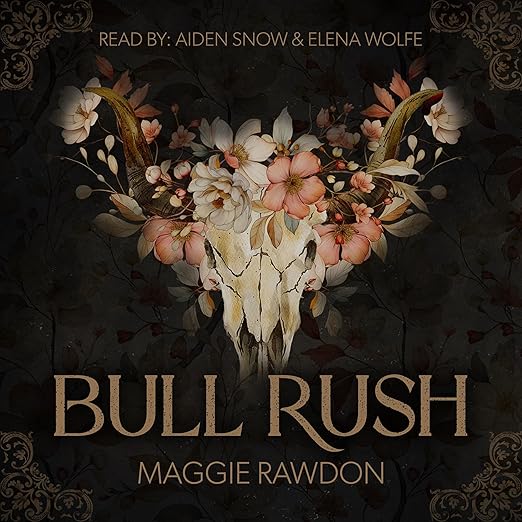
Still married. That is the whole first line of this audiobook's description, two words standing alone, and it earns its place because it does all the work at once. Everything after it belongs to a woman who is never named. She runs an inn that sits on the family ranch of the husband she believed she had divorced, she has a wedding of her own planned, and she has an offer in front of her: play his wife for ninety days and receive a quiet divorce, the ranch, and a million-dollar bonus to keep her business afloat. Eleven hours and five minutes of that bargain, and the woman telling you about it does not acquire a name until the review column starts.
Where This One Lands
Aiden Snow is credited alone, and one reviewer's trope list marks the book as dual POV. Those two facts sit in tension with each other. A dual-perspective romance divides its chapters between two first-person voices, and a single narrator has to construct both and keep them separable for eleven hours and five minutes. Solo narration is standard practice in this corner of the genre, and it is also where the corner most often thins out: the heroine's interior chapters and the hero's begin to sound like one person thinking twice.
Eleven hours is generous for this premise, which is encouraging. The ninety-day arrangement is a container built to be filled: a woman living in her own inn beside a husband she thought was gone, a fiancé waiting somewhere off the page, brothers pulling from the other direction. Slow burn needs exactly that much room, and the reviewers who loved it describe getting it. Emilee, writing as Spicy Little Reader, credits the build up in every slight touch and unspoken word, which is precisely the register a narrator either sells or flattens.
The Best Parts of Bull Rush
Ramsey Stockton is the reason the machine runs, and the description is careful with him in a way the reviews are not. The copy calls him a former pro football star turned felon and hero, sets those two nouns side by side, and moves along. Gina Blades supplies what the blurb withholds: out of prison for killing a man who had been stalking a friend's girlfriend and tried to kill them, home again after parole. That is a far more specific man than the sales copy admits to, and knowing it changes how the opening hour lands.
Gina Blades also hands over the setting, calling this book one in The Quiet Horsemen and placing it in Purgatory Falls, Colorado. Neither the town nor the state appears in the publisher's own description, which is an odd omission for a Western romance in which a ranch is the prize. The inn stands on that ranch, the ranch is what she stands to win, and the geography is doing plot work the copy has left entirely to its readers.
That five-star trope list reads as an inventory before it reads as a review, and that is more useful than it sounds. Second chance, morally grey hometown hero, cowboy romance, dual POV, forced proximity, possessive male lead, plot twist. If four of those seven are what you shop for, you have your answer without another word. If two of them are things you actively steer around, you have that answer as well, and eleven hours is a great many evenings to spend arguing with a book you already knew you disagreed with.
What Gives Us Pause
Look at the dates before anything else. This release is stamped April 18, 2025, and two of the five reviews under it were posted earlier: one on January 5, 2025 from the United Kingdom, one on February 19, 2025. Both describe this plot accurately, so neither is misfiled onto the wrong book. Most likely the column is shared with an earlier print or digital edition, though the page never says as much, and neither entry discusses a recording. Two of five voices here were never talking about audio at all.
Spice ratings disagree, which matters more in this genre than it would in most. Emilee's header runs four chili peppers. Gina Blades opens with three. Same book, same shorthand, a full step apart. Sunstarandsea, at three stars, splits the difference in prose instead, writing HAWT in capitals and then reporting that the story felt a bit lacking and the characters a bit flimsy. Between the three of them you get a usable range instead of a single number, which is more honest anyway.
Hazel is a name four of the five reviewers use, and the publisher's description never does. Read the blurb again and you will notice it runs entirely in her voice, first person and present tense, from those opening two words to the closing line about Stockton men, without once identifying her. Ramsey Stockton has a full name by the second sentence. Hazel Briggs arrives in full from a single reviewer. It is a small imbalance, and a strange one in a book whose entire premise is her decision.
Romance labels are the last thing worth checking. Romance is the genre field here and Westerns the tag, both defensible, and the copy sells a ranch, a cowboy and a town where Stockton men stop at nothing. Spicy_bookcorner reports downloading it on the strength of the phrase dark cowboy romance and then finding, at first, that it was not especially dark. If dark is a requirement rather than a preference, treat that as a caution about the label, since the writing is not what the reviewer is questioning.
Who Should Pick Up Bull Rush
Give this its eleven hours for a second-chance romance with a legal complication doing the plotting for you. The forced-proximity setup is airtight, the money on the table is large enough to justify the decision, and the reviewers who enjoyed it agree about why: two people who already know every one of each other's weak points, stuck in one building. Four of the five entries here sit at four stars or better.
Steer clear if a possessive male lead is a hard no, since a reviewer puts that on the label and nobody contradicts it, and steer clear if you need two genuinely separate voices in a dual-POV book, because one narrator is credited for both halves. The two entries posted before the release date deserve reading with that context in place before you let them decide anything for you.
Which spice level should I expect from this audiobook?
Two reviewers grade it in chili peppers and land one step apart, four from one and three from the other. A third writes HAWT in capitals while docking a star for a story described as lacking. Read that as consistently explicit, with the heat mattering more to some listeners than the plot carrying it.
Where does Bull Rush sit in The Quiet Horsemen series?
First. A reviewer states plainly that this is book one, and the record files it as number one in that series. You can start here with no homework at all. The setup, an unfinished divorce and a ninety-day bargain, is self-contained, and the Stockton brothers are clearly being planted for later volumes.
How does one narrator handle a dual-POV audiobook this long?
One credit covers both halves. A reviewer's trope list marks this dual POV, meaning alternating first-person chapters, and Aiden Snow is the only name attached to the recording. Solo narration of a two-voice romance is common enough, and over eleven hours it lives or dies on differentiation. No reviewer here reports back on that.