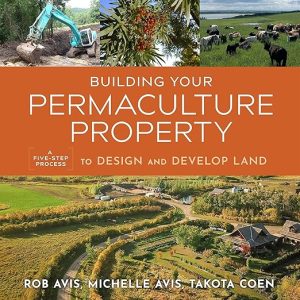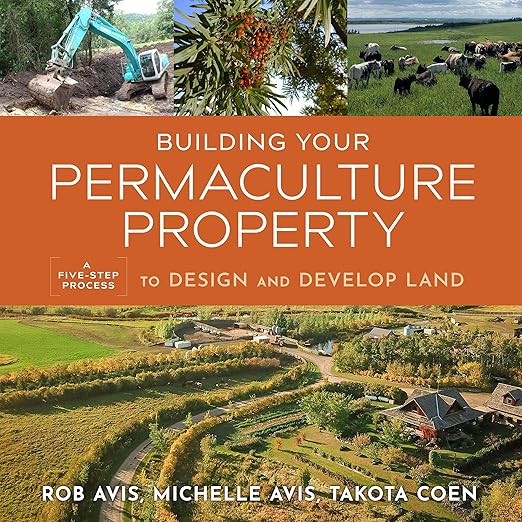
Permaculture books tend to fall into two camps: the visionary and the practical. Rob Avis, an engineer turned farmer and educator, understood that most readers were stuck in the gap between them, inspired by the Geoff Lawton videos and the Sepp Holtzer case studies but unable to figure out where their own land fit into any of it. Building Your Permaculture Property is his answer to that problem, and this audiobook delivers the system cleanly across nearly ten hours of focused listening. The companion PDF is available in your library alongside the audio, and it matters because the book includes templates and workflow tools that work better on a page than in your ears alone.
Farnsworth Keeps Five Dense Steps From Fatiguing
The structure Avis proposes is a five-step process: clarify your vision and values, diagnose your land's strengths and weaknesses, design to meet your vision, implement in the right sequence, and establish monitoring benchmarks. What makes this framework valuable is the insistence on context before technique. One reviewer, a homesteader who described their biggest frustration with permaculture literature as "its lack of focus on context and decision making," called this book a genuine fix for that problem. The authors acknowledge openly that land stewards often suffer from option paralysis, too many principles, too many examples from high-profile permaculture properties, and no system for deciding what to do first on their specific piece of land.
Adam Farnsworth's narration is competent and clear. He reads with professional consistency that keeps the denser passages, particularly the diagnostic frameworks and the sections on SWOT analysis applied to land resources, from becoming fatiguing over an extended listen. He does not bring particular warmth or personality to the material, but that is not what this content requires. The book is written to be instructional, and the narration honors that intent without allowing the more analytical sections to become monotone.
Forty Percent In, the Framework Finally Clicks
One reviewer described not receiving any "factual information or tangible numbers" until about 40% through the book, and then having everything click when the information-storage and decision-making sections arrived. That experience seems fairly common among serious listeners, and it points to something real about how the book is structured. The early sections on vision and values can feel abstract, even frustrating, on a first pass. But they are doing necessary work. Avis is not withholding the practical content; he is arguing that the practical content is meaningless without the foundational clarity that the values work establishes first.
The audiobook rewards listeners willing to sit with the conceptual framework before looking for actionable steps. For a commuter or someone listening while doing outdoor work, the front sections will pass quickly and the ideas will accumulate gradually. For someone who is genuinely at the start of a permaculture design project and wants to apply the framework immediately, those same sections may require pausing, taking notes, and returning with specific land conditions in mind. The PDF companion makes the templates accessible in written form, which the audio format alone cannot fully convey to someone ready to act on what they are hearing.
Another reviewer described the book as addressing the critical need for a process guide when so many permaculture resources provide techniques without context. That observation gets at the real value here. You can find information about food forests, swales, and animal integration everywhere. What you cannot easily find is a method for deciding which of those elements to prioritize on your specific land with your specific resources and values. That is what this book provides, and why the framework it teaches holds up better over time than any single technique it might have covered instead.
A Design Process, Not a Technique Encyclopedia
The book is explicit about its scope: it is a design process, not a technique encyclopedia. You will not find detailed sections on specific food forest layouts, water harvesting system construction, or animal integration protocols. Those topics appear as examples within the design framework, but if you want deep technical guidance on building a specific earthwork or establishing a particular polyculture combination, this book will point you elsewhere. It is a systems design text, not a gardening manual, and that distinction is worth understanding before you begin.
The companion PDF is not optional for serious implementation. Treating the audio as a standalone product and skipping the templates means missing the practical tools that translate the framework into actual land decisions. Download it before your first listening session and use it alongside the audio rather than as an afterthought.
Engineers and Farmers Fit This Analytical Style
This audiobook is well-suited to anyone who owns or is planning to own land and wants a coherent design process rather than a collection of individual techniques. It is especially valuable for listeners who have already encountered general permaculture content through books, courses, or online resources and feel overwhelmed by the gap between inspiration and implementation on their specific property. Engineers, farmers transitioning to regenerative practices, and serious homesteaders will find the analytical framework particularly well-suited to how they already think about problems.
It is less useful for apartment dwellers or anyone seeking lifestyle inspiration and general environmental philosophy rather than a working methodology for a specific piece of land. The book is dense with process, and listeners who prefer narrative-driven nonfiction may struggle with its instructional register across ten hours. Anyone who needs the worksheets and templates to function practically should treat the companion PDF as part of the package from the very beginning.
Common Questions
Is the companion PDF essential if you are listening to this audiobook rather than reading the print version?
For casual learning and conceptual absorption, the audio stands alone reasonably well. For anyone actively designing a permaculture property, the PDF templates and workflow tools are genuinely important, as the audiobook format cannot substitute for the visual structure of a design worksheet when you are working with real land data.
Does this audiobook assume prior knowledge of permaculture principles and vocabulary?
Some familiarity helps, but Avis explains key concepts as he goes. The book is most useful for people who already feel overwhelmed by permaculture options than for complete beginners seeking their first introduction to what permaculture actually is.