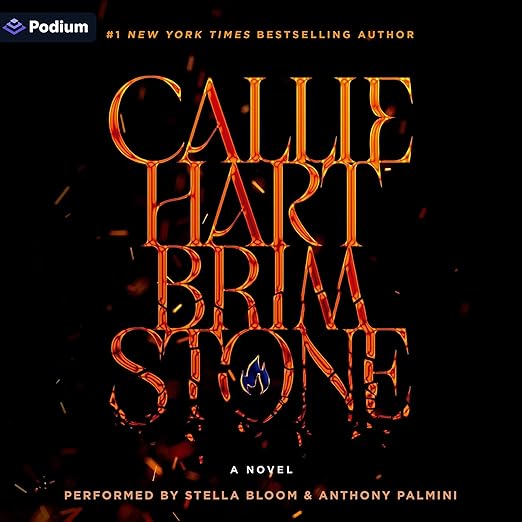
- Read by: One credited performer against a description that ends by promising duet style, a contradiction the page never resolves.
- At its heart: A crowned queen who cannot travel home, an odd-couple journey through a hostile city, mates separated by a realm going dark.
- Vibe: Bleak at the outset, funnier in the middle, ruthless at the close.
- Short version: Essential if you finished book one; unreadable as an entry point, and long enough that the decision matters.
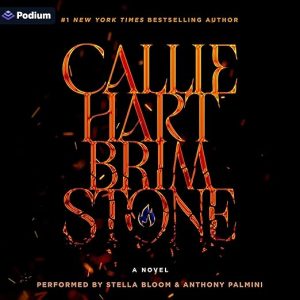
Narrated in duet style is the closing line of this audiobook's description, and it may be the most consequential sentence on the page, because the credits directly beneath it name exactly one performer. Duet narration is a specific production choice, not a flourish: two readers split the point of view characters and trade chapters. Either this recording does that with an uncredited second voice, or the copy is describing a production that was not made.
Fisher and Saeris Split the Book in Two
Duet work matters more here than it would on most sequels, because the book splits geographically as well as emotionally. Saeris holds a court she never wanted. Fisher travels to a city he despises with a smuggler he cannot silence. Two narrators would keep those strands audibly separate across a very long file; one narrator has to distinguish them by craft alone. A buyer choosing between formats deserves to know which of those they are paying for.
Twenty-Four Hours Are Harder to Follow Alone
Simultaneous reading and listening turns up in the column, which is worth flagging because it is rare evidence of anybody actually engaging with this edition. One listener describes running the text and the audio together and calls the result immersive from the opening, singling out the prologue as the hook that locked them in. That entry also concedes that some of the middle felt like filler, while arguing the filler was necessary.
Practically, the credit question decides how much of the twenty-four and a half hours you can follow while distracted. Duet productions let a listener track who is speaking through a change of voice; single narration on a two-strand romantasy asks for more attention, particularly across the alleyway sequences where the copy promises hidden dangers and unfolding secrets. Podium Audio produced it, and the imprint is the only other production information the record supplies.
Crack No Jokes for Kingfisher and Carrion
Saeris cannot go home, and that constraint is the cleverest thing in the setup. Born under blazing suns, she would die crossing the Quicksilver to reach the homeland where her ward and her brother need her, so the queen who now holds all the power in the story is the one person unable to act on it. Delegation as a plot engine gives a romantasy sequel somewhere to go that is not another battlefield.
Sending Kingfisher and Carrion Swift together is the second good decision. One has defeated armies and survived horrors; the other will not stop talking. The instruction quoted in the copy, to keep quiet, stay in the shadows and crack no jokes for the love of all seven Gods, tells you the register of their entire journey before it starts. Comic friction under real threat is a durable structure, and it gives the middle stretch its energy.
Series readers report the payoff arriving in bursts. One who preordered describes devouring and savoring the book in the same breath, being stunned repeatedly and finding no dull stretch anywhere in it, which is a fair description of a plot the copy sells on revelations. A darkness falling across Yvelia raises the stakes past the couple, so the romance now carries a war rather than sitting beside one.
Fifteen Hours Before the Slow Opening Pays Off
Opinions split hard on the opening, and the disagreement is worth taking seriously. One four-star response describes struggling through the first sixty percent, breaking off around the halfway mark to read other books entirely, and finding that the beginning did not live up to the previous volume, with too much weight on romance, spice and comic relief. No other entry reports the same struggle, which is precisely why the objection is useful: it is specific, it is time-stamped to a percentage, and it tells a prospective listener where the risk of abandoning the file sits.
Endings carry their own warning, and one five-star account delivers it plainly. That reader calls the book a clear improvement on its predecessor, credits Carrion by name for the humor that lightens a bleak opening full of apparently unbeatable foes, and then signs off on a huge cliffhanger with an eleven-month wait for resolution. That last detail is the kind buyers deserve before committing. If unresolved endings frustrate you, the sensible move is to wait until the next volume is announced and listen to both in sequence rather than arriving at the last chapter unprepared.
Length compounds both issues. A recording this long amounts to roughly three ordinary romance audiobooks back to back, so a slow first stretch is not a chapter of patience but several hours of it. Sixty percent of twenty-four and a half hours is close to fifteen hours before the objection is answered, which is more than most complete novels ask for. The record also carries no content notes of any kind, on a book whose copy promises deadly consequences, impossible foes and a realm falling into darkness. Listeners who screen for that will find nothing here to screen with.
Continue Only if You Finished the First Book
Readers who finished the first volume and want more of the same world should simply proceed, ideally with the previous book fresh. The couple are mates now rather than antagonists, a change the copy treats as settled fact, and the supporting cast has been promoted from decoration into people with jobs to do. Romantasy listeners who like their fantasy politics load-bearing rather than ornamental will find plenty to chew on.
Newcomers should not start here under any circumstances. The description opens mid-situation, with a queen already crowned, a mate already established, a portal already lethal to one character and a city already hated by another. None of that is explained, and reconstructing it from context across a very long file is a miserable way to meet a series that clearly rewards its regulars.
Spoiler discipline is the last piece of advice, and it comes from the column itself. One reviewer declines to describe almost anything, on the grounds that the impact of this book comes from discovering its twists alongside the characters, and that even small details spoil it. That is a rare kind of restraint in a review, and following the same rule while shopping is probably the best thing a prospective listener can do for themselves.
Common Questions
How long is the Brimstone audiobook and where does it sit in the series?
The recording runs twenty-four hours and thirty minutes, published by Podium Audio in November 2025. The series fields place it as the second entry in Fae and Alchemy, and the description opens by describing itself as the continuation of a bestselling romantasy series rather than as a standalone.
Does the audiobook use one narrator or two?
The description's final line promises duet style, which ordinarily means a second performer sharing the reading. This listing's narrator slot holds a single name, Stella Bloom, and no other voice is named in any field. Both statements cannot be right, and the page offers nothing that would settle which one is.
Can this be read as a standalone?
The copy assumes you already know that Saeris has been crowned queen of the Blood Court, who Kingfisher is, what the Quicksilver does, and why Zilvaren matters. Every one of those arrives as established fact rather than as introduction, so starting here means reconstructing an entire prior volume from context.