- Performance: A Random House Audio production carried by one credited reader across all twelve step reframings
- What it covers: Twelve Step spirituality, powerlessness and surrender, addiction as a shared human condition, grace after failure
- Feel: Gentle in tone and completely unyielding in substance
- Our call: A short, demanding reframing of the Steps that rewards a second pass, and no substitute for a program.
Richard Rohr's premise is blunt enough to state in one sentence, and this audiobook spends its whole length refusing to let you off with it. Addiction, in this reading, is not a category of person. It names a universal human condition, whether the attachment runs to a substance, to a behavior, or to a rigid pattern of thinking that stopped being examined years ago. From there the book moves through each of the Twelve Steps and reframes them as a spirituality rather than as a program, arriving not at sobriety as an endpoint but at what the copy calls a reorientation of consciousness, relationship, and desire. That is a large claim for three hours, and the file mostly earns it.
Addiction as a Universal Human Condition
Addiction as a universal condition is the move that makes this book usable by people who have never been near a meeting, and it is equally the move most likely to irritate anyone who has. Rohr is not diluting the Twelve Steps into a metaphor, and the argument in fact runs the other way. The claim is that the Steps were always describing something general, and that recovery communities simply noticed it first. Drawing on Scripture, psychology, and decades of pastoral work, the book treats admitting powerlessness as the opening of freedom rather than as an admission of defeat. Whether that inversion reads as profound or as a rhetorical trick will depend heavily on what you carried in with you.
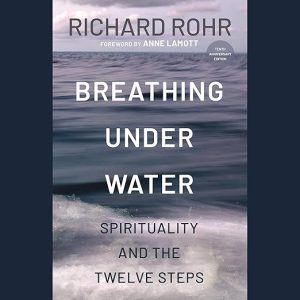
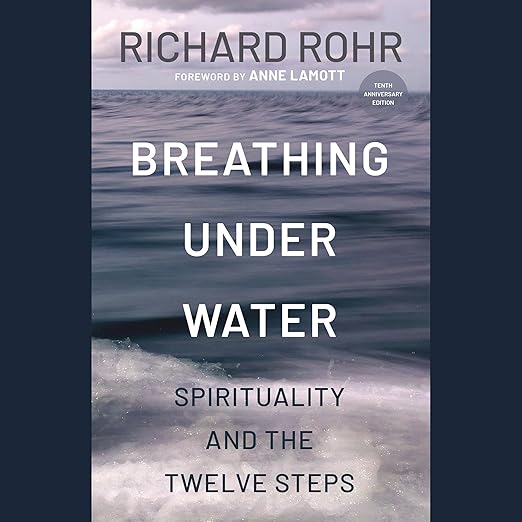
Anne Lamott wrote the foreword, and the copy quotes it prominently: a promise that Rohr may take a reader to places both avoided and longed for, ending at their own precious self. The sentence sets the register accurately. This is devotional writing with a hard argument sitting inside it, warm in tone and uncompromising in substance, and the warmth is what makes the demands bearable. The book asks a listener to let go of false control and to encounter a merciful God, which is not a small request no matter how gently it is delivered. That pairing of a hopeful vision with a genuinely difficult one is the thing the description gets right about its own contents.
Drew Jackson Reads the Foreword Too, Unmarked
Drew Jackson is the only reader named on the record, and that single credit covers everything inside the file, the Lamott foreword included, with nothing on the page indicating a separate voice for it. A foreword by a named author is usually treated as its own object in print, set in different type and signed at the end, and audio has exactly one tool for making that distinction: a change of voice. When the same reader delivers both, the seam depends entirely on how the transition gets handled. The detail matters more here than it does in fiction, because the foreword is doing the work of an endorsement and a listener ought to be able to hear where it stops.
Three hours is short for a book carrying this much architecture, and the brevity works as a feature rather than as a compromise. Twelve steps means twelve movements, each with its own reframing, and a compressed file keeps the whole argument in view instead of letting it sprawl across a week of commutes. Rohr's prose has a habit of turning on a single sentence, so a listener accustomed to spiritual writing that circles one point for a chapter will find the density surprising. A physician sitting with a family member's long struggle with alcohol describes finding relief in the simplicity of breathing in and breathing out, which is a fair account of the book at its best.
The Star Rating's Numbers Do Not Add Up
Arithmetic is where this listing stops making sense, and you can see the problem without working any of it out for yourself. The star average printed at the top cannot be produced from the number of votes the page says it received, under any rounding convention you care to apply. Below it, the page then displays more written responses than its own counter admits to having collected. Those two facts point in the same direction. Whatever that badge is summarizing, it is not the opinions sitting underneath it, and anyone weighing this title should treat the number as decoration rather than as evidence of anything.
Christian Roots, Argued Without Claiming the Steps
Twelve step readers will notice how carefully the book stays on its own side of a line. Rohr writes as a priest, and the spiritual principles arrive primarily from a Christian frame, which the copy states plainly rather than burying in the fine print. What the book declines to do is claim the Steps for the church. The most interesting thread in the whole thing gets picked up by a reader more exercised about the church than about the addiction, who praises the analysis of why twelve step groups meet people's actual struggles more effectively than organized churches with their worship arenas and coffee bars, and notes that the Steps grew out of a Christian movement before separating from it. That is the argument at its sharpest.
Surrender is the word the entire book turns on, and it is worth knowing in advance how uncompromising the treatment is. This is not a self-help framework with a spiritual accent applied over the top. The copy calls the vision hopeful and demanding in the same breath, and the demanding half means the surrender of control is presented as the actual mechanism rather than as an attitude adjustment you can adopt selectively. Listeners hoping for the Twelve Steps stripped of their spiritual content will discover that the book is largely an argument against doing precisely that. None of this is concealed. The theology is named on the first screen of the description.
Theology for Those Living Alongside Addiction
Recovery is the obvious frame, though the audience is wider than the word suggests. Come to it when you are living alongside somebody else's addiction and need language that is neither clinical nor sentimental, or when your own attachments run to patterns of thought rather than to substances. It works for people already inside a Twelve Step community who want the spiritual claims examined instead of assumed, and it works for listeners who left organized religion behind and have never found a replacement vocabulary for what went with it.
Set it aside when you want practice rather than theology, because this is a reframing and not a program, and it will not tell you what to do on a difficult evening. The same holds if the Christian framework is a barrier rather than a doorway for you, since it is load-bearing here and not decorative. The file is short enough to try and dense enough to reward a second pass, and the honest measure is whether you find yourself replaying a step instead of moving to the next one. Rohr wrote this to be argued with, and it holds up to the argument.