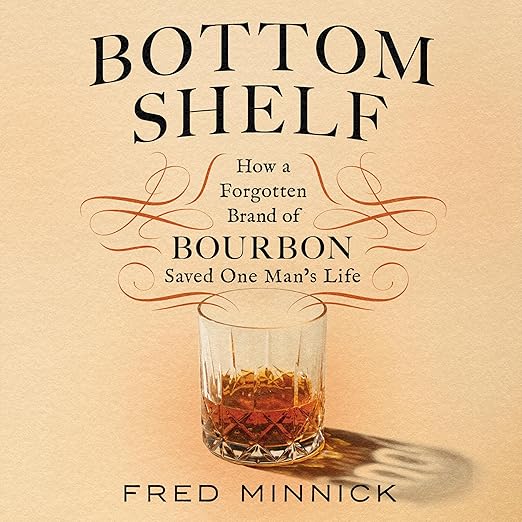
The Short Version
- Performance: Fred Minnick reads his own memoir, which puts a market-moving palate and a veteran's worst years in the same voice.
- What it covers: Bourbon history, combat trauma and recovery, one brand's fall from presidential tables to the bottom shelf.
- Feel: Convivial expertise sitting right next to grief.
- Our call: A whiskey investigation and a war memoir braided together, and the braid is the reason to hear it rather than read about it.
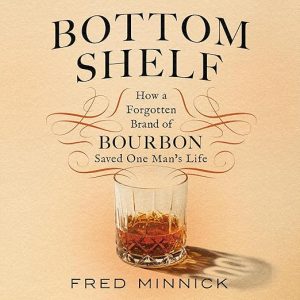
A dusty 1969 bottle of Old Crow went from forty dollars to three thousand almost overnight because Fred Minnick named it as his all-time favorite in an interview, and that one detail tells you what kind of authority this audiobook rests on. His palate 'shapes the industry,' the publisher's copy says; his reviews 'move markets,' his instincts 'set trends.' What the same copy puts second is less expected. Long before the tasting notes, Minnick was a combat veteran wrestling with what the description calls 'the invisible wounds of war,' and paying close attention to whiskey became a way to calm his mind and rebuild a life. By the end of seven and three-quarter hours those two stories have fused into one, and I came away convinced the fusion is the book's real argument rather than its structure.
Four Books in One, Fresh Off the Press
Reviewer HuntleyMC supplies the most useful description of the structure available anywhere on the page, calling it four books in one and then counting them off: the memoir of a National Guard veteran, husband, father, writer and bourbon expert; the biography of James C. Crow; the story of the brand that carries his name; and a history of bourbon's place in American wars and politics. That is an unusual amount of load for a single recording of under eight hours to carry, and it explains why the book keeps changing register. HuntleyMC is also the only reviewer who says outright that bourbon is not their drink, and awards four stars anyway. Keith N., who has followed Minnick's work for years, frames the same difference from the opposite direction: the history and knowledge were expected, and what gets commended is Minnick 'sharing his personal story and opening himself to us, as the reader.'
A 4.6 average, drawn from thirty ratings, is a thin base by any standard, and the dates explain why. All five written notices landed between February 20 and March 7, 2026, inside three weeks of a February 17 release. This is the first crop of readers, not a settled verdict, and first crops on a memoir by a well-followed specialist skew toward people who were already following. Two of the five open by establishing exactly that, one having read most of Minnick's earlier books and the other addressing readers who already know the name.
Minnick's Favorite Answer Multiplied Old Crow's Price
The investigation half is genuinely good material for audio, because it works as a chase. Old Crow was 'once revered by presidents, poets, and distillers alike,' per the description, then stripped of its legacy and banished to the shelf the title names. Minnick wants to know what happened to the whiskey itself, which pulls him into distilling records, corporate decisions, and the biography of the chemist whose name is still on the label. Worth sitting with the economics for a moment too: one offhand answer in an interview multiplied the price of a specific bottle roughly seventy-five times over, which says as much about how modern whiskey collecting works as it does about the whiskey. Stewart Durham describes the quest itself as unrelenting and thorough, and credits Minnick with 'uncovering all aspects of Old Crow' along the way.
Both Registers Live Inside a Single Voice
Memoir is what the reviewers keep reaching for, though. MV calls it 'a poignant telling of a life disturbed by war, yet redeemed by a search for an elusive bourbon,' and identifies the hinge: Minnick eventually recognizes that the obsession 'is actually a metaphor of his life.' Margarita Scouten reports laughing and crying and then doing both again, and takes from it the conviction that somebody can walk through the darkest part of trauma and still find a way forward. Stewart Durham puts it more bluntly, saying the raw accounts of finding himself are what set the book apart.
Minnick narrates his own memoir, and on this particular book that is more than an authenticity bonus. Two registers have to live inside one voice: the professional taster whose judgments move a market, and the veteran describing his own demons. Those demand opposite things from a reader, precision in one and exposure in the other, and the person who lived both is the only narrator who does not have to choose which to fake. Stewart Durham's list of things regulars already know about Minnick ends on his being 'unapologetically honest in his delivery,' a description of him as a communicator that reads differently once he is the one at the microphone.
Filed as Food and Wine, Reads as War
Start with the filing, because it will mislead somebody. This title arrives tagged under home and garden, with a food and wine subheading, which sets an expectation of tasting notes and weekend projects. What you actually get includes war, grief, and a man cataloguing his own worst years. The whiskey content is real and expert, but a listener who queued this up as pleasant background for cooking will hit the memoir material without warning. Anyone sensitive to combat aftermath, or to grief written at close range, should treat the description's phrase about invisible wounds as understatement rather than decoration.
Mystery framing is the second thing to weigh. The description poses a real question, why an iconic brand was abandoned and what became of the liquid, and a memoir's obligations pull against a full answer to it; expect a resolution that is emotional first and archival second. Worth noting too that three reviewers describe reading rather than listening, while three separate notices trail off before reaching their final point, so the page gives you less finished testimony than its five entries imply. On a release this recent, that is normal rather than suspicious.
Bourbon Drinkers and Veterans Share This Shelf
Bourbon drinkers who already know Minnick's byline will want this, and so will the wider audience for veteran memoirs, where the whiskey functions as the specific obsession that made recovery legible. It also suits listeners who like the shape of a single-object investigation, the format where one bottle, one recipe, or one building becomes the excuse to tour a century. HuntleyMC is the proof of concept for the outer ring of that audience: not a bourbon drinker, and still calls it interesting and quick on the strength of the history and the man.
Look elsewhere for a buying guide. This is not a survey of current releases, a distillery tour, or a tasting primer, and Minnick's market-moving palate appears here as biography rather than as recommendation. Whiskey writing purists who want the author kept out of the glass will find the personal chapters intrusive, and a reader in a bad stretch with grief or service-related trauma should pick the moment carefully rather than skip the book.
Is the Bottom Shelf audiobook mostly about bourbon or mostly a memoir?
It runs on both tracks at once. One reviewer counts four books inside it: Minnick's own life, a biography of distiller James C. Crow, the Old Crow brand's decline, and bourbon's role in American politics and war. The personal material is what reviewers single out most often.
Does Fred Minnick narrate Bottom Shelf himself?
Yes, the narrator credit is his own. That matters more than usual here, because the book asks one voice to hold professional tasting authority and an account of combat trauma. A reviewer listing what regulars know about him ends on his being unapologetically honest in his delivery.
What content warnings should a listener know about before starting this audiobook?
The publisher's phrase about invisible wounds of war covers a lot. Expect combat aftermath, grief, and Minnick's own account of what one reviewer calls his demons, wrapped around a subject that is itself a strong spirit. Reviewers report crying. The listing's home and garden filing gives no hint of any of it.
Do you need to know anything about whiskey to follow the story of Old Crow?
No. The one reviewer who says outright that bourbon is not their drink still gave it four stars and called it a quick, interesting read. Minnick explains the distilling and brand history as he goes, so the technical vocabulary arrives with its own translation attached.