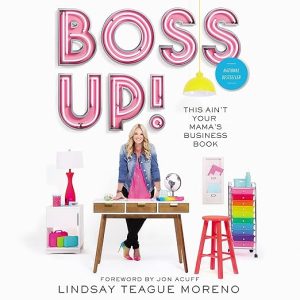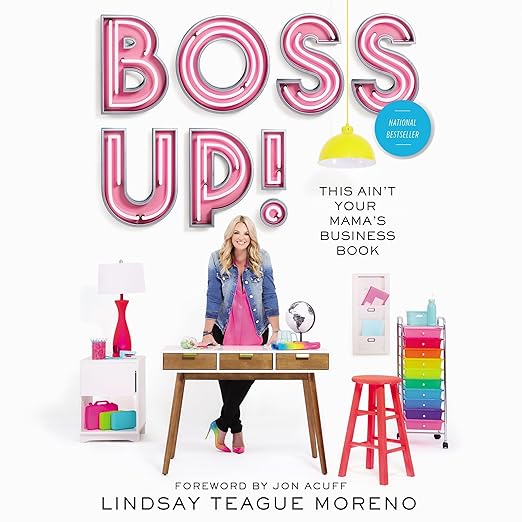
I came to Boss Up through a recommendation from a listener who said it was the first business book that made her cry. That description either draws you in or pushes you away depending on what you want from the genre, and I will admit I was skeptical. Business books that lean into emotional appeal can easily become inspirational wallpaper, long on feeling and short on substance. Lindsay Teague Moreno's book is not that. I listened to it over two afternoons and emerged with both a highlighter's worth of practical notes and a couple of things I needed to think about seriously.
The context for Boss Up is Lindsay's own trajectory: a stay-at-home mom who built a multimillion-dollar direct sales business and eventually turned her experience into a framework for helping other women do something similar. The direct sales background is relevant and worth noting upfront. This book is not aimed exclusively at women in network marketing, and its principles extend well beyond that specific industry, but Moreno's particular world informs her examples and her understanding of the friction that comes with being a woman who wants to build something while also being a mother and a partner. One reviewer who was neither a mother nor married noted finding genuine value here despite sitting outside the explicit target audience.
How Boss Up! Holds Up
The structural spine of Boss Up is ten philosophies Moreno identifies as essential to entrepreneurial success, including thinking long-term, being unapologetically yourself, and what she calls the unsales tactic. The audiobook includes an exclusive expanded chapter 8 with additional material on this last concept, which gives listeners something the print edition does not have. That is a genuine reason to choose audio over text for this particular book.
These philosophies are not revelatory in isolation. Most of them have appeared in other business books in other forms. What makes Moreno's treatment worth hearing is not the originality of the frameworks but the specificity of the failure stories she uses to illustrate them. She does not describe herself as someone who got it right and now knows how to tell you to get it right. She describes herself as someone who made particular kinds of expensive mistakes and has worked out, from those specific experiences, what a different approach might have looked like. That honesty is not performed. It is the substance of the book rather than its packaging.
Why Boss Up! Works as an Audiobook
The decision to have Moreno read her own book is the right one for this material. The book is explicitly personal, frequently funny, and built on the specific texture of one woman's experience rather than on abstracted principles delivered by a professional voice. When she is telling you about the time she failed publicly or the moment she understood something that had previously eluded her, the credibility of her own voice doing the telling matters significantly. The book's humor, which multiple reviewers describe as landing between laughing out loud and tearing up within the same chapter, comes through with full force in the self-narrated version in ways that a proxy narrator could not replicate.
The audiobook companion PDF with charts and exercises is also worth downloading if you plan to engage with the material actively rather than just listening through. The exercises embedded in the text are not rhetorical. They ask for specific answers to specific questions about your actual life and actual business, and the PDF gives them a format that makes follow-through more likely than mental note-taking while driving.
Weak Spots in Boss Up!
The aspect of this book that reviewers respond to most consistently, whether positively or with genuine discomfort, is the hard questions Moreno embeds in the inspiration. She asks what you actually want, not what you have decided it is acceptable to want. She asks what you are willing to sacrifice, not in a motivational-poster sense but in a practical, daily-life sense that has real consequences. One reviewer described needing to answer some really hard questions about what they want for their life and their business. That is what a good business book should do. Not confirm existing decisions but interrogate them, and do so without malice.
At just over six hours, Boss Up is a short listen by business book standards. This is appropriate. Moreno is not padding. The material she covers is substantive enough to need time and compact enough not to require inflation to fill a standard business book runtime. Listeners who prefer their business content dense and exhaustive may find it breezy by comparison. Listeners who have abandoned many a business audiobook halfway through because it ran out of new ideas at hour three will appreciate that Moreno respects their time and does not overstay.
The audiobook format serves this material especially well. Moreno recorded the book herself, and the performance has the energy of someone speaking from conviction rather than reciting from a script. There is a difference in listening to an author narrate their own work when the author has genuine presence, and Moreno has it. The directness that comes through in the writing is amplified rather than flattened in her delivery. Several reviewers specifically noted the narration as part of what made the book land, and that response is telling. This is a book that benefits from the intimacy the audio format provides, more so than most business titles that are simply read aloud by a professional hired for the task.
The Right Listener for Boss Up!
Boss Up is primarily aimed at women considering or currently building small businesses, particularly those navigating the tension between entrepreneurial ambition and domestic roles. The direct sales background gives certain examples a specific flavor that listeners in other business contexts may need to translate, but the core philosophies are broadly applicable. Multiple reviewers who came from outside the explicit target demographic noted finding real value here without needing to share every element of Moreno's specific situation. Listeners wanting a highly technical business operations manual will need to look elsewhere. Those who want a combination of practical framework and honest personal narrative will find their six hours well spent.
A Few Questions About Boss Up!
What is the expanded chapter 8 exclusive to the audiobook?
The expanded chapter provides additional depth on Moreno's unsales tactic, her approach to selling that deprioritizes aggressive persuasion in favor of authentic relationship-building. It is not available in the print edition.
Is the companion PDF referenced in the audiobook worth downloading?
If you plan to work through the exercises and frameworks actively rather than treating this as a passive listen, yes. The PDF includes charts and exercises that supplement the audio content.
Is this book as emotionally demanding as some reviews suggest, or is the inspiration more surface-level?
The emotional content is genuine rather than performed. Moreno asks specific, sometimes uncomfortable questions about what listeners want and what they are willing to do about it. The book balances humor and honesty in ways that several reviewers found unexpectedly affecting.